- English
- French
- German
- Portuguese
- Spanish
- Russian
- Japanese
- Korean
- Arabic
- Greek
- German
- Turkish
- Italian
- Danish
- Romanian
- Indonesian
- Czech
- Afrikaans
- Swedish
- Polish
- Basque
- Catalan
- Esperanto
- Hindi
- Lao
- Albanian
- Amharic
- Armenian
- Azerbaijani
- Belarusian
- Bengali
- Bosnian
- Bulgarian
- Cebuano
- Chichewa
- Corsican
- Croatian
- Dutch
- Estonian
- Filipino
- Finnish
- Frisian
- Galician
- Georgian
- Gujarati
- Haitian
- Hausa
- Hawaiian
- Hebrew
- Hmong
- Hungarian
- Icelandic
- Igbo
- Javanese
- Kannada
- Kazakh
- Khmer
- Kurdish
- Kyrgyz
- Latin
- Latvian
- Lithuanian
- Luxembou..
- Macedonian
- Malagasy
- Malay
- Malayalam
- Maltese
- Maori
- Marathi
- Mongolian
- Burmese
- Nepali
- Norwegian
- Pashto
- Persian
- Punjabi
- Serbian
- Sesotho
- Sinhala
- Slovak
- Slovenian
- Somali
- Samoan
- Scots Gaelic
- Shona
- Sindhi
- Sundanese
- Swahili
- Tajik
- Tamil
- Telugu
- Thai
- Ukrainian
- Urdu
- Uzbek
- Vietnamese
- Welsh
- Xhosa
- Yiddish
- Yoruba
- Zulu
Are Lean Pork and Shrimps Wontons Suitable for Freezer Storage Today?
Yes — lean pork and shrimps wontons are well-suited for freezer storage when handled correctly. The combination of lean pork front leg meat and whole shrimp meat creates a high-protein filling that retains its texture and flavor under stable frozen conditions. Stored at -18°C or below, these shrimp wontons carry a 12-month shelf life without preservatives compromising quality. For B2B buyers sourcing premium frozen dim sum at scale, understanding what freezer storage does — and does not — affect is the foundation of a sound procurement decision.
Understanding Lean Pork and Shrimp Wontons: Composition and Storage Challenges
What Goes Into the Wrapper and Filling?
For Zhulaoda's shrimp and pork wontons, wheat flour dough is rolled out to a thickness of 0.5 to 0.8 mm, which is just the right amount of thick to keep the wontons from breaking when they boil. Pork front leg meat, dried shrimp, Chinese cabbage, spinach, agaric, scallions, ginger, sesame oil, oyster sauce, and soy sauce are all in the filling. This mix of ingredients gives the food a natural umami depth that doesn't need a lot of spice to taste good.


Why These Ingredients React Differently to Cold?
Shrimp is a shellfish seafood that has a lot of water, so it reacts strongly to being frozen and then thawed. Because it is leaner than shoulder cuts, pork front leg meat keeps its protein matrix better when frozen. Before it is mixed, Chinese cabbage is dried out so that the amount of free water is reduced to about 15–20%. This keeps the wrapper starch from breaking down too quickly while it is frozen. Each item needs a controlled environment, and because they interact with each other, it's impossible to break the temperature rules.
Fresh vs. Frozen vs. Refrigerated: A Practical Comparison
Refrigeration only adds two to three days to the shelf life of raw lean pork and shrimps wontons, which increases the risk of microbes. Fresh goods can't be sent over long distances for business-to-business transactions. Freezing at -18°C stops microbes from growing, keeps shrimp flexible, and keeps the wrapper intact for up to 12 months. Frozen is the only format that meets the needs of restaurant groups, hotel kitchens, and catering distributors for food safety, a wide range of logistics options, and consistent output quality.
Scientific and Practical Insights on Freezing Shrimp Wontons
How Blast Freezing Protects Texture?
Zhulaoda uses blast freezing at -40°C right after making something. Because the temperature drops so quickly, small ice crystals instead of big ones form inside the filling. Large ice crystals, which happen when something freezes slowly, break down the cell walls in shrimp meat, making it soft and watery after cooking. Blast freezing keeps the natural snap of whole shrimp and the bond structure of the pork protein matrix. These two things work together to give high-end Cantonese wonton meals the bite quality they want.
What Happens During Thawing and Cooking?
Holding the internal temperature at 74°C (165°F) for at least 15 seconds is recommended. This kills Salmonella, Listeria monocytogenes, and Vibrio parahaemolyticus, which are all very important because the food contains seafood. It takes 5–7 minutes to boil something frozen, and 8–10 minutes to steam something frozen. The wrapper stays clear and the filling stays moist with both methods. When you pan-fry something, the crust turns brown, and the inside needs to be steamed covered for an extra 4 minutes to make sure it's safe.
Recognizing Freezer Burn and Quality Decline
Freezer burn shows up on the wrapper as white, dry spots and means that moisture has evaporated because of changes in temperature. At some point, the cold chain has been broken if a product gets an off-white, chalky film on it or if the wrapper breaks before it's cooked. Teams in charge of buying things should demand cold chain logs from sellers and demand consistent -18°C delivery, not just storage temperatures in the plant.
Procurement Considerations: Choosing the Right Frozen Wonton Supplier
Certifications and Quality Control Standards
A good company that makes frozen lean pork and shrimps wontons should have ISO 9001, HACCP, and the right national licenses for making food. Zhulaoda has a Food Production License SC11137139600148, follows the SB/T 10412 product standard, and in 2005 passed the Food Quality and Safety Certification. As part of HACCP plans for shrimp wontons, raw materials must be tested for TVB-N (freshness threshold: <15 mg/100g), finished lots must go through microbiological screening, and X-rays must be used to look for any leftover shrimp shell pieces.

Packaging Options and Cold Chain Delivery
For B2B buying, these are the main types of packages that are available:
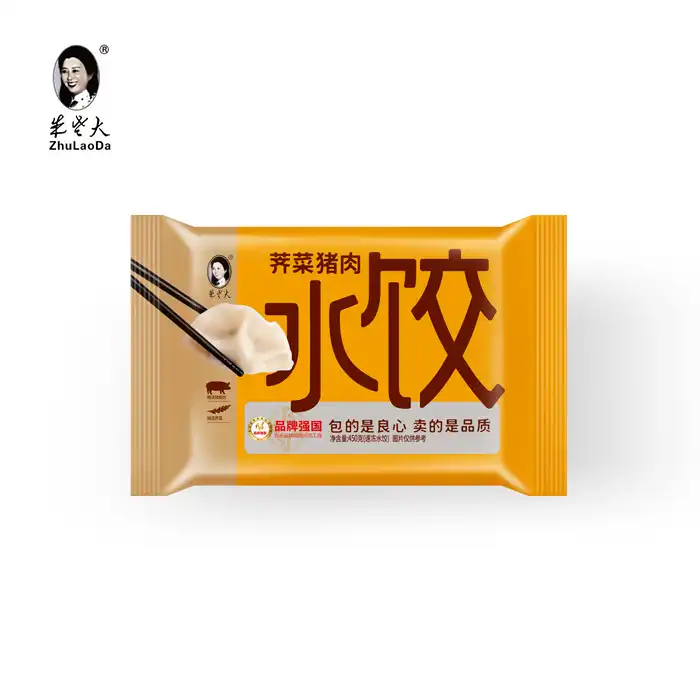
- 450g retail packs — suited for supermarket cold chain with tray-sealed or vacuum formats, offering visual appeal and consumer portion control.
- 1kg catering packs — designed for restaurant kitchens requiring consistent daily batch cooking with minimal prep time.
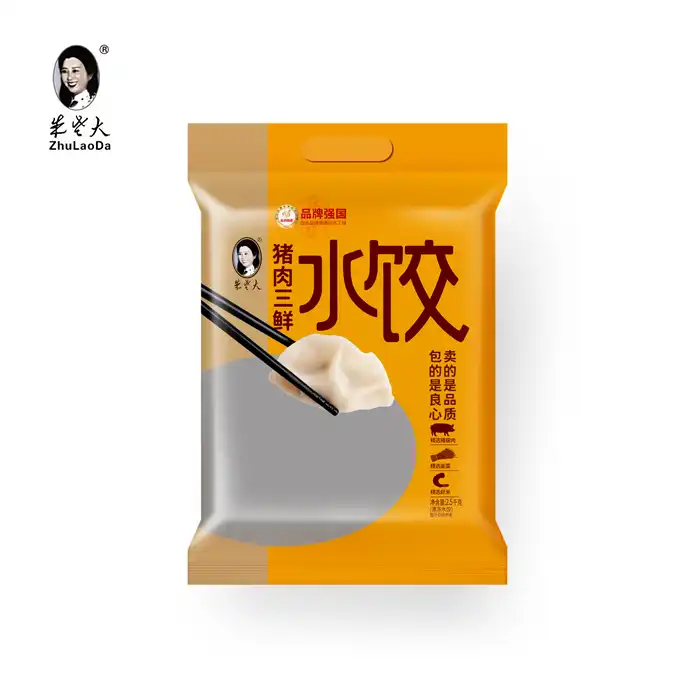
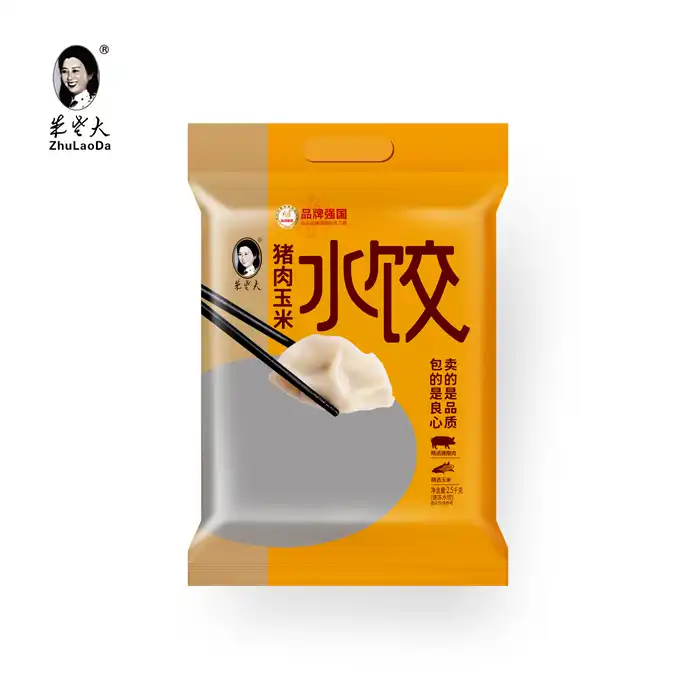
- 2.5kg bulk bags — ideal for hotel restaurants, franchise wonton noodle chains, and institutional catering where high-volume boiling or steaming is standard. Custom configurations are available on request.
Allergen Labeling and Regulatory Compliance
There are four main allergens in this product: wheat, soybeans, shrimp, and sesame. Most export markets, like the US, EU, and Southeast Asia, require clear labels for these four allergens. As required by destination-market rules, buyers who are looking for ingredients for hotel restaurants or food contracts with institutional clients must make sure that the supplier's paperwork shows all allergen-containing ingredients. The marking on Zhulaoda's products meets these needs as mandatory export paperwork.
Best Practices for Handling Frozen Shrimp Wontons in Commercial Kitchens
Storage and Temperature Management
During the whole cold chain, keep the product at -18°C or less. Do not let the product partially thaw and then freeze again. This is the main reason why wrappers crack and fillings lose their texture. To keep food from micro-temperature swinging in commercial freezers, stack it away from door seals and air vents. For HACCP compliance, check the freezers often and write down the temperatures at least twice a day.
Thawing and Cooking at Scale
For restaurants that handle a lot of food, cooking straight from frozen eliminates all warming risks. For large amounts, boiling works best: bring frozen wontons to a rolling boil, cook for 5–7 minutes, or until they float, and then serve right away. For dim sum displays that need to show shrimp through a clear skin, steaming for 8–10 minutes keeps the wrapper's look the best. For à la carte service, where a crisp base is a way to set the food apart, pan-frying works.
Menu Integration for B2B Clients
Frozen shrimp and pork wontons can be used in a variety of ways. They can be eaten on their own as a soup course, in a dim sum box, as a topping for noodles, or as a starter that is pan-fried. This format flexibility is important for procurement buyers who are in charge of restaurant groups with multiple locations or hotel food businesses where a single SKU needs to work in a number of different menu places.
Conclusion
Lean pork and shrimps wontons should be kept in the freezer at -18°C. This is the right way to do it and has been shown to work. Blast freezing, strict microbiological controls, and a stable cold chain transportation system all work together to keep shrimp fresh, wrapper integrity, and batch stability for 12 months. When buying in bulk, it's easy for procurement professionals to make a choice: make sure the supplier can blast freeze, confirm allergen documentation, check cold chain protocols, and ask for product samples before making a decision. The process of making something good, from checking the raw materials to delivering it, makes quality a given.
FAQ
Do shrimp wontons lose their texture after freezing?
Not when blast freezing is applied correctly. Rapid freezing at -40°C forms small ice crystals that do not rupture shrimp cell walls. The result is a cooked shrimp with a natural snap rather than a soft, watery consistency. Texture degradation typically results from freeze-thaw cycles during transport, not from the freezing process itself.
Is it safe to refreeze thawed shrimp wontons?
No. Refreezing thawed wontons is not recommended. Once thawed, the product should be cooked and consumed within 24 hours. Refreezing compromises both food safety and sensory quality, as the shrimp filling becomes watery and the wrapper loses structural integrity.
What allergens are present in these wontons?
The product contains wheat, soybeans, shrimp, and sesame. These are declared allergens and must be communicated to end consumers in compliance with local food labeling regulations.
How long can frozen wontons be stored?
The shelf life is 12 months when stored continuously at -18°C or below. This applies from the date of manufacture as marked on the packaging.
What cooking method works best for high-volume service?
Boiling directly from frozen is the most practical method for large-batch cooking. It takes 5–7 minutes and delivers consistent results across every portion without requiring thawing prep time.
Partner With Zhulaoda for Premium Frozen Wonton Supply
Since 2001, Zhulaoda has been selling high-quality frozen dim sum. They have three automated production lines that can make 100 tons of food every day and a cold storage facility that can hold 8,000 tons. Our lean pork and shrimps wontons manufacturers offer custom bulk packaging, full allergen documentation, and production that is ISO 9001 and HACCP certified. Get in touch with our team to get product samples or to talk about your buying needs. You can email us at sdzldsp@163.com.
References
1. Sun, D.-W. (Ed.). Handbook of Frozen Food Processing and Packaging. CRC Press, 2011.
2. Fellows, P.J. Food Processing Technology: Principles and Practice (4th ed.). Woodhead Publishing, 2017.
3. U.S. Food and Drug Administration. Fish and Fishery Products Hazards and Controls Guidance (4th ed.). FDA, 2011.
4. Codex Alimentarius Commission. General Standard for the Labelling of Prepackaged Foods (CODEX STAN 1-1985, Rev. 2018). FAO/WHO, 2018.
5. Barbosa-Cánovas, G.V., et al. Water Activity in Foods: Fundamentals and Applications. Blackwell Publishing, 2007.
6. China National Standard. Quick-Frozen Dumplings, Wontons and Tangyuan — SB/T 10412. Ministry of Commerce of the People's Republic of China, 2007.
Learn about our latest products and discounts through SMS or email