- English
- French
- German
- Portuguese
- Spanish
- Russian
- Japanese
- Korean
- Arabic
- Greek
- German
- Turkish
- Italian
- Danish
- Romanian
- Indonesian
- Czech
- Afrikaans
- Swedish
- Polish
- Basque
- Catalan
- Esperanto
- Hindi
- Lao
- Albanian
- Amharic
- Armenian
- Azerbaijani
- Belarusian
- Bengali
- Bosnian
- Bulgarian
- Cebuano
- Chichewa
- Corsican
- Croatian
- Dutch
- Estonian
- Filipino
- Finnish
- Frisian
- Galician
- Georgian
- Gujarati
- Haitian
- Hausa
- Hawaiian
- Hebrew
- Hmong
- Hungarian
- Icelandic
- Igbo
- Javanese
- Kannada
- Kazakh
- Khmer
- Kurdish
- Kyrgyz
- Latin
- Latvian
- Lithuanian
- Luxembou..
- Macedonian
- Malagasy
- Malay
- Malayalam
- Maltese
- Maori
- Marathi
- Mongolian
- Burmese
- Nepali
- Norwegian
- Pashto
- Persian
- Punjabi
- Serbian
- Sesotho
- Sinhala
- Slovak
- Slovenian
- Somali
- Samoan
- Scots Gaelic
- Shona
- Sindhi
- Sundanese
- Swahili
- Tajik
- Tamil
- Telugu
- Thai
- Ukrainian
- Urdu
- Uzbek
- Vietnamese
- Welsh
- Xhosa
- Yiddish
- Yoruba
- Zulu
Best Chinese Beef Radish Dumplings for Foodservice Importers
If you're a foodservice importer or procurement director searching for a reliable frozen dumpling SKU that commands a strong menu margin, Chinese beef radish dumplings deserve your full attention. This product combines seasoned ground beef with shredded daikon radish in a high-gluten wheat wrapper — pre-seasoned, factory-calibrated, and ready for your central kitchen. At Shandong Zhulaoda Food Co., Ltd., we produce these dumplings under HACCP-compliant conditions with a 12-month frozen shelf life, giving operators across the United States a dependable, high-value item that differentiates any Chinese-style menu from standard pork offerings.
Understanding Chinese Beef Radish Dumplings: Composition, History, and Nutritional Value
What Goes Into the Filling?
For the most part, our dumpling filling is made from real meat. A radish, onions, carrots, and ginger that have been chopped are added to it. Sesame oil, cooking wine, yeast extract, and soy sauce are all in the seasoning mix. At the plant, it was all mixed up. The daikon (Raphanus sativus) part does more than just make it taste better. Because it naturally has water in it, the beef filling stays juicy when steamed or fried. This is different from lean beef products, which tend to be dry.
A Dish Rooted in Northern Chinese Culinary Tradition
Chinese beef radish dumplings come from northern China. Wheat-based dough has been the main source of carbs there for hundreds of years. This filling mix is a winter favorite in Shandong, Hebei, and Liaoning areas. You could get radish for a low price and it was easy to find. Beef was a good source of energy and heat. These two foods go well together because they are both practical and traditional in Chinese cooking, which is why Chinese people who live in the U.S. like them.
Nutritional Appeal for Health-Focused Operators
Lean beef has a good amount of energy to fat. Because daikon is low in calories and high in fiber, places that serve health-conscious people like this type of noodle. There is just the right amount of radish and beef in our recipe for both taste and nutrition. This means the product can be used for business cooking where there are rules about how meals should be made.
Procurement Insights: How to Source the Best Chinese Beef Radish Dumplings for Foodservice?
Defining Quality Before You Place an Order
It's not just about how the frozen beef dumplings look that makes them good. People who work in procurement should check the beef-to-radish ratio (by cutting a cross-section), make sure the wrapper width is consistent (it should be between 0.8 and 1.2 mm), and make sure moisture doesn't move around. Too much water moving from the radish center to the shell while it is frozen can cause it to crack. Most of the time, the wrapper's weight changes by less than 2% after three months of keeping.
Certifications That Matter for Institutional Buyers
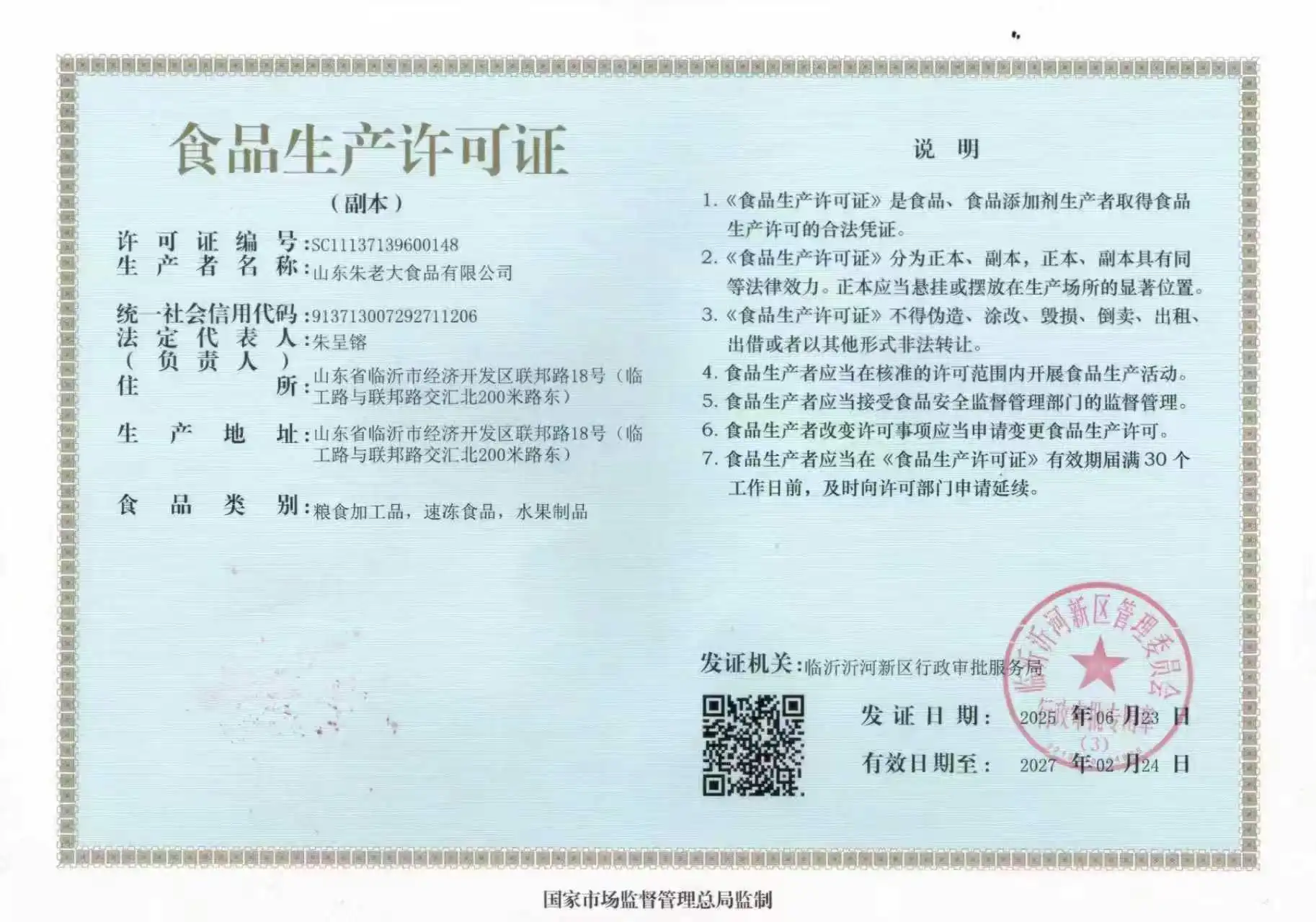
In order to work in a school, hospital, or business restaurant, food safety paperwork is an important part of the application process. The plant that makes our stuff has a Food Production License (SC11137139600148) and makes sure that their goods meet the SB/T 10412 standard. These credentials are useful for QA checks and paperwork for institutional tenders. We also have strong rules on microbes during production, as shown by the fact that Salmonella is negative/25g and Listeria monocytogenes is negative/25g. We know this because we test every batch.
Packaging, MOQ, and Cold Chain Specifications
The basic sizes of our beef and radish dumplings boxes are 450g, 1kg, and 2.5kg. We also have options that are made just for chain operators. For one year, it will stay good if you store it at -18°C or less. Our 8,000-ton cold storage building is run by a clever shuttle rack system. This lets us handle a lot of orders during the busy holiday season. The minimum order amounts are set up so that tests of central cooking can be done before the full rollout.
Cooking and Serving Recommendations for Foodservice Operators
The Dual-Method Advantage: Steam First, Then Pan-Fry
Zhulaoda's Chinese beef radish dumplings are unique because they are made in a "steam-then-fry" (蒸煎) method. The filling stays wet while the dumpling is slowly cooked through by steaming it first. The bottom gets golden brown and crispy in a second pan-fry in a flat plate. The top cover stays soft and bendable. This dish with a crispy bottom and a soft top is popular in both fast food and sit-down places. It saves a lot of time because the cooks don't have to make or season the filling.
Serving Formats That Work in American Foodservice
Here are practical serving configurations for U.S. operators:
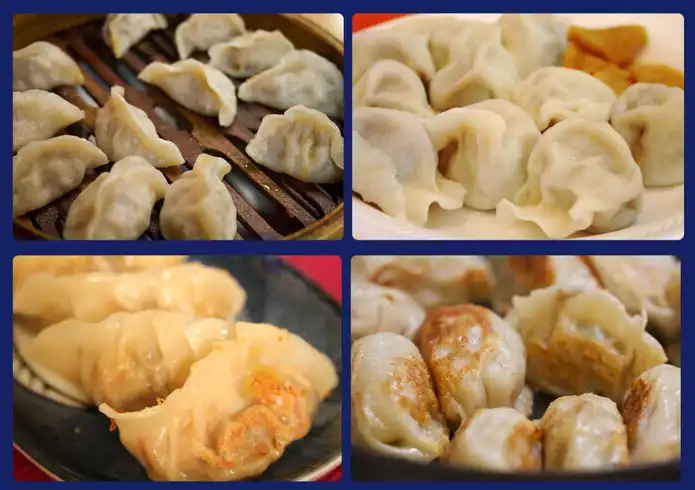
- Pan-fried (Guotie style): Six to eight pieces are served with a small dish of black vinegar and pepper oil when they are pan-fried in the Guotie way. This look works well in Chinese fast food places and food halls.
- Steamed (dim sum style): This dish is steamed in the style of dim sum and is served in bamboo steamers with soy-ginger sauce of choice.
- Boiled (soup dumpling base): To make soup dumplings, bok choy and sesame oil are added to clear water. You can use this for soup station orders or delivery to a business.
These formats cover three distinct service models, giving operators flexibility without requiring additional SKUs.
Menu Placement and Margin Considerations
It's okay to charge more for Chinese beef radish dumplings than for pork or vegetable ones because people think they're worth it. At a normal fast-casual Chinese restaurant, a beef dumpling dish can cost 15–25% more than a similar pork dish. This is because the food's supplier raises the price by the same amount or less. Because of this difference in profit, the beef radish SKU is one of the smartest business moves you can make when adding to a menu that is mostly dumplings.
Market Comparisons and Decision-Making Criteria for Procurement Managers
Beef Radish vs. Other Dumpling Varieties
If a buying manager looks at different kinds of Chinese beef radish dumplings, they should know how beef radish fits in with those other choices. Even though the food is less expensive, pork and cabbage is still the most common meal. Types that only have vegetables are good for vegetarians and cheap people. Korean-Americans who eat with other Americans like kimchi pork more now than they used to. On the other hand, beef and radish is in the top tier. Because it has real beef and fresh daikon in it, the prices can go up, and it's easy to add extras to any dumpling menu.
OEM/ODM Flexibility for Chain Operators
Customizing recipes is a big part of buying that people often forget about. People in different places often have different tastes, so chain owners have to change things like the amount of salt, the thickness of the wrapper, or the amount of spice. It's clear that Zhulaoda's production model works with both OEM and ODM setups. The agreed-upon limits for the width of the shell, the ratio of fillings, and the level of seasoning can all be changed. This ability to change helps business owners a lot when they have to deal with places in the U.S. and markets around the world where Chinese people live and work and have different tastes.
Homemade vs. Centrally Supplied: The Real Cost Comparison
You need skilled workers, money to buy tools, and a reliable way to get the ingredients if you want to make a lot of dumplings at home. Every day, 5,000 pizzas are made in a central kitchen that has to thaw the dough, keep the filling from getting too wet, and freeze the pizzas all at the same time. These things are taken care of when you buy from a skilled maker with a factory that uses computers to make things. You can get consistency that you can't get at most restaurants because the weight and flavor are set at the factory.
Future Trends and Innovation in Chinese Beef Radish Dumpling Supply
IQF Technology and Texture Integrity
Now, the usual way to make good beef and radish dumplings is with Individual Quick Freezing (IQF) tunnels that can work at -35°C or lower. Large ice crystals don't form inside the radish cells with this method. This is very important because large crystals break down cell walls and make the texture soft when heated again. For a whole year, dumplings that have been treated with IQF stay crisp and strong.
Sustainable Packaging in B2B Procurement
Buyers in the food service industry are being pushed by institutional clients to keep more and more records of how they use sustainable packaging. RFPs are beginning to ask for film materials that can be recovered and units with less plastic. Suppliers that offer eco-friendly packaging will be able to get long-term contracts with institutions as environmental standards become more important in buying decisions.
Ingredient Traceability and Supply Chain Transparency
Many restaurants in the U.S. want to be able to track the raw materials they buy. As a normal part of checking out a seller, buyers now ask for records of testing done on each batch, certificates of origin for raw materials, and cold chain temperature logs. Zhulaoda gets its fresh, chilled meat from JINLUO, a famous Chinese meat maker. It also gets its premium wheat flour from Canada and the Hetao Plain area of China. Both of these supply lines can be watched and are strong enough to pass checks for quality control.
Conclusion
Restaurants in the U.S. can make money, make their jobs easier, and add something new to their offering by making Chinese beef radish dumplings. This recipe uses two stages of steaming to make things easier in the kitchen. The pre-seasoned filling makes sure that every batch is the same, and the frozen shelf life of 12 months makes it easier to plan your stock. There is a proven taste profile, proof of food safety credentials, and the ability to be customized at the factory level for this product category. If procurement workers want to add a high-margin, authentic Chinese beef radish dumplings to their selection, this is it.
FAQ
What radish variety is used in these dumplings?
There is a lot of water in the daikon radish (Raphanus sativus) that we use in our recipe. It has a mildy sweet taste. If you prepare daikon the right way, it stays hard even after being frozen and then heated up again. This makes it the best vegetable for filling Chinese beef radish dumplings.
Can the filling recipe be customized for regional tastes?
Yes. You can change the amount of salt, the strength of the spices, the thickness of the wrapper, and the weight of each piece. We also do OEM and ODM production. This is very helpful for chain owners who offer a variety of flavors to their customers.
What certifications does Zhulaoda hold?
The plant we work in has a Food Production License (SC11137139600148) and makes goods that meet the SB/T 10412 standard. We follow HACCP rules when we make the food, and we check every batch for bacteria.
What is the minimum order quantity for trial purchases?
We have MOQ structures that are flexible enough to allow for tests to be done in central kitchens before going live for the whole company. Get in touch with us to talk about how much volume you need.
How should these dumplings be stored and how long do they last?
Don't let it get above -18°C. If you keep it frozen properly, it will stay good for a year from the date it was made.
Partner with Zhulaoda — Trusted Chinese Beef Radish Dumplings Manufacturer
Zhulaoda has been making frozen dumplings since 2001. The factory has three automatic lines that can make 100 tons of dumplings every day. The freezer holds 8,000 tons of dumplings. Our company is a real Chinese beef radish dumplings supplier, and we offer consistent batches, paperwork that proves the food is safe, and full OEM/ODM support. Right now, you can ask for a taste, look at our certifications, or start a conversation about buying in bulk. Please send us an email at sdzldsp@163.com to begin.
References
1. Food and Agriculture Organization of the United Nations. Meat Processing and Quality Standards in Global Supply Chains. FAO, 2021.
2. Goldfein, K.R., & Slavin, J.L. "Why White Bread is Commonly Consumed in Chinese Cuisine." Comprehensive Reviews in Food Science and Food Safety, 2015.
3. International Institute of Refrigeration. Quick Freezing Technologies and Frozen Food Quality. IIR, 2020.
4. Mintel Group. Frozen Asian Food Market Report: United States. Mintel, 2023.
5. Sun, D.W. (Ed.). Handbook of Frozen Food Processing and Packaging. CRC Press, 2011.
6. U.S. Food and Drug Administration. Food Safety Modernization Act: Importer Compliance Guidelines. FDA, 2022.
_1743152244166.webp)

Learn about our latest products and discounts through SMS or email