- English
- French
- German
- Portuguese
- Spanish
- Russian
- Japanese
- Korean
- Arabic
- Greek
- German
- Turkish
- Italian
- Danish
- Romanian
- Indonesian
- Czech
- Afrikaans
- Swedish
- Polish
- Basque
- Catalan
- Esperanto
- Hindi
- Lao
- Albanian
- Amharic
- Armenian
- Azerbaijani
- Belarusian
- Bengali
- Bosnian
- Bulgarian
- Cebuano
- Chichewa
- Corsican
- Croatian
- Dutch
- Estonian
- Filipino
- Finnish
- Frisian
- Galician
- Georgian
- Gujarati
- Haitian
- Hausa
- Hawaiian
- Hebrew
- Hmong
- Hungarian
- Icelandic
- Igbo
- Javanese
- Kannada
- Kazakh
- Khmer
- Kurdish
- Kyrgyz
- Latin
- Latvian
- Lithuanian
- Luxembou..
- Macedonian
- Malagasy
- Malay
- Malayalam
- Maltese
- Maori
- Marathi
- Mongolian
- Burmese
- Nepali
- Norwegian
- Pashto
- Persian
- Punjabi
- Serbian
- Sesotho
- Sinhala
- Slovak
- Slovenian
- Somali
- Samoan
- Scots Gaelic
- Shona
- Sindhi
- Sundanese
- Swahili
- Tajik
- Tamil
- Telugu
- Thai
- Ukrainian
- Urdu
- Uzbek
- Vietnamese
- Welsh
- Xhosa
- Yiddish
- Yoruba
- Zulu
Exploring the Difference Between Chinese Dumplings and Korean Mandu
Chinese dumplings and Korean mandu share a common ancestor yet diverge in meaningful ways—through dough texture, filling philosophy, and culinary tradition. While both are beloved staples across East Asia, their distinctions matter deeply to foodservice buyers, distributors, and procurement managers sourcing at scale. One of the most iconic filling combinations in Chinese dumpling culture is the pairing of juicy pork with crisp, mildly sweet radish. Pork and radish dumplings represent a classic comfort flavor that balances savory richness with refreshing lightness—a combination that consistently earns repeat orders in restaurant and institutional dining settings alike.
Understanding the Basics of Chinese Dumplings and Korean Mandu
Origins and Cultural Identity
People in China made dumplings called jiaozi more than 1,800 years ago. The first ones were made during the Eastern Han Dynasty, according to history. People in China eat them all the time, but especially around the Lunar New Year. They came from Mongolia to the Korean peninsula during the Goryeo Dynasty (918–1392 CE). It grew into its own habit, with its own style and way of being made.
For traditional Chinese dumplings, gluten-free wheat flour is used to make the "wrapper dough." So that the thick stuff can stay inside, it is rolled out very thin and hard. Most of the time, Korean mandu wraps are a bit thicker and smoother. They might also be bendy, which makes them chewier when boiled or steamed.
Filling Philosophies and Nutritional Profiles
Some Chinese cakes, like pork with napa cabbage, onions, or radish, smell very strong and tasty. People really like the radish kind because it has a lot of water in it naturally. This makes the filling soft without being too heavy. The different things that go into mandu are the glass noodles (dangmyeon), tofu, and kimchi that are traditionally used. They taste more complex and sour because of this.
Not as unhealthy as fillings made with cabbage and pork, but fillings made with pork and radish are better for you. So, they are a good choice for food groups that care about health. Radish has a lot of fiber, vitamin C, and acids that help your stomach work. For businesses, this is a small way to get people who care about their health to come in.
Key Differences in Preparation and Cooking Methods
Dough Texture and Wrapper Construction
In China, jiaozi are made with dough that is made to stay together while it boils. When there is more gluten in wheat flour, the wrapper doesn't tear when it gets hot. This is very important in kitchens where a lot of food needs to be cooked at once. The dough used to make mandu wraps is a little softer for steamed types like jjin mandu. When it's done, the dough gets soft and pillowy.
A big part of how good premade dumplings for big kitchens are is how well the wrapper holds up during long cooking times. If someone wants to buy frozen foods from a store, they should put the wrapper in hot water for at least eight minutes and see if it stays together.

Cooking Methods and Their Effects on Flavor
There are three main ways to cook mandu and dumplings in a pan: boil, steam, or fry. But each way tastes very different. This is how each way works:
- Boiling yields the most tender texture, ideal for highlighting the natural moisture in pork and radish fillings. Cook from frozen in boiling water for 6–8 minutes until the dumplings float cleanly to the surface.
- Steaming preserves the filling's aromatics and produces a softer wrapper bite. Steam for 10–12 minutes over boiling water. This method is common in institutional catering settings where batch consistency matters.
- Pan-frying creates the signature crispy-bottomed finish (called guotie in Chinese cuisine). Heat oil in a pan, arrange dumplings flat, add a small measure of water, cover, and cook until the bottoms turn golden brown. This method produces textural contrast that increases perceived product value in restaurant settings.
Boiling the pork and radish innards brings out their natural wetness, which makes them the softest. Put the dumplings in hot water and cook them until they float to the top, about 6 to 8 minutes. Freeze them.
When you cook them, the inside tastes the same, but the shell gets softer. Boil water and steam for ten to twelve minutes. This is how many schools make sure that every group is the same.Its bottom is crispy because it was fried in a pan, which is called "guotie" in Chinese. Lay the dumplings flat in a pan with hot oil. Put a lid on top, add a little water, and cook until the bottoms turn brown. This method changes the way food tastes in places, which makes it look like it costs more.
Dipping Sauce Culture
The tastes of these two ways of cooking are not the same. Buyers should make sure that cooks know how to make both Chinese and Korean food if they offer two menus. This way, the quality of the food won't change.
Regional Variations and Market Preferences
Ingredient Modifications Across Regions
There are lots of different ways to make dumplings in China. Northern Chinese styles usually have rich, meaty fillings, like pork with radish or onions. As filling, shrimp and vegetables are often used in southern cooking. In the same way, different places have different Korean mandu. Mandu in the Pyongan style are smaller and serve soup, while mandu in the Kaesong style are huge and have a lot of different foods.
In the U.S. market, you can find frozen dumplings from this range. In the U.S. in 2023, SPINS sold more than $600 million worth of frozen Asian dumplings in stores. More and more people bought Chinese-style boiled dumplings and Korean-style steamed mandu every year. There are clean labels that make it clear where the ingredients come from and approvals that show the product meets food safety standards. People in North America want to buy these things.
Frozen vs. Fresh and the Rise of Clean-Label Demand
In the U.S. food service market, easy-to-use frozen packages are becoming more popular. Most of the workers say it's because it's easier to make, comes in sets of portions, and stays fresh longer. There is a natural filling made from radish that works well in this case. Radish keeps its shape through the freeze-thaw cycle without making too much water, which would weaken the wrapper. Before you mix the radishes, make sure all the water is gone.
Procurement Insights: Sourcing Authentic Frozen Dumplings for Commercial Use
Evaluating Suppliers for Scalability and Quality
What makes a business frozen dumpling seller stand out? Three things: being honest about the ingredients, being able to make a lot of them, and having a good cold chain. People who import and sell goods in the U.S. can get the paperwork they need to follow the rules from HACCP and ISO9001-approved sources.
Shandong Zhu Laoda Food Co., Ltd. has been in business since March 2001. Every day, they can make up to 100 tons of food on three fully automated lines. They have smart cold storage that can hold more than 8,000 tons of frozen food. The line that makes pork and radish cakes uses fresh front leg pork from the well-known Chinese meat brand Jinluo and wheat flour from Canada. This makes sure that the filling and wrapper are good enough to meet export standards.

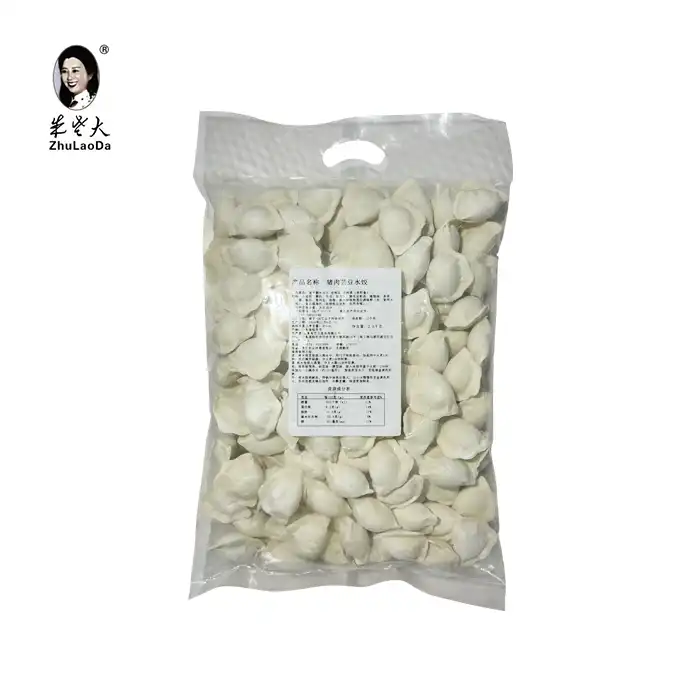
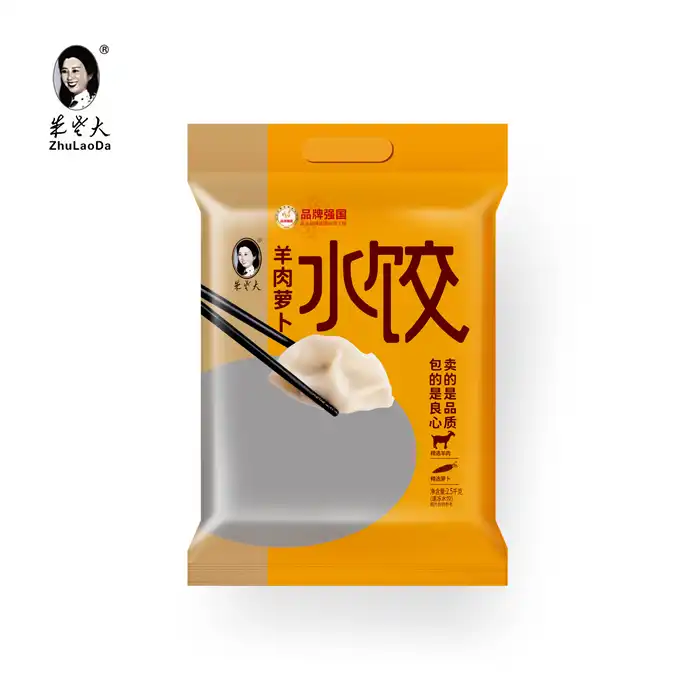
You can use the 2.5 kg business package format in school kitchens, cafeterias, and restaurants. It has the Product Standard Code SB/T 10412 and the Food Production License SC11137139600148 clearly marked on it. This format is designed to be used in groups behind the scenes. At or below –18°C, it stays fresh for a year, so it can be sent long distances without going bad.
The 2.5 kg commercial packaging format for pork and radish dumplings, clearly labeled with Product Standard Code SB/T 10412 and Food Production License SC11137139600148, is purpose-built for back-of-house batch use in restaurants, cafeterias, and institutional kitchens. Shelf life extends to 12 months at –18°C or below, supporting long-haul logistics without quality degradation.
Practical Tips for Businesses: Enhancing Customer Satisfaction and Product Appeal
Operational and Menu Differentiation Strategies
Most of the time, the only ways for restaurant owners and food service providers to make their products stand out are to be consistent and have a good story. It's easy to use pork and radish in a story because it's lighter than pork and cabbage, a little sweet, and generally thought to be a better choice. You can use this story to make menus and talk to staff.
People come back to the table more often when the dumplings taste different each season. Adding radish-based foods to your meal along with cabbage or corn dishes is an easy way to make it more interesting. A lot of frozen foods that don't need any extra work make this even more true.
Lots of companies that deal with low profits and a lot of work trust frozen commercial dumplings to help them run their companies better. It will work well in a business kitchen as long as the source keeps the seasoning amounts stable, manages the water in the radish filling, and makes sure that all the wrappers are the same thickness.
Conclusion
There are more and more Chinese jiaozi and Korean mandu in the U.S. food service market, even though they come from different places and have different contents and sauces. When procurement professionals know about these differences, they can make better decisions about where to get things and when to sell them. Radish fillings sell well because they taste great whether they are steamed, boiled, or fried in a pan. Pork and radish dumplings are the ones with pork and radish inside and are especially tasty. The most important things are still the source's quality, the output's size, and the cold chain's safety.
FAQ
Does freezing affect the texture of pork and radish dumplings?
It will keep its shape if you freeze it the right way. The most important thing is how well the radishes handle water before they freeze. Osmotic dehydration stops ice crystals from growing and breaking the filling when it's frozen. First, they salt and press the radish to make this happen. Do not thaw the dumplings before cooking them. The filling will still be juicy and the shell will still be whole. They are still just as good as ever.
How do dipping sauces differ between Chinese dumplings and Korean mandu?
Dumplings from China are often made with soy sauce, black vinegar, and chili oil. Thai mandu is often served with soup or a lighter soy-vinegar mix. These soups taste different since the layers are different. This type is more complicated and can taste sour, while the Chinese type is stronger and has more spice.
Are there gluten-free options available for commercial buyers?
You can buy wrappers that are gluten-free. They are made from rice flour or starch. People who can't handle gluten should know that regular wheat-based wraps, like the ones Zhulaoda uses, contain wheat and soybeans and aren't good for them. Before you buy something, you should always read the safety information and brand standard numbers.
Partner with Zhulaoda for Reliable Frozen Dumpling Supply
They stand behind every batch because they've been making pork and radish dumplings for 20 years and know how to do it. Every day, they can make 100 tons. People from all over the world can buy from this company because it is certified by ISO9001, HACCP, and QS. Please get in touch with us right away to get samples or to talk about business prices. To begin, go to zhulaodadumpling.com or send an email to sdzldsp@163.com.
References
1. Journal of Ethnic Foods — Kim, J. & Park, S. (2016). Historical and cultural background of Korean traditional foods.
2. Food Chemistry — Zhang, H. et al. (2019). Moisture migration mechanisms in frozen stuffed dough products during storage.
3. SPINS Retail Market Report — (2023). Frozen Asian food category performance in U.S. retail channels.
4. Comprehensive Reviews in Food Science and Food Safety — Guo, X. et al. (2020). Quality attributes of frozen dumplings: Wrapper, filling, and processing interactions.
5. Journal of Food Engineering — Liu, Y. et al. (2018). Effects of quick-freezing rate on ice crystal size and texture of wheat-based dough products.
6. Food Control — Chen, L. et al. (2021). HACCP implementation in frozen food manufacturing: Case studies from Chinese processing facilities.

Learn about our latest products and discounts through SMS or email