- English
- French
- German
- Portuguese
- Spanish
- Russian
- Japanese
- Korean
- Arabic
- Greek
- German
- Turkish
- Italian
- Danish
- Romanian
- Indonesian
- Czech
- Afrikaans
- Swedish
- Polish
- Basque
- Catalan
- Esperanto
- Hindi
- Lao
- Albanian
- Amharic
- Armenian
- Azerbaijani
- Belarusian
- Bengali
- Bosnian
- Bulgarian
- Cebuano
- Chichewa
- Corsican
- Croatian
- Dutch
- Estonian
- Filipino
- Finnish
- Frisian
- Galician
- Georgian
- Gujarati
- Haitian
- Hausa
- Hawaiian
- Hebrew
- Hmong
- Hungarian
- Icelandic
- Igbo
- Javanese
- Kannada
- Kazakh
- Khmer
- Kurdish
- Kyrgyz
- Latin
- Latvian
- Lithuanian
- Luxembou..
- Macedonian
- Malagasy
- Malay
- Malayalam
- Maltese
- Maori
- Marathi
- Mongolian
- Burmese
- Nepali
- Norwegian
- Pashto
- Persian
- Punjabi
- Serbian
- Sesotho
- Sinhala
- Slovak
- Slovenian
- Somali
- Samoan
- Scots Gaelic
- Shona
- Sindhi
- Sundanese
- Swahili
- Tajik
- Tamil
- Telugu
- Thai
- Ukrainian
- Urdu
- Uzbek
- Vietnamese
- Welsh
- Xhosa
- Yiddish
- Yoruba
- Zulu
How to Cook Eggs and Chives Dumplings Without Breaking the Wrappers
To cook eggs and chives dumplings without breaking the wrappers, keep the filling dry, seal the edges tightly, and use gentle heat. Cool the scrambled eggs and dry the chives before mixing. Do not overfill. Cook frozen dumplings straight from the freezer, because thawing softens the skin. Add them to boiling water, lower the heat to a steady simmer, and nudge them only once. Steaming and pan-frying also work when you leave space between pieces. The same rules apply at home and in a commercial kitchen. Below, I walk through each step, from filling to troubleshooting, and share what buyers should check before ordering.
Step 1: Prepare an Egg and Chive Dumpling Filling That Does Not Become Watery
Cook and Cool the Eggs Before Mixing
Warm the pan up with some oil over medium-low heat. Add the eggs and cook them until they start to set. Take them out of the pan before they burn. Place the curds on a plate and let them cool down completely. The eggs and chives dumplings lose their shape and water because the hot egg soaks into the wrapper from the inside. When you cook at home, using fresh eggs makes food soft and tasty. Parts of eggs that have been dashed can help a factory make sure that every batch is the same. But they're better for making things than cooking at home. The egg pieces should be small, dry, and cool, no matter what shape you make them in. When you fill them, they should stay together too.
Control Moisture in the Chives
Harold McGee writes about this method in his book On Food and Cooking. Chives have a lot of water in them, but osmosis takes it away. Separate the chives into pieces just before you wrap them. Wash them ahead of time and dry them with a paper towel or a spin dryer. A lot of cooks think it's important to put oil on the chopped leaves first. The water doesn't evaporate because the leaves' surface stays smooth. And finally, add the salt right before you cover the food. It's too wet if there are pools of water at the bottom of the bowl after ten minutes. This will make the dough soft on the inside.
Balance the Filling with Seasonings and Binders
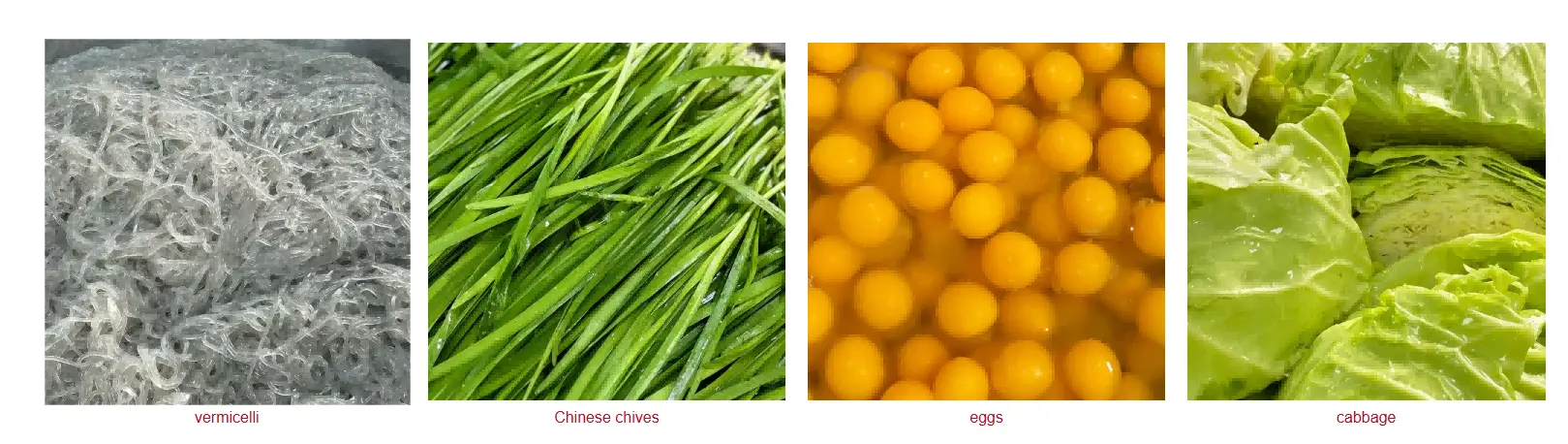
If you know how to use them right, cabbage and vermicelli can help with this. To get rid of extra juice, squeeze chopped cabbage in a clean towel. If you want the dish to be soft, you should also cut the cooked vermicelli into very small pieces. We have Chinese chives, eggs, cabbage, vermicelli, vegetable oil, and a spice mix with yeast extract on our list of things to cook. Soy sauce and other spices that add water should only be used in small amounts. Take a cooked spoonful of the filling and taste it before you wrap it all up. This quick test saves time and keeps the mixture from being too salty and smooth.
Step 2: Select the Dough, Thickness, and Seal for Egg and Chive Dumplings
Choose Flour and Rest the Dough
If you want to make the best eggs and chives dumplings at home, use a smooth dough made from all-purpose flour, which is mid-protein wheat flour. You can bite into it, and it's stretchy enough to keep the filling in place. Slowly add water to the dough and work it until it feels smooth. Put the lid on and let it sit for at least 30 minutes. When the dough sits, the gluten loosens up, so it doesn't spring back. In her book Asian Dumplings, Andrea Nguyen talks a lot about this subject. Lots of times, people forget to do the last part, which makes the wraps too tight and causes them to tear when they try to stretch around the filling.
Use the Correct Wrapper Thickness
Make each roll about 2 mm thick in the middle. You can make the sides by leaving a little extra space on the sides. It's best to have a thin edge to seal and a stronger middle to keep the filling in place. Too thin of a wrapper will tear when water hits it. When they cook, the wrappers burn and taste heavy if they are too thick. You can work with the edges better if you have a small rolling pin. When you're done rolling, wipe off any extra flour. When there is dry flour on the edge, the seal is not as strong. Do not let the wrappers dry out and break. Instead, put them under a damp cloth. Also, buyers should make sure that all of the wrappers are the same thickness. This is because wrappers of different shapes cook at different rates in a machine or steamer.
Fill, Seal, and Store the Dumplings
In a 3-inch shell, put about one level tablespoon of filling. Don't cut the edge. The skin gets stretched when you make it too full, which is the main cause of splits. After getting rid of all the air, close the bag. When you cook, air that gets stuck can get bigger, which can break a seam. Pleats in the shape of a half-moon close better than a simple fold. If the rim has oil on it, wipe it off. If the wrapping feels dry, wet it with water. Place the dumplings on a baking sheet lined with foil so they don't touch. Put them in bags after you freeze them. They say that food kept at 0°F (-18°C) is safe, but it gets worse over time.
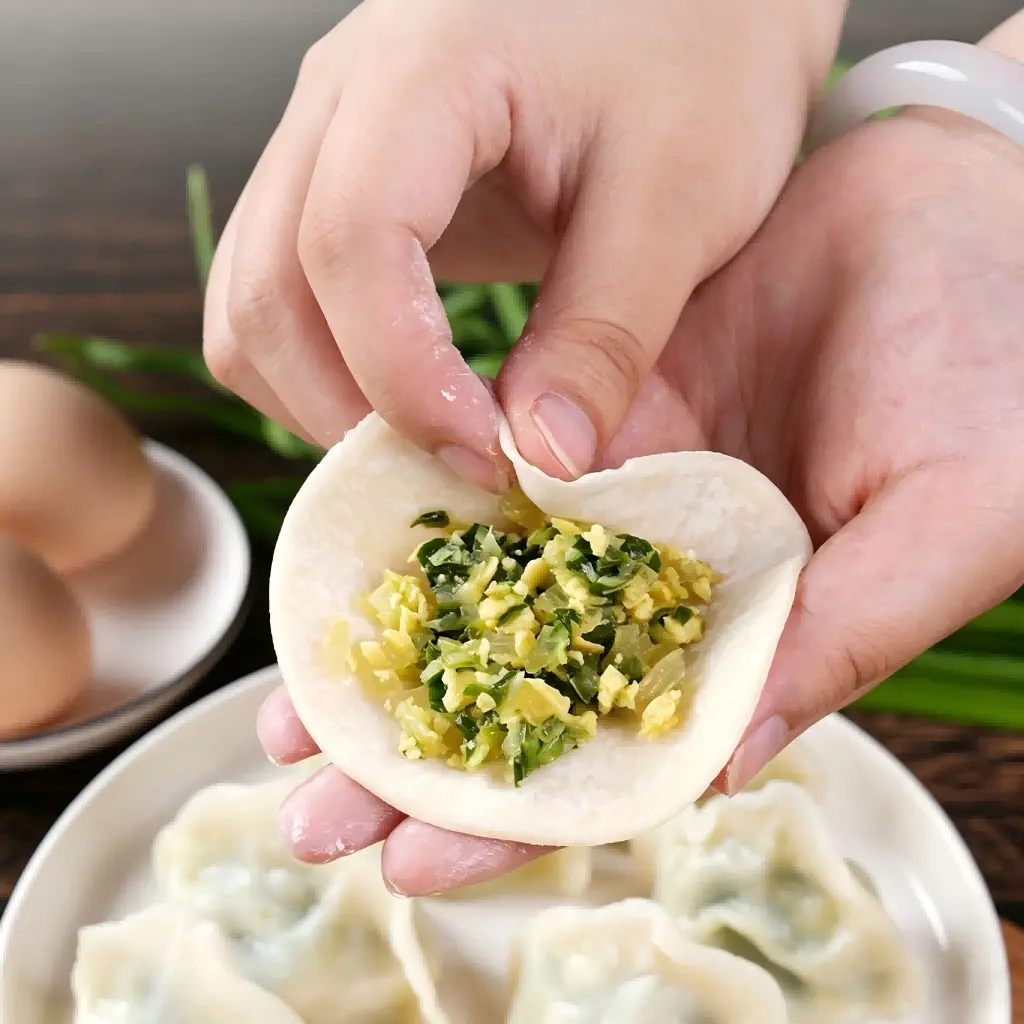
Step 3: How to Cook Eggs and Chives Dumplings Without Breaking Them?
Boil with Steady Heat
You should boil it, but be careful not to let the heat get too high. Putting the egg and chive filling dumplings in that way won't cool the water down. Put water in a big pot. Slowly add the dumplings once the water starts to boil. To get them out, run a spoon along the bottom of the pot once. Then, turn down the heat so it stays at a slow simmer. The dumplings are thrown against each other and cut in half by a strong boil. There should be enough room in the pot for everyone, so cook them one at a time. Don't dump them into a sieve; instead, use a curved spoon to get them out.
Cook Frozen Dumplings Straight from the Freezer
When a frozen dumpling is thawed, it gets soft and sticky. In other words, dumplings tend to stay together better when they are cooked from frozen. First, bring water to a boil in a pot. Then, add the dumplings slowly and wait for the water to boil again. If there are chunks of ice in the water, wait until it melts before you start the timer. Lower the heat and let them cook for six to eight minutes, or until they start to float. Being able to float is a good sign, not proof. Check to see if the inside is hot and the outside is soft by cutting it in half. They should check that the times work with their own stoves, pots, and food amounts.
Steam or Pan-Fry for Different Textures
The dumplings don't move around as much while they're steaming, so they are less likely to tear. Around the edges of the steamer, put cabbage leaves or parchment paper. Leave about an inch of space between each piece. Put some oil in a pan and then add the dumplings. Put the flat side down after the bottom is brown and set. After that, add a few tablespoons of water, cover, and cook until there is no more water. Just leave it open for a short time to get the bottom crisp again. In a pan, you can steam, boil, or fry our dumplings. Some ways to cook it are to boil it, steam it, or fry it in a pan. Each method will make it soft in different ways. Check one piece at a time after each step.
Step 4: Troubleshoot Common Eggs and Chives Dumpling Cooking Problems
Why Wrappers Split in Boiling Water
If you boil the eggs and chives dumplings too quickly, fill them too much, use wet filling, or use wrappers that are too thin and weak, they are most likely to split. The steam and air inside the dumpling move out as it gets hotter. That is, the seams that aren't strong will give way first. Before you cook, check the seal and press the air out. After you add the dumplings, turn down the heat. To see what's inside a split raw dumpling, cut it open and look inside. If the middle is too full or there is liquid that doesn't stick together, that means the filling isn't right. If the rim is broken, the seal doesn't work right.
Why Dumplings Stick and Why the Filling Turns Watery
It can stick if there are too many people in a steamer that isn't closed, if the pan is too cold, or if the food is moved too quickly. Put the pieces in the steamer and heat the pan with oil. There is too much liquid flavor in the filling when the chives are wet, the eggs are hot, or the onions are wet. First, make sure the chives are dry. After that, let the eggs cool down. Last, add the salt. When the filling leaks juice, the skin tears because it's not strong enough, and the package gets gooey on the inside. Don't make dumplings at all if you don't want to carefully stir them on the stove.
Why Frozen Dumplings Crack and How to Keep Batches Consistent
When the weather changes, skin dries out and loses water, which can cause cracks. Keep frozen dumplings in their bags at or below 0°F (-18°C). Don't let them thaw and then freeze again. Industrial restaurants need to measure everything to make sure they are always the same. Record how often the dumplings break, weigh them before and after cooking to see how much time was lost, and use your own tools to test each new batch. As part of that process, use a thermometer to check the middle temperature. You can get help from the tech support staff at the company that made your product if you give them these numbers.
Step 5: Homemade vs. Frozen Eggs and Chives Dumplings for Buyers
Homemade or Ready-to-Cook Frozen: Which Fits Your Kitchen
If you make your own egg and chive filling dumplings, you can choose the spices, the covering thickness, and the amount of food that you want to serve. But they need time, space, and practice. Ready-to-cook frozen dumplings come in standard sizes, are easier to plan your stock around, and are easier to make. Being able to make changes isn't always more important for a store, restaurant, or canteen than being able to know what will happen. Egg-vegetarian dumplings are a good choice if you don't want to eat meat but still like eggs. If your needs don't change, buy a lot of frozen food. That can also help you make plans for your time and money.
What Our Frozen Egg and Chive Dumplings Contain
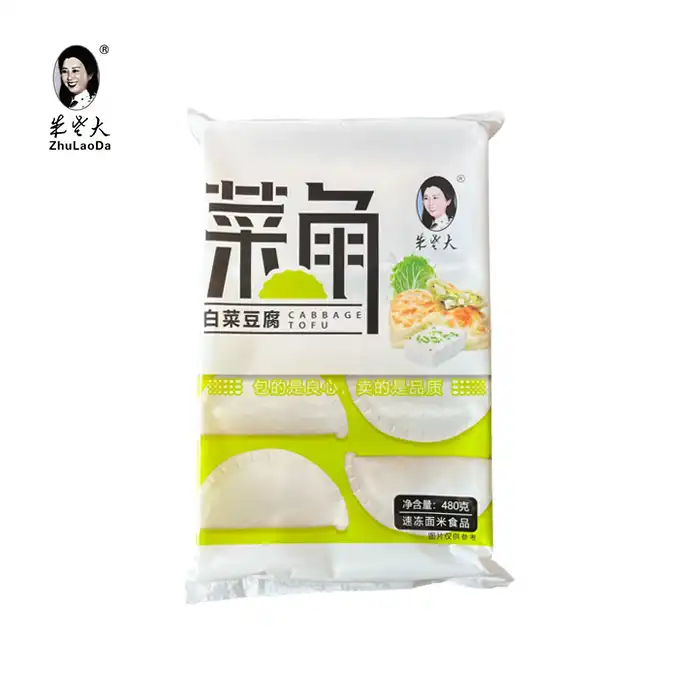
You can get kelp cakes and eggs and chives dumplings in 450g, 1kg, or 2.5kg packs, but you can ask for other sizes if you need to. It's made with things like eggs, Chinese chives, cabbage, vermicelli, veggie oil, salt that you can eat, spice powders, yeast extract, and food additives. There's nothing on the list. It should be called egg-vegetarian instead of vegan since it has eggs in it. Wheat, soy, and eggs all contain allergens. All three are on the FDA's list of major food allergens in the US under FALCPA. Don't let it get above -18°C. It's okay to keep for a year. The item number is SB/T 10412, and the food license number is SC11137139600148.
How to Evaluate a Manufacturer and OEM Support
Price by itself doesn't tell you much about a source. You should find out how to keep food safe, how much can be made, how to store it cold, and how much allergens are allowed. It has ISO 9001, HACCP, and QS tags on it. It's called Zhulaoda. The Codex's general hygiene rules are used by HACCP when it comes to risk analysis. Our plant has three automatic lines that can make up to 100 tons of dumplings every day. Our cold store can hold more than 8,000 tons of frozen dumplings.
We look for bacteria, pesticide residue, and other chemical and physical signs in veggies that come straight from the farm and wheat flour that comes from Canada and the Hetao Plain in China. Through OEM and ODM work, we can also make recipes and packaging just for you. You should make sure you know everything you need to know before you place your order. You should use your own tools to test the samples and look at the total landed cost, which includes freight, storage, and cooking loss.
Conclusion
The wrappers are more likely to get damaged than the eggs and chives dumplings themselves in very hot or wet weather, water, and seals that don't work well. To keep the middle steady, use eggs that have been cooled, chives that are dry, and not too much sweet taste. It is strong because the dough has a medium level of protein and has been left to rest. It also has a thin, even layer, a small amount of filling, and a dry, thick edge. Do not let the frozen dumplings thaw before you boil, steam, or pan-fry them.
Make sure they are well spaced out and cook slowly. This will keep the face safe. You can find the source of problems, such as cracks, broken pieces, sticking, or filling that is too wet, line by line. Keep track of how often things break and food goes to waste in business kitchens to turn these habits into data. For buyers, there should be clear signs for allergens and eggs, food safety systems with lots of proof, and tests of the seller.
FAQ
Should I Thaw Frozen Eggs and Chives Dumplings Before Cooking?
Not at all. As it thaws, the wrapper gets softer and more likely to break. To cook them from frozen, just follow the directions on the box. Make sure the middle is still hot after the time is up by cutting it in half.
How Do I Keep Egg and Chive Dumpling Filling from Getting Watery?
Okay, let the eggs cool down first. After that, squeeze the cabbage. Last, add the salt. Don't use too many spices that make things watery. If there is still water in the bowl after ten minutes, add less of the wet ingredients.
Are Boiled, Steamed, or Pan-Fried Dumplings Less Likely to Break?
There aren't as many tears when the dumplings are cooked because they don't move around as much. Not if you use low heat and leave enough space between the pieces. You can also boil or fry them.
Can I Buy Frozen Vegetarian Egg and Chive Dumplings in Bulk?
Yes. Because they have eggs in them, these dumplings are egg-vegetarian, not vegan. Send an email to sdzldsp@163.com telling them how much you want to buy and how you'd like it to be packed.
Request Samples of Zhulaoda Eggs and Chives Dumplings for Wholesale Supply
Zhulaoda is an eggs and chives dumplings manufacturer with three automatic production lines, ISO 9001 and HACCP certification, and OEM and ODM services. Our packs come in 450g, 1kg, and 2.5kg, with customization available. Send your target market, expected volume, cooking method, and packaging needs to sdzldsp@163.com to request samples and discuss wholesale supply.
References
1. Harold McGee, On Food and Cooking: The Science and Lore of the Kitchen, 2004
2. Andrea Nguyen, Asian Dumplings: Mastering Gyoza, Spring Rolls, Samosas, and More, 2009
3. J. Kenji López-Alt, The Food Lab: Better Home Cooking Through Science, 2015
4. USDA Food Safety and Inspection Service, Freezing and Food Safety, 2013
5. U.S. Food and Drug Administration, Food Allergen Labeling and Consumer Protection Act of 2004
6. Codex Alimentarius Commission, General Principles of Food Hygiene (CXC 1-1969), 2020
Learn about our latest products and discounts through SMS or email