- English
- French
- German
- Portuguese
- Spanish
- Russian
- Japanese
- Korean
- Arabic
- Greek
- German
- Turkish
- Italian
- Danish
- Romanian
- Indonesian
- Czech
- Afrikaans
- Swedish
- Polish
- Basque
- Catalan
- Esperanto
- Hindi
- Lao
- Albanian
- Amharic
- Armenian
- Azerbaijani
- Belarusian
- Bengali
- Bosnian
- Bulgarian
- Cebuano
- Chichewa
- Corsican
- Croatian
- Dutch
- Estonian
- Filipino
- Finnish
- Frisian
- Galician
- Georgian
- Gujarati
- Haitian
- Hausa
- Hawaiian
- Hebrew
- Hmong
- Hungarian
- Icelandic
- Igbo
- Javanese
- Kannada
- Kazakh
- Khmer
- Kurdish
- Kyrgyz
- Latin
- Latvian
- Lithuanian
- Luxembou..
- Macedonian
- Malagasy
- Malay
- Malayalam
- Maltese
- Maori
- Marathi
- Mongolian
- Burmese
- Nepali
- Norwegian
- Pashto
- Persian
- Punjabi
- Serbian
- Sesotho
- Sinhala
- Slovak
- Slovenian
- Somali
- Samoan
- Scots Gaelic
- Shona
- Sindhi
- Sundanese
- Swahili
- Tajik
- Tamil
- Telugu
- Thai
- Ukrainian
- Urdu
- Uzbek
- Vietnamese
- Welsh
- Xhosa
- Yiddish
- Yoruba
- Zulu
Are Beef and Celery Dumplings a Healthy and Convenient Meal Choice?
Indeed, beef and celery dumplings excel in both areas. This dumpling supper is balanced with lean protein and beef hind leg meat and fibre from crisp celery for contemporary health-conscious dining. A good beef and celery dumpling has macronutrients, vitamins, and true flavour in one wrapper, unlike many frozen convenience dishes. This filling has a fascinating tale and significant nutritional value, whether you operate a foodservice or retail frozen aisle.
Understanding Beef and Celery Dumplings: Nutrition and Health Benefits
What Makes the Filling Nutritionally Significant?
The main filling, which is lean beef hind leg meat mixed with celery, has a different set of macronutrients than most pork-based alternatives. The back leg of a beef animal naturally has less fat inside its muscles, but it is still high in complete protein, iron, and zinc.
Celery has fiber, vitamin K, potassium, and natural phthalides, which are chemicals that may help reduce inflammation. Together, they make a filling that is high in protein and mild in carbs. This is good for people who are trying to stick to a low-calorie diet without giving up feeling full.
Zhulaoda's recipe calls for wheat flour wrappers, vegetable oil, scallions, ginger, soy sauce, and edible salt. These are all common, useful, and mostly whole-food-based ingredients. Adding increased soy-based products gives the food another source of protein, and distarch phosphate in the wrapper helps the texture stay the same during freezing and cooking.
USDA FoodData Central says that 100 grams of lean beef has about 26 grams of protein and less than 5 grams of total fat. Celery has about 16 calories per 100 grams, which means it has a small amount of calories but a lot of fiber. This makes it a good food for making healthy, portion-controlled meals.
Allergen Awareness and Dietary Suitability
For B2B buyers who deal with a wide range of customers, allergy openness is a must. It must be made clear on both retail and restaurant packaging that Zhulaoda's beef and celery dumplings contain wheat and soybean ingredients. The product standard code SB/T 10412 sets standards for production quality, and the food production license number SC11137139600148 shows that the rules set by Chinese national food safety law are being followed.
Celery is also a controlled allergen in the EU, as stated in Regulation (EU) No 1169/2011. This means that accurate marking is very important for European marketing channels.
Comparing Beef and Celery Dumplings with Other Dumpling Varieties
How Does the Beef-Celery Combination Differ from Pork or Vegetable Variants?
The fattier cuts of pork used in pork and cabbage dumplings, which are the most popular type around the world, make them higher in saturated fat. Even though vegetable-only dumplings are low in calories, they don't always have enough protein to be a full meal. The combination of beef and celery is a great middle ground. It gives people who want protein the meatiness and flavor depth they want while also giving people who like vegetables the freshness and nutrition they like.
When it comes to flavor chemistry, celery's volatile phthalide compounds naturally block the metallic or gamey undertones that can come from oxidized myoglobin in beef. This is a useful property for frozen foods that need to keep their taste and smell the same for 12 months.
The way you cook also has a big impact on how you feel when you eat. Boiling makes the shell the nicest and keeps the filling's moisture. When you steam something, the texture is a little harder and the taste stays better. By pan-frying, you get a golden, crispy base that looks like potstickers. It adds visual appeal and a change in texture. Each method works well for a variety of service types, from quick-service food containers to restaurant plates for sitting down.
Convenience and Procurement of Beef and Celery Dumplings for B2B Clients
Why Frozen Format Wins for Large-Scale Operations
The U.S. market for frozen dumplings has grown steadily over the years. Statista says that the U.S. frozen food market was worth more than $72 billion in 2023. One of the fastest-growing subcategories was Asian-inspired frozen meals, including offerings such as beef and celery. Buyers who need to find suppliers for freezer areas in stores, Asian restaurant groups, or institutional catering need to find suppliers that can meet their needs for volume, paperwork, and transportation all at the same time.
These needs are met by Zhulaoda's real facilities. The business has three automatic production lines that can make up to 100 tons of goods every day. Its cold storage building can hold more than 8,000 tons of frozen goods. It has an intelligent shuttle rack system that makes it easy to move products around, which is important for keeping the cold chain going during ocean freight and preventing freezer burn.
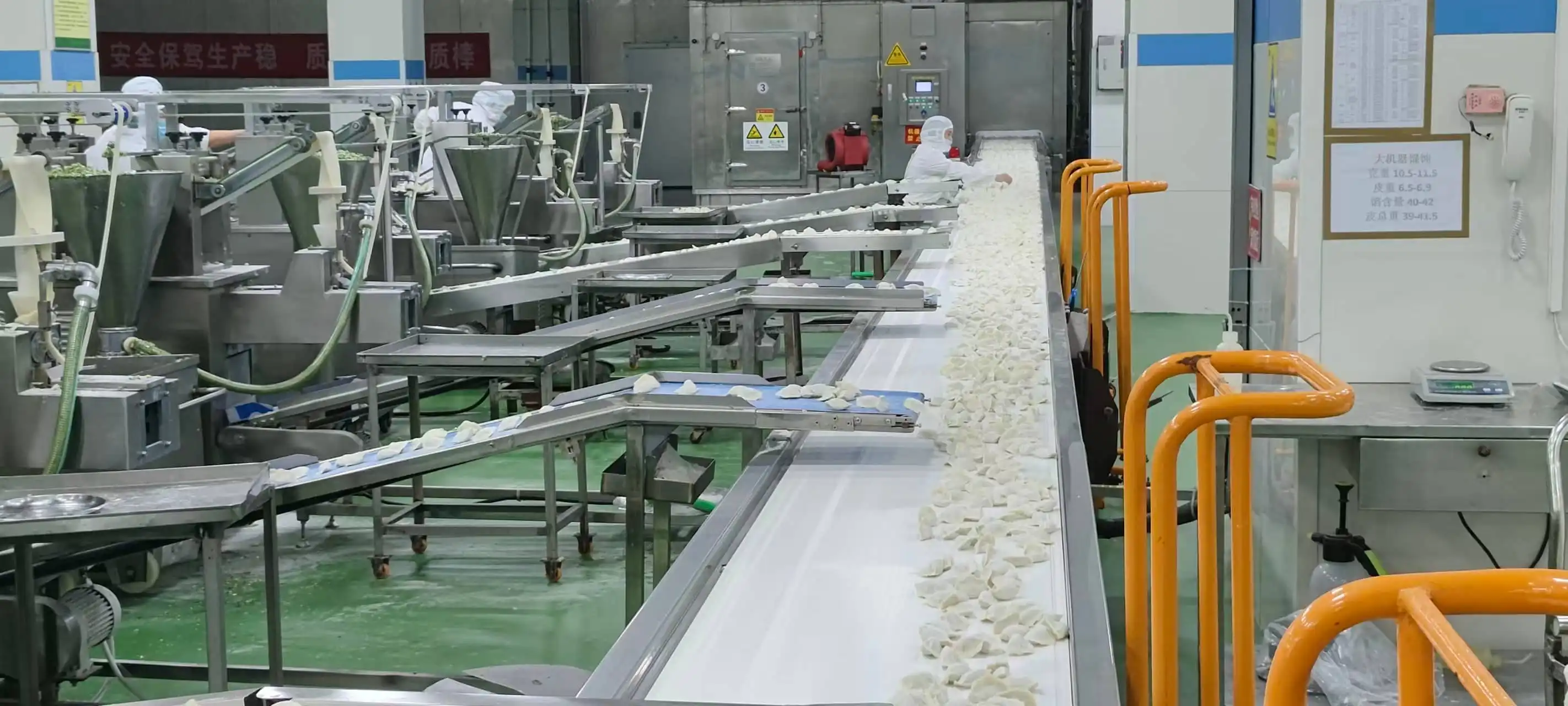
Being able to change how you package things is a real practical benefit. The product comes in 450g, 1kg, and 2.5kg sizes, and can be customized through OEM and ODM. It can be used on store shelves, in restaurants, or for private-label programs. Labels with English-language allergen and diet information can be changed to meet U.S. FDA labeling requirements. This makes it easier for American sellers to comply with import rules.
It is easy to trust Zhulaoda as a supplier because of its skills in purchasing:
- Verified cold chain capacity: 8,000-ton cold storage with intelligent racking supports 12-month shelf life under consistent -18°C storage, reducing spoilage risk across long-haul ocean shipping routes.
- Customizable packaging formats: 450g, 1kg, and 2.5kg options accommodate retail, foodservice, and bulk distribution channels, with OEM labeling available in English for U.S. market entry.
- Certified food safety compliance: ISO9001, HACCP, and National QS certifications provide the documentation stack that import brokers and retail buyers require for customs clearance and shelf approval.
Together, these strengths make it easier to get the materials needed for new products that are being sold in foreign markets. This speeds up the process from getting the samples approved to sending out the first business order.
Why Choose Zhulaoda for Authentic and Healthy Beef and Celery Dumplings
Zhulaoda was founded in March 2001 and is based in Shandong province. It is known as the biggest and most highly advanced base for preparing frozen food in southern Shandong and northern Jiangsu. Its production philosophy is based on using traceable raw materials, like fresh veggies that come straight from fields, chilled fresh beef that comes only from JINLUO, which is one of China's biggest meat producers, and premium wheat flour that comes from both Canada and China's Hetao Plain region.
Every batch of raw materials that comes in has to go through strict quality control steps, such as looking at how it looks, testing for pesticide residue, studying microbes, and making sure that physical and chemical indicators are correct. Modern systems for moving fresh air and killing germs with UV light keep the production area clean and in line with international standards for manufacturing.
It has an ISO9001 International Quality Certification, a HACCP Food Safety Certification, a National QS Certification, and a Food Quality and Safety Certification. This is a set of paperwork that can be used for import statements in the US, Canada, the UK, and Australia. Zhulaoda's infrastructure and certification collection are a low-risk, high-value way for wholesalers to buy from a verified beef and celery dumplings maker with auditable compliance records.
Preparing and Serving Beef and Celery Dumplings: Tips for Optimal Experience
Cooking Methods That Preserve Quality
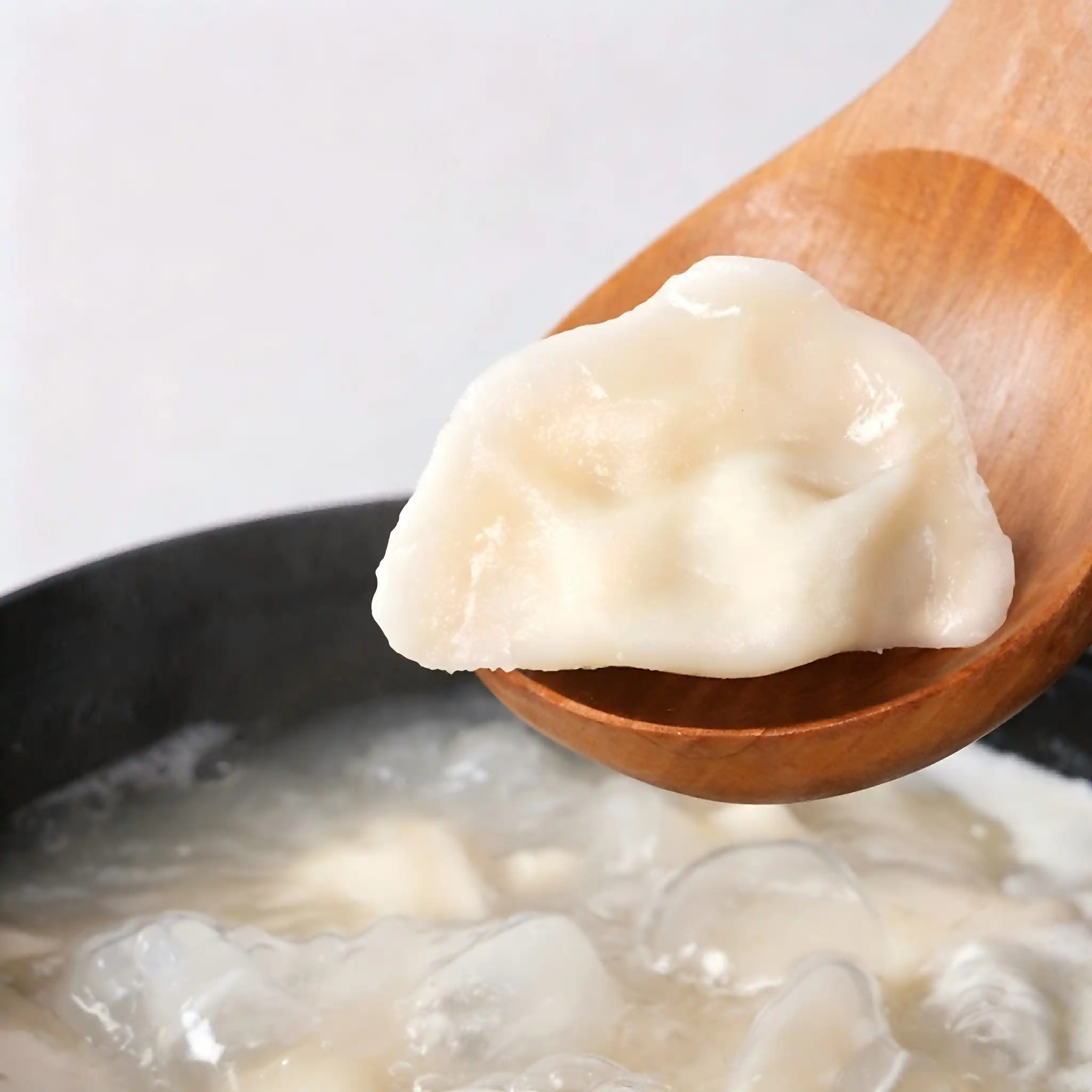
To get the most out of frozen dumplings, you must first choose the right way to cook them for your service. For high-volume catering settings, boiling is the most forgiving method. Just add the dumplings to water that is rolling around, stir them gently, and cook for 6–8 minutes, until they float and stay afloat for 30 seconds.
When food is steamed over hot water for 10 to 12 minutes, the flavors become better, which is good for menus that focus on health. The crispy bottom texture works well in quick-service restaurants and delivery services. It is made by pan-frying in a lightly oiled pan with a little water added and covering it until the bottom turns golden brown.
Keep the product at -18°C or lower all the time. Temperature changes above -10°C speed up lipid oxidation in the beef and mess up the cellular structure of the celery, so don't partially thaw and refreeze. For consistency in service, cook from frozen without defrosting first.
Conclusion
Beef and celery dumplings provide a truly appealing mix of nutritional value, cooking flexibility, and ease of preparation. The lean beef gives you all the protein and minerals you need, the celery gives you fiber and bioactive chemicals, and the wheat wrapper gives you the energy you know from carbs.
This type of product is easy to add to any health-focused frozen food collection if it comes from a producer with clear food safety standards, ingredients that can be tracked, and scalable cold chain infrastructure. Zhulaoda has been making products for more than 20 years and has approved manufacturing standards. This makes it a reliable supplier for U.S. wholesalers who want to start selling Asian-inspired frozen meals that are marketed as healthy.
FAQ
Are beef and celery dumplings considered a low-fat food?
Celery is over 95% water by weight, so when mixed with the filling, it keeps the total fat level lower than in standard pig versions. The exact nutritional values depend on how much filling is used and how thick the wrapper is.
Do these dumplings contain common allergens?
Yes, the wrapper for Zhulaoda's beef and vegetable dumplings is made of wheat, and the expanded soy-based goods and flavor powder are made from soybeans. Under FALCPA rules, both allergens must be listed on U.S. food labels for both retail and food service.
What is the shelf life of frozen dumplings from Zhulaoda?
When kept frozen at -18°C or below all the time, the product stays fresh for 12 months. Changes in temperature shorten this window by speeding up the breakdown of lipids and the formation of new ice crystals.
Can the packaging be customized for private-label retail programs?
Zhulaoda does support OEM and ODM packaging in 450g, 1kg, and 2.5kg sizes. They can include English-language allergen declarations and nutritional labels that are specific to the needs of the destination market.
Is the beef traceable to a specific supplier?
Zhulaoda only gets chilled fresh beef from JINLUO, a well-known Chinese meat producer. This creates a clear supply line for questions about where ingredients come from.
Partner with Zhulaoda — Your Trusted Beef and Celery Dumplings Supplier
Zhulaoda has been making frozen foods for more than 20 years and has approved food safety infrastructure, a daily output that can be increased up to 100 tons, and flexible OEM packaging to help U.S. wholesalers build an Asian frozen food line that is focused on health. Our beef and celery dumplings come with full compliance paperwork, ingredients that can be tracked, and a shelf life of 12 months. To get samples and prices, go to zhulaodadumpling.com or email our team at sdzldsp@163.com.
References
1. USDA FoodDataCentral. (2023). Lean Beef with Celery Nutrition. US Department of Agriculture.
Second Statista Research Department (2023). US Frozen Food Market Value and Forecast. Statista.
3. European Parliament (2011). Regulation (EU) Order 1169/2011 on Food Information to Consumers. EU Official Journal.
4. FDA (2023). FDA Food Allergen Labelling and Consumer Protection Law Guidance.
5. Fellows, P.J. (2022). Fundamentals and Practice of Food Processing Technology: 5th Edition. Publisher Woodhead.
6. Hui, Y. H., & Evranuz, & E. Ö. (Eds.). (2012). Handbook of Green Fermented Drinks and Food Science (2nd ed.). CRC Press.

Learn about our latest products and discounts through SMS or email