- English
- French
- German
- Portuguese
- Spanish
- Russian
- Japanese
- Korean
- Arabic
- Greek
- German
- Turkish
- Italian
- Danish
- Romanian
- Indonesian
- Czech
- Afrikaans
- Swedish
- Polish
- Basque
- Catalan
- Esperanto
- Hindi
- Lao
- Albanian
- Amharic
- Armenian
- Azerbaijani
- Belarusian
- Bengali
- Bosnian
- Bulgarian
- Cebuano
- Chichewa
- Corsican
- Croatian
- Dutch
- Estonian
- Filipino
- Finnish
- Frisian
- Galician
- Georgian
- Gujarati
- Haitian
- Hausa
- Hawaiian
- Hebrew
- Hmong
- Hungarian
- Icelandic
- Igbo
- Javanese
- Kannada
- Kazakh
- Khmer
- Kurdish
- Kyrgyz
- Latin
- Latvian
- Lithuanian
- Luxembou..
- Macedonian
- Malagasy
- Malay
- Malayalam
- Maltese
- Maori
- Marathi
- Mongolian
- Burmese
- Nepali
- Norwegian
- Pashto
- Persian
- Punjabi
- Serbian
- Sesotho
- Sinhala
- Slovak
- Slovenian
- Somali
- Samoan
- Scots Gaelic
- Shona
- Sindhi
- Sundanese
- Swahili
- Tajik
- Tamil
- Telugu
- Thai
- Ukrainian
- Urdu
- Uzbek
- Vietnamese
- Welsh
- Xhosa
- Yiddish
- Yoruba
- Zulu
Chinese Beef Radish Dumplings Import Guide: MOQ, Costs, and Tips
If you source frozen dumplings for a restaurant chain, cafeteria, or food service operation, this guide is written specifically for you. Chinese beef radish dumplings have become a high-margin SKU across the U.S. food service sector, particularly in Chinese quick-service and institutional catering. This guide covers everything a procurement professional needs to know before placing a bulk order — from MOQ thresholds and landed cost breakdowns to quality certifications and cold chain compliance — so you can make a confident, well-informed sourcing decision.
Understanding Chinese Beef Radish Dumplings for Import
What Makes This Product Distinct?
You can't just get beef and radish dumplings from the store. Ground beef and chopped daikon radish are used to make the filling. Radish enzymes naturally break down the tough parts of beef, and the high water content of the radish gives the meat a juicy bite that lean beef alone can't give. This dough wrapper is made with high-gluten wheat flour so that it stays together when the IQF freezes and thaws.
Ingredient Transparency Matters
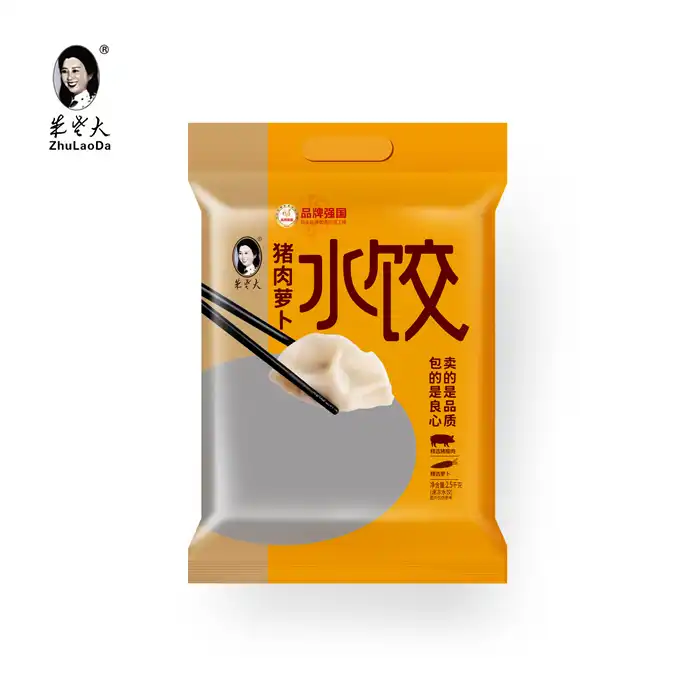
When you go to Zhulaoda, you can find ingredients like wheat flour, radishes, beef, scallions, carrots, ginger, vegetable oil, soy sauce, sesame oil, oyster sauce, and certain food additives like Hydroxypropyl Distarch Phosphate that make the texture stable when frozen. The item is licensed to make food under number SC11137139600148 and meets Product Standard SB/T 10412. People who are allergic should know that this product has parts of wheat, soy, and sesame in it.
Market Applications and Product Forms
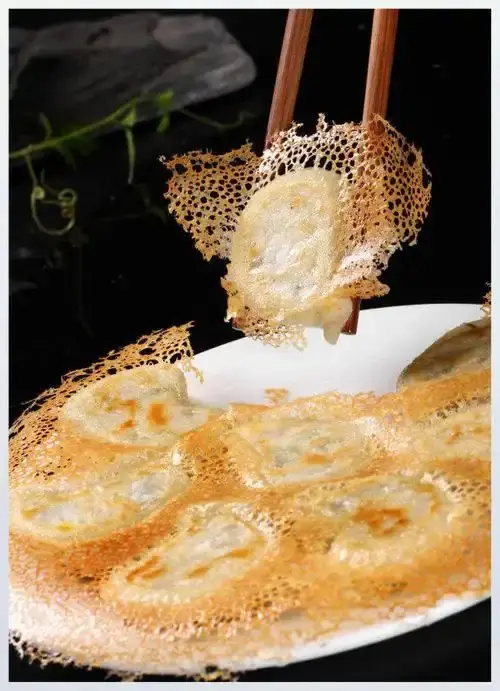
People who buy food for restaurants in the U.S. usually get it frozen (stored at -18°C or below) and it lasts for 12 months. They make their steamed pan-fried beef and radish cakes to be cooked twice, first in the steamer and then in the pan. This makes the bottom crispy and the top soft and soft. Quick-service restaurants (QSRs) like this "two-texture" finish because it works well there where speed and consistency in look are important.
Minimum Order Quantity (MOQ) and Supplier Requirements
Typical MOQ Ranges in the Market
Most Chinese businesses that make frozen dumplings set the MOQ at 500 kg to 1 metric ton per SKU for the first order. This limit is there so that the temperature profiles in the tunnel freezer stay the same during IQF production runs. If you have between 10 and 50 restaurants, a 500 kg MOQ is enough for a test run in the main kitchen before going all the way through the chain. Chinese beef radish dumplings are a practical SKU for a first run at this scale, since the filling holds up well through both test and rollout.
Factors That Influence MOQ
MOQ changes because of a lot of real things. The type of packing has the most direct effect. Standard retail packs (450g and 1 kg) have lower MOQs than special OEM packs (2.5 kg bulk catering bags) because the tools' costs are spread out more widely. MOQ goes up because of things like private label needs, production plans, and formula customization (like changing the amount of salt, the thickness of the wrap, or the weight of the piece). In general, buyers who want OEM/ODM options start with 1–2 metric tons.
Negotiating MOQ Flexibility
To get things going right, ask for a sample first, then test the product in the kitchen to make sure it fits, and finally talk about the MOQ as part of an annual volume promise. Most suppliers will lower the MOQ at first if the buyer can show that they have a good plan for growing. A factory can better plan their production and usually get better terms if you give them a rolling monthly order forecast for 6 to 12 months.
Cost Structure and Pricing Analysis
Key Cost Components
If you know what changes your landing cost, you can make better budgets and spot problems with prices faster. In general, it costs the following to bring frozen beef and radish dumplings from China to a cold storage facility in the U.S.:
- Product ex-works price: Driven by beef raw material costs, wrapper thickness, and piece weight. Beef price volatility is the single largest variable — always request a price validity period in writing.
- Cold chain freight (sea, -18°C reefer container): FCL (full container load) sea freight from Qingdao or Shanghai to a U.S. West Coast port typically runs lower per-kg than LCL (less than container load), making volume consolidation important.
- U.S. customs duties and FDA registration fees: Frozen dumplings fall under HTS codes that generally carry low tariff rates, but confirm current rates with your customs broker before finalizing cost models.
- Domestic cold storage and last-mile delivery: Terminal handling and cold storage fees at the destination port can add meaningfully to per-unit cost, especially during peak season.
Costs like these are linked, and even small changes in one area can have a big impact on your profit. Plan your work around production windows around the Chinese New Year, when companies are less busy. This will help you protect both supply and price.
Import Sourcing vs. Local Production
If a business serves a lot of Chinese food, they will always get a better price per piece and a more authentic taste when they buy from a certified Chinese manufacturer instead of contract manufacturing in China. The matrix is made up of soy sauce, sesame oil, oyster sauce, ginger, and onions. The cost difference is quickly closed because they can't be made on a large scale outside of China without getting the same ingredients.
Quality Assurance and Supplier Evaluation
Certifications You Must Verify
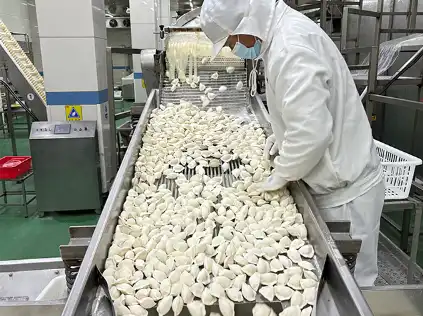
caterers who work for institutions and restaurant groups with more than one spot need to be certified in food safety. If you want to know that a dealer is reliable, they should show you at least HACCP, ISO 22000, and the Chinese food production license (SC certificate). Zhulaoda is licensed under SC11137139600148 to make food and follows SB/T 10412 rules. Their workshop is very nice and has tools for cleaning and moving air.
Factory Audit and Batch Consistency
It's not enough to just look over papers from afar for a long-term supplier deal. It's important for the factory or a third party to do regular checks on the production line to make sure that it uses metal detection and X-ray inspection to catch any foreign objects that might be in the grinding machines, as well as standard microbiological tests like Salmonella negative/25g and Listeria negative/25g. Chinese beef radish dumplings are a good example of why this matters, since ground beef is the step where foreign-object risk is highest.
Protecting Your Custom Formula
OEM buyers who want to change the ratios of fillings, the amount of salt, or the thickness of the wrapper should get a signed Non-Disclosure Agreement (NDA) before giving goal specs. This is the way that real producers do things. It is also important to get temperature logs and inspection reports for each shipment at the batch level. These will help with your internal quality control checks and any paperwork you need to do for bids on institutional food.
Import Logistics and Compliance Tips
FDA Registration and Import Documentation
The Bioterrorism Act says that the FDA needs to keep track of all food companies that send food to the US. Make sure that the building where your seller works is still registered with the FDA before you place your first order. Some of the things that need to be brought in are the business invoice, packing list, bill of lading, certificate of origin, and health certificate from the right Chinese government.
Cold Chain Best Practices
When they are being shipped, frozen beef and radish dumplings need to stay at -18°C or less. Food that is kept frozen at all times has a 12-month shelf life from the date it was made. Every shipping container should have a temperature sensor, and there should be clear rules about what temperature is okay when it gets there. Any change above -15°C when the product is received should lead to a hold-and-test process before it is put into cold storage.
Managing Customs Delays and Inventory Risk
Make sure your store has extra stock for at least 4–6 weeks in case the times it takes to clear customs change. Zhulaoda has 8,000 tons of cold storage space, so they can hold off-season goods and schedule shipments to fit your restocking schedule. This makes it less likely that you will run out of stock during busy times like Chinese New Year or when clients are coming back to school.
Conclusion
Sourcing frozen Chinese beef radish dumplings at scale requires attention to MOQ structure, total landed cost, quality certification, and cold chain integrity. The dual-cook steamed pan-fried format offers real operational value for food service kitchens: consistent output, no on-site marinating, and a premium beef filling that justifies a higher menu price point. Starting with a sample evaluation and a documented supplier audit process is the most reliable path to a long-term, low-risk supply relationship. Get these foundational steps right, and this product can become a stable, high-margin line on your menu.
FAQ
What is the shelf life of frozen beef and radish dumplings?
The shelf life is 12 months from the production date when stored continuously at -18°C or below. This duration supports cross-country distribution and seasonal inventory planning without quality degradation.
Can I order a small test batch before committing to a full MOQ?
Yes. Most reputable suppliers, including Zhulaoda, support sample shipments prior to formal order placement. A sample allows your kitchen team to evaluate cooking performance, filling ratio, taste profile, and wrapper texture before negotiating a commercial agreement.
Are gluten-free versions available?
The standard product contains wheat flour and is not gluten-free. Allergens include wheat, soybean, and sesame. Buyers with gluten-free menu requirements should discuss alternative formulations directly with the supplier during the sample consultation phase.
Can the recipe be adjusted for different regional tastes?
OEM and ODM customization is available, covering salt content, wrapper thickness, and piece weight. Custom specifications require an NDA and a minimum order volume that covers the production run adjustment costs.
What certifications does the manufacturer hold?
Zhulaoda holds Food Production License SC11137139600148, complies with SB/T 10412 product standards, and operates with HACCP and ISO-aligned production protocols.
Partner With Zhulaoda — Your Trusted Chinese Beef Radish Dumplings Manufacturer
It has been in business since 2001. It has three automatic lines that can make 100 tons of goods every day, and cold rooms that can hold 8,000 tons of goods. We are a Chinese beef radish dumplings seller with a track record of food safety and the ability to make changes for OEMs. This makes it easy to go from a sample to a stable supply chain. Send us an email at sdzldsp@163.com right away to get your sample pack.
References
1. Food and Agriculture Organization of the United Nations (FAO). Codex Alimentarius: General Standard for Frozen Foods. FAO/WHO, 2019.
2. U.S. Food and Drug Administration. Food Facility Registration Under the Bioterrorism Act. FDA, 2022.
3. China National Standards Administration. SB/T 10412: Quick-Frozen Dumplings Product Standard. SAC, 2007.
4. International Organization for Standardization. ISO 22000:2018 — Food Safety Management Systems. ISO, 2018.
5. Hazard Analysis and Critical Control Points Alliance. HACCP Principles and Application Guidelines. NACMCF, 2021.
6. U.S. Customs and Border Protection. Importing Food Products Into the United States: HTS Classification and Tariff Guidance. CBP, 2023.
_1740477587099.webp)
Learn about our latest products and discounts through SMS or email