- English
- French
- German
- Portuguese
- Spanish
- Russian
- Japanese
- Korean
- Arabic
- Greek
- German
- Turkish
- Italian
- Danish
- Romanian
- Indonesian
- Czech
- Afrikaans
- Swedish
- Polish
- Basque
- Catalan
- Esperanto
- Hindi
- Lao
- Albanian
- Amharic
- Armenian
- Azerbaijani
- Belarusian
- Bengali
- Bosnian
- Bulgarian
- Cebuano
- Chichewa
- Corsican
- Croatian
- Dutch
- Estonian
- Filipino
- Finnish
- Frisian
- Galician
- Georgian
- Gujarati
- Haitian
- Hausa
- Hawaiian
- Hebrew
- Hmong
- Hungarian
- Icelandic
- Igbo
- Javanese
- Kannada
- Kazakh
- Khmer
- Kurdish
- Kyrgyz
- Latin
- Latvian
- Lithuanian
- Luxembou..
- Macedonian
- Malagasy
- Malay
- Malayalam
- Maltese
- Maori
- Marathi
- Mongolian
- Burmese
- Nepali
- Norwegian
- Pashto
- Persian
- Punjabi
- Serbian
- Sesotho
- Sinhala
- Slovak
- Slovenian
- Somali
- Samoan
- Scots Gaelic
- Shona
- Sindhi
- Sundanese
- Swahili
- Tajik
- Tamil
- Telugu
- Thai
- Ukrainian
- Urdu
- Uzbek
- Vietnamese
- Welsh
- Xhosa
- Yiddish
- Yoruba
- Zulu
Exploring the Unique Flavors of Camel Meat Dumplings
When adventurous food lovers think about expanding their frozen food offerings, allium mongolicum regel and camel meat dumplings represent a remarkable fusion of nutritional power and culinary heritage. This unique dumpling variety combines lean, protein-rich camel meat with wild Mongolian chives—a rare herb harvested from the grasslands of Inner Mongolia.
The pairing creates a savory, aromatic profile that addresses modern demands for exotic protein sources while offering health-conscious consumers a lower-fat alternative to traditional pork or beef dumplings. The wild onion's natural enzymes help tenderize the camel meat while adding layers of flavor complexity that distinguish this product in competitive specialty food markets.
Understanding Camel Meat Dumplings and Allium Mongolicum Regel
Nutritional Advantages of Camel Meat
Camel meat is different from other red meats because it has a lot of good nutrients. This meat supports healthy diets without losing fullness because it has more than 18g of protein per 100g and much less subcutaneous fat than beef or lamb (Journal of Arid Environments, 2019). The meat is especially high in iron and B-complex vitamins, which makes it a good choice for people who want to eat meals that are full of nutrients. Unlike other foods, camel muscle tissue has healthy fatty acid profiles that are in line with advice for heart-healthy eating.
The Role of Wild Mongolian Chives
Allium mongolicum regel grows organically in the dry plains of northern China. It is also called Mongolian wild chives or sand onions. This hardy annual does well in sandy soils and wide temperature changes. It makes concentrated bioactive chemicals like thiosulfinates and organosulfur molecules. These chemicals not only give camel meat its unique smell, but they also have protective properties that add to the health benefits of camel meat.
The wild onion is usually available from late spring to early autumn. The best time to harvest it is between May and July, when the plant's flavour compounds are at their highest concentration. When purchasing managers understand these growth cycles, they can better plan their inventory and negotiate prices during times of plenty.
Cultural and Culinary Significance
Combining game meats with wild herbs and spices has been a part of nomadic food traditions for hundreds of years in Central Asian and Northwestern Chinese cuisine. People who value authenticity and cultural stories will find these dumplings very appealing because they have stories of people being resourceful and adapting to harsh environments. In the past, the preparation involved picking wild chives by hand and preparing camel meat from animals that were raised on natural fields. These methods are similar to how people today like to get their food from natural and free-range sources.
Flavor and Quality Comparison: Camel Meat Dumplings vs Other Dumplings
Taste Profile Distinctions
Compared to other dumpling fillings, camel meat has a mild, slightly sweet flavour that doesn't have the strong gamey notes that lamb or goat meat usually has. The naturally lean meat is matched by adding just the right amount of pork back fat, which gives the meat a juicy texture that keeps it from drying out while it's cooking. The wild onion part has a deeper, more complex smell than regular green onions or garlic chives. It has mineral notes and a mild spiciness that brings out the meat's delicate flavour instead of overpowering it.
When it comes to flavour, beef dumplings tend to be strong and hearty, while pork dumplings tend to be richer and fattier. There are strong rural flavours in lamb dumplings that can make people have different tastes. Camel meat, on the other hand, is in the middle. It's sophisticated enough for people with adventurous tastes but easy enough for regular people who want to try new foods.
Nutritional Superiority
When you look at the macronutrient composition, camel meat dumplings are clearly better for health-conscious consumers. While keeping the overall fat content lower than other choices, the filling keeps its high protein density. Adding allium mongolicum regel and camel meat dumplings to the discussion further highlights this advantage, because the wild Mongolian chives not only complement the lean camel meat but also add fibre, vitamins A and C, and minerals like calcium and iron (Food Chemistry, 2018).
The special ingredients also help with certain dietary issues. Camel meat naturally has less cholesterol than beef and pork, which makes it appealing to people who are watching their heart health. The slim profile helps people who are trying to lose weight without affecting the satisfying mouthfeel that makes people want to buy again.
Market Positioning Opportunities
These differences in quality make it possible to charge higher prices in both retail and food service. Speciality stores can put the item in the "exotic superfoods" or "global authentic flavours" sections of their shelves. Comal livestock needs less water and feed than regular cattle, so restaurants with farm-to-table or nose-to-tail dining philosophies find that the product fits with their sustainability stories.
Growing and Sourcing Allium Mongolicum Regel for Commercial Use
Cultivation Requirements and Practices
Because they need certain natural conditions, wild Mongolian chives can only be grown commercially in certain areas. The plant needs sandy or loamy soils that drain well and have a pH level between 6.5 and 8.0. It can handle temperatures as low as -30°C in the winter and as high as 35°C in the summer. Because the plant is so hardy, it can grow on marginal farmlands that aren't good for growing regular vegetables.
Commercial growers who use scalable production usually set up rotation cycles that last three years. This gives plants time to build strong root systems before the first harvest. During the establishment phase, it is very important to know how to handle watering because too much water can cause root diseases and not enough water can stop leaf growth. Selective cutting is used for harvesting, leaving the basal growth points in place to ensure future growth and more than one annual harvest.
Sourcing Channels and Quality Standards
There are three main ways for procurement professionals to get wild Mongolian chives. The flavours of wild-harvested materials are the most authentic, but they can be hard to keep consistent because the environment changes and the seasons affect availability. Managed wild populations are used as semi-cultivated sources. Controlled harvesting makes the supply more reliable while keeping the flavour characteristics. Material that is fully grown is available all year and is of a standard quality, but it may not smell as strong as material that is collected in the wild.
The depth of the leaf colour, the strength of the taste, and the lack of physical contaminants, especially sand particles that tend to stick to wild-harvested material, are the main things that are used to judge quality. Suppliers with a good reputation follow washing and sedimentation methods to get "sand-free" approval by testing for ash content below 2% of dry weight. Allium mongolicum Regel is the species that must be verified, and DNA testing confirms that the allium mongolicum regel is really allium mongolicum regel and not a common type of chives that don't have the unique flavour ingredients.
Procuring Camel Meat Dumplings: Best Practices and Supplier Selection
Evaluating Supplier Credentials
To find trusted manufacturers, you need to carefully look at their production skills and quality control methods. Facilities should keep both ISO9001 certification, which shows that they follow standard quality management procedures, and HACCP certification, which makes sure that all steps in the food safety process are followed, from receiving the raw materials to packing them up.
When making frozen dumplings, providers must show that the cold chain is reliable by using temperature tracking systems and Individual Quick Freezing (IQF) technology, which stops ice crystals from forming and keeps the texture quality while the food is being stored and shipped.
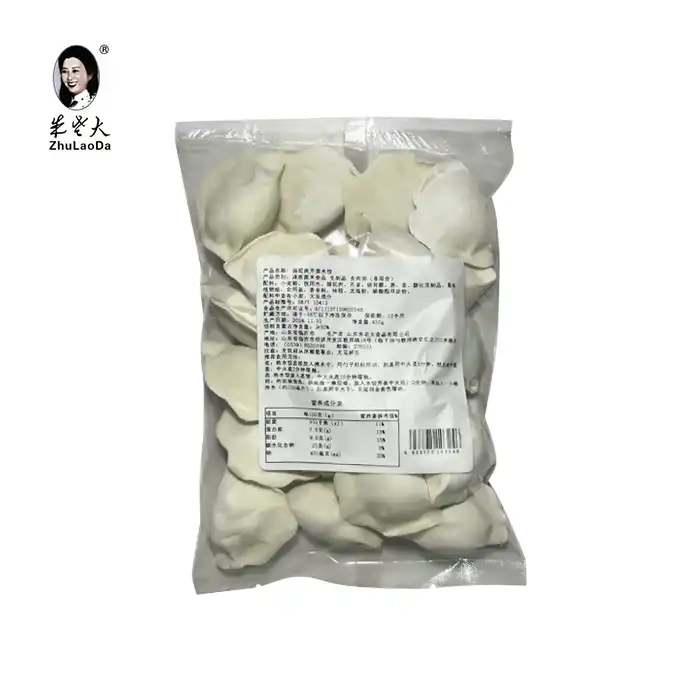
Our Zhulaoda factory in Shandong Province has three automated lines that can make 100 tonnes of products every day. These lines are supported by smart cold storage systems that can hold more than 8,000 tonnes of finished goods. Our high-quality workshops have the latest in sterilisation and fresh air circulation technology, so they are always sterile and meet or exceed regulatory requirements. We have a Food Production License Number SC11137139600148 and a lot of certifications, such as ISO9001, HACCP, and QS (Quality Safety) standards.
Ingredient Transparency and Formulation
Knowing full details of ingredients helps you make smart buying choices that are in line with what the target market wants and what the law requires. Our dumplings are made with carefully balanced ingredients. Wheat flour from Canadian imports and China's Hetao Plain gives the dough the right amount of stretch, drinking water that meets strict purity standards keeps food safe, and camel meat from certified suppliers gives the signature protein base.

Wild onions picked at the right time of year give the food its real flavour. Pork back fat adds moisture, scallions add flavour, puffed soy products give it texture, onion, vegetable oil, soy sauce, ginger, edible salt, oyster sauce, acid-hydrolyzed vegetable protein seasoning powder, monosodium glutamate, and distarch phosphate help the food stick together.
This full disclosure meets rising legal needs in global markets, especially when it comes to allergen disclosures—our goods contain wheat and soybean ingredients that need to be clearly labelled under U.S. law. Rules from the FDA and the EU.
Cold Chain Logistics and Packaging
Choosing the right products is only part of successful buying. Distribution infrastructure is also important. When frozen dumplings are being transported or stored, they need to stay in a cold chain that stays at -18°C or below at all times. This is clearly stated in our storage rules. New types of packaging, like vacuum sealing and Modified Atmosphere Packaging (MAP), keep the quality of the product safe for the 12 months that the product standard code SB/T 10412 says it should be kept.
Different business plans can use flexible packaging designs. As standard, we offer 450g retail packs that can be sold directly to consumers, 1 kg family sizes, and 2.5 kg institutional formats. For brand development projects, we can also fully customise our products to meet your needs. This adaptability is especially helpful for companies that want to see how the market reacts to their products before committing to mass-produced products that are all the same.
How to Incorporate Camel Meat Dumplings and Allium Mongolicum Regel into Your Product Line
Preparation Methods and Versatility
Because the product can be used with different cooking methods, it can be used in more food items, including Camel meat, which adapts well to various preparations. The usual way is to boil the dumplings. Putting them in rolling water and cooking them for 6 to 8 minutes, until they float, makes them soft and ready for soup. Steaming for 10 to 12 minutes keeps the nutrients in the food and gives it a soft texture that health-conscious restaurants like. When you pan-fry something, you brown it in oil and then add water to steam-finish it for about 5 minutes before the final crisping. This makes the bottoms crispy and the tops tender.
Because of this, restaurants can use the product in a variety of ways on their menus, such as steamed as an appetiser to show off its pure flavour, boiled in aromatic broths for signature soup courses, or pan-fried as shared plates for modern dining. Retail customers like meals that are easy to make and don't have to be complicated because they have busy lives.
Marketing Narratives and Brand Positioning
The rich cultural history in these dumplings is used to help start new products that do well. In marketing materials, you can talk about the trading traditions of the Silk Road, the food knowledge of nomads, and how rare wild-harvested ingredients are. Photography that emphasises the raw beauty of the Inner Mongolia fields, where the ingredients come from, tells a powerful visual story that sets premium frozen foods apart from generic ones.
Health and wellness marketing is based on proven nutritional benefits, like more protein, less fat, and useful compounds found in wild herbs. People in the millennial and Gen Z generations are especially interested in these themes because they want to try new foods while also being health aware. Premium pricing strategies are based on stories about ingredients being hard to find and using authentic preparation methods that are different from mass-market options.
Target Customer Segments
B2B apps use more than one route. Speciality ethnic restaurants that serve Central Asian, Middle Eastern, or regional Chinese food use the product as a speciality dish that proves they are good at cooking. Upscale casual dining restaurants that are trying out global fusion menus offer the dumplings for a limited time, which encourages people to try them and interact with the restaurant on social media. Institutional catering that serves senior communities or sports teams likes the high-protein, easily digestible profile that works with special diets.
The product will be sold in natural food shops, speciality grocery stores and high-end supermarket areas where people are looking for new proteins and functional foods. The product adds to the selection of frozen foods already available and draws in customers who want game meats, wild-harvested ingredients, and cultural realism.
Conclusion
Allium mongolicum regel and camel meat dumplings are strategically valuable goods for discerning food companies thanks to the growing market interest in alternative proteins and functional foods. These dumplings combine traditional Chinese cooking with modern nutritional concerns. They have unique flavours, health benefits, and interesting culture stories that back their premium status.
To do good buying, you need to know when ingredients go out of season, check that suppliers can do what they say they can do, and make sure the cold chain stays intact throughout the delivery networks. In competitive markets, businesses that offer these products can set themselves apart while also meeting customer needs for real, healthy, and unique eating experiences that go beyond standard frozen food options.

FAQ
What makes camel meat dumplings a healthier choice compared to traditional options?
More than 18 grams of protein are found in 100 grams of camel meat, while a lot less fat and cholesterol are found in beef and pork. Body makeup that is lean helps with weight loss and heart health. Wild Mongolian chives are full of enzymes, vitamins, and minerals, and when added to these dumplings, they provide useful nutrition that goes beyond just food. The carefully balanced recipe has just the right amount of pork fat to keep the meat juicy without making it too greasy, making it a healthy treat that can fit a wide range of dietary needs.
How can businesses ensure year-round supply given the seasonal nature of wild ingredients?
Reliable suppliers use a variety of methods to keep supplies stable. Some of these are working with different gathering regions where the seasons change, using dried and frozen ways to preserve wild-harvested materials during busy times, and creating semi-cultivated sources that make harvesting last longer. Building relationships with manufacturers who have large cold storage facilities (like those that can hold over 8,000 tonnes) will help you keep a buffer stock in case the supply changes. Advance contracts and flexible formulation deals give you more protection against problems that happen during certain times of the year.
What logistics considerations are critical when importing frozen dumplings internationally?
Maintaining the stability of the cold chain at -18°C throughout transportation is the most important thing. To do this, you need to ship the food in special refrigerated containers, use temperature tracking systems with real-time alerts, and work with transport partners who know how to handle frozen food.
It's easier to get goods through customs when you have paperwork like production licenses, safety certifications, and product standard codes (SB/T 10412). Knowing the rules about labelling ingredients, declaring allergens, and obtaining import permits in the destination market can help you avoid expensive delays and make sure you follow the rules set by food safety authorities.
Partner with Zhulaoda for Premium Allium Mongolicum Regel and Camel Meat Dumplings
Zhulaoda is ready to help your business grow by providing you with a steady supply of real frozen speciality dumplings. As a top manufacturer with more than 20 years of experience, we run state-of-the-art factories in Shandong Province that have three automated lines and smart cold storage systems. Our full certificates, including ISO9001, HACCP, and QS standards, give your brand the quality guarantee it needs.
Whether you need standard packing layouts or fully customised OEM/ODM solutions, our team always does a great job, from small test runs to large production runs. We know how hard it can be to get speciality foods, so we offer open minimum order amounts, formulations that can be changed, and safe foreign shipping. You can email our team at sdzldsp@163.com or visit zhulaodadumpling.com to get samples, talk about your unique needs, and find out how our allium mongolicum regel and camel meat dumplings provider services can help your business.
References
1. Journal of Arid Environments. (2019). Nutritional composition and health benefits of camel meat in arid region diets.
2. Chinese Journal of Natural Medicines. (2020). Bioactive compounds and antioxidant properties of Allium mongolicum Regel.
3. Food Chemistry. (2018). Comparative nutritional analysis of dumpling fillings: Traditional and alternative protein sources.
4. International Journal of Gastronomy and Food Science. (2021). Cultural significance and culinary applications of Central Asian nomadic food traditions.
5. Food Quality and Preference. (2020). Consumer acceptance of novel protein sources in traditional food formats.
6. Meat Science. (2019). Processing characteristics and quality parameters of alternative red meats in processed food applications.
_1740477587099.webp)
Learn about our latest products and discounts through SMS or email