- English
- French
- German
- Portuguese
- Spanish
- Russian
- Japanese
- Korean
- Arabic
- Greek
- German
- Turkish
- Italian
- Danish
- Romanian
- Indonesian
- Czech
- Afrikaans
- Swedish
- Polish
- Basque
- Catalan
- Esperanto
- Hindi
- Lao
- Albanian
- Amharic
- Armenian
- Azerbaijani
- Belarusian
- Bengali
- Bosnian
- Bulgarian
- Cebuano
- Chichewa
- Corsican
- Croatian
- Dutch
- Estonian
- Filipino
- Finnish
- Frisian
- Galician
- Georgian
- Gujarati
- Haitian
- Hausa
- Hawaiian
- Hebrew
- Hmong
- Hungarian
- Icelandic
- Igbo
- Javanese
- Kannada
- Kazakh
- Khmer
- Kurdish
- Kyrgyz
- Latin
- Latvian
- Lithuanian
- Luxembou..
- Macedonian
- Malagasy
- Malay
- Malayalam
- Maltese
- Maori
- Marathi
- Mongolian
- Burmese
- Nepali
- Norwegian
- Pashto
- Persian
- Punjabi
- Serbian
- Sesotho
- Sinhala
- Slovak
- Slovenian
- Somali
- Samoan
- Scots Gaelic
- Shona
- Sindhi
- Sundanese
- Swahili
- Tajik
- Tamil
- Telugu
- Thai
- Ukrainian
- Urdu
- Uzbek
- Vietnamese
- Welsh
- Xhosa
- Yiddish
- Yoruba
- Zulu
How to Cook Carrot and Egg Dumplings Without Making Them Fall Apart
Cooking carrot and egg dumplings without breaking them comes down to three essentials: moisture control, wrapper integrity, and precise heat management. The natural water content in carrots can weaken the filling if not handled correctly, while overcooked wrappers lose elasticity and burst under pressure. Whether you are preparing a family dinner or managing a commercial kitchen, understanding these variables makes the difference between a perfect batch and a pot full of broken pieces. This guide walks through every critical step with practical solutions you can apply immediately.
Understanding the Problem: Why Do These Dumplings Fall Apart?
Too much water is the main reason why most dumplings don't turn out right. Carrots give off water when they're cooked. If that water gets into the dough covering, it weakens the seal and the dumpling comes apart. When you're making a lot of food, this is a big problem because the whole batch could not be good if you don't prepare the items right.
Filling Composition and Structural Cohesion
There is an egg in the center that keeps the chopped carrot, vermicelli, wood ear fungus, cabbage, and onions together. If you don't fully cook the eggs before you fold them, the filling will stay loose and move around when they boil. It's also very important to know the right balance between filling and wrapper thickness. It has been found that the best ratio for filling to wrapper thickness is between 55:45 and 60:40, and the wrapper thickness should stay between 0.8 mm and 1.2 mm so that the product stays stable at high temperatures without turning starchy.
Wrapper Dough and Cooking Method Variables
It depends on how much protein and water are in the flour and how elastic the dough is. If the dough doesn't have much gluten, the heat can tear it. The way the food is cooked makes this even worse. When something boils, it puts rough mechanical pressure on the wrapper. When something steams, the heat is softer and more even. The bottom of something that's been pan-fried gets crispy, but the middle might not get as wet as it should.
Step-by-Step Solution: How to Cook Them Without Breaking
Care must be taken to make dumplings before they are cooked so that they always stay together. This is a good way to do things that can be used in both home kitchens and busy production areas.
Moisture Management Comes First
Grate the carrots and squeeze them hard with a clean cloth or a blender (in a business setting) to get rid of the water on top before adding the other filling ingredients. Before you add the filling, make sure the eggs are almost set. This will help carrot and egg dumplings hold together without adding more liquid. This one step makes cooking waste a lot less. Less than 5% heat loss is okay in the food business, and keeping wetness in check is the most important thing.
Sealing and Shaping the Wrapper
Press the edge of the bag tightly with pleats that meet. The seal on dumplings often breaks while they're cooking. In industrial production, automatic vision systems often look for small cracks and make sure the seal is still good before freezing. This keeps home users from having hot blowouts.

Once the filling and sealing are handled correctly, cooking technique becomes straightforward. Here are the recommended methods with specific parameters:
- Boiling: Warm up a big pot of water until it quickly starts to boil. When you add the dumplings, don't drop them from a high place. Don't let anything stick; stir it once every 30 seconds. Wait 7 to 9 minutes and then serve. When the dumplings float and the covers look a little see-through, they are done. If you put too many things in the pot, the water will cool down and take longer to cook than it should.
- Steaming: Make sure there is room between each dumpling on a rack that has been lightly oiled. This is how you steam them. Let it cook for 10 to 12 minutes after taking it off the heat. Because it keeps the filling's wetness and the wrapper's structure, steaming is the best way to show off good food.
- Pan-frying: Over medium-low heat, melt some oil in a pan that won't stick. Put the dumplings down so that the flat side is facing down. They should be cooked for two minutes or until they turn brown. After that, add some water and cover right away. After that, steam it for five to six minutes, or until there is no more water. With this method, you get a crispy base and a soft top, which is a taste that everyone likes.
You can follow these steps whether you are cooking for one person or to feed a lot of people. You can't wing it when it comes to time and temperature if you want the same results every time.
Comparison: Carrot and Egg Versus Other Dumpling Varieties
Dumplings made with vegetables are one of the groups of frozen foods that is growing the fastest right now. Carrot and egg dumplings have a lot less fat than chicken or pork dumplings. Better nutrition labels for kids' food, school lunch programs, and shops that care about health are also a big plus.
Beta-carotene in carrots is a natural sign of their health benefits that adds to the vitamin A benefits without adding any extra ingredients. Parents read ingredient lists very carefully and like it when they see whole, known foods. This is especially important for names of meals for kids.
It stays fresh longer when bought in bulk from certified manufacturers (up to 12 months at -18°C) than when made at home. The stability of the shelves means less waste and better planning for the supply chain for people who work in buying and are in charge of handling inventory cycles.
Sourcing and Procurement: Buying in Bulk Without Compromising Quality
It's not enough to have a fair price sheet to pick the right provider. Teams that buy things should look for licensing, the ability to keep track of raw materials, and proof that the company can make a lot of carrot and egg dumplings.
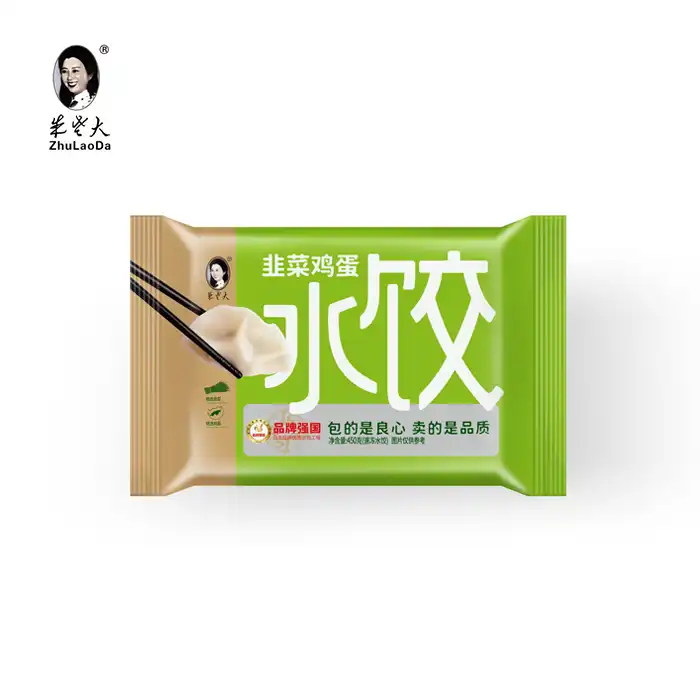
Since 2001, Shandong Zhulaoda Food Co., Ltd. has been in business. They have three automatic lines that can make up to 100 tons of food every day. There are smart shuttle racks in the cold storage building that can hold more than 8,000 tons. Good wheat flour from Canada and China's Hetao Plain is one example of a raw material that is checked for microbes, pesticide residues, and physicochemicals before it is used in production.
The item meets Product Standard Code SB/T 10412 and has a Food Production License SC11137139600148. Carrot and egg dumplings come in different packaging options of 450g, 1kg, and 2.5kg, and OEM customization is possible for branded channels in stores or institutions. This flexibility helps brands of kids' meals and food service buyers who need to change serving sizes and private label packages.
Best Practices for Handling and Storing Bulk Frozen Dumplings
To keep the system whole from the warehouse to the table, there needs to be strict cold chain rules. Keep everything in the supply chain at or below -18°C. If you keep an eye on the ice recrystallization in the dough, you can tell if the temperature was thrown off while it was being shipped; bigger crystals mean that the wrapper went through freeze-thaw cycles that hurt the structure.
Put the dumplings in the fridge (2–4°C) instead of letting them thaw at room temperature. The slow process keeps the surface of the paper from getting wet with condensation before it's fully cooked. People who work in restaurants and stores should be taught how to handle frozen dumplings without putting too much pressure on them when they are stacked, as this can cause tiny cracks. In this line of work, an IQF cracking rate of less than 2% is fine.
Conclusion
To cook carrot and egg dumplings without breaking them, you have to be strict about how you do it and always do it the same way. Making sure the filling has the right amount of moisture, the wrapping is the right thickness, it is sealed in the right way, and it is cooked at the right temperature all help to get a good product. When you purchase something, working with a skilled, large-scale maker gets rid of the differences that cause batches to fail and customers to be unhappy. Good sourcing isn't something that you do after the fact; it's what makes every other step easier.

FAQ
Are carrot and egg dumplings healthier than meat-based dumplings?
Yes. They have less saturated fat and more fiber, beta-carotene (which helps your body make vitamin A), and plant-based protein. People are wanting healthier meals that are high in veggies, especially in the kids' food groups. This nutritional profile fits with that desire.
What kinds of allergens might be in these dumplings?
The products have small amounts of wheat, eggs, and soy. Food safety rules say that product labels should make all hazard information very clear. As part of the buying process, buyers should look at the allergy management procedures. These should include controls on the production line to stop contamination from spreading to other areas.
How should frozen dumplings be reheated without falling apart?
To warm it up again, steam it for 5 to 7 minutes or cook it in a pan with some water. Do not put the wrapper in the microwave without a damp cover. The uneven heat will cause it to harden and split in different places. When food is warmed up in professional kitchens, steam always keeps the structure the best.
What kinds of licenses should a business that sells a lot of dumplings have?
Sellers who have HACCP, ISO 22000, and any other national food production permits you need should be given more weight. These tags show that the methods for managing food safety, third-party tests, and keeping track of the supply chain have been checked and are up to par. All of these things are needed for school meal programs and stores that follow rules.
Partner With Zhulaoda for Reliable Bulk Supply
Buy teams can always count on Zhulaoda to give them good quality. It's a well-known business that's been making carrot and egg dumplings for over twenty years. OEM customization, flexible packaging formats, and full compliance documentation are all things that they offer to both institutional and retail buyers. You can email the buying team at sdzldsp@163.com or go to zhulaodadumpling.com to talk about your big order and get samples of the products they sell.
References
1. Fellows, P.J. Food Processing Technology: Principles and Practice. Woodhead Publishing, 2022.
2. Gisslen, W. Professional Cooking. John Wiley & Sons, 2023.
3. Hui, Y.H. (Ed.). Handbook of Food Science, Technology, and Engineering. CRC Press, 2019.
4. Journal of Food Engineering — "Moisture Migration and Texture Degradation in Frozen Filled Pasta Products." Elsevier, 2021.
5. Comprehensive Reviews in Food Science and Food Safety — "Quality Indicators for Frozen Dumplings: A Review of Physicochemical and Microbiological Parameters." Wiley, 2020.
6. Vaclavik, V.A., & Christian, E.W. Essentials of Food Science. Springer, 2021.
_1743152244166.webp)

Learn about our latest products and discounts through SMS or email