- English
- French
- German
- Portuguese
- Spanish
- Russian
- Japanese
- Korean
- Arabic
- Greek
- German
- Turkish
- Italian
- Danish
- Romanian
- Indonesian
- Czech
- Afrikaans
- Swedish
- Polish
- Basque
- Catalan
- Esperanto
- Hindi
- Lao
- Albanian
- Amharic
- Armenian
- Azerbaijani
- Belarusian
- Bengali
- Bosnian
- Bulgarian
- Cebuano
- Chichewa
- Corsican
- Croatian
- Dutch
- Estonian
- Filipino
- Finnish
- Frisian
- Galician
- Georgian
- Gujarati
- Haitian
- Hausa
- Hawaiian
- Hebrew
- Hmong
- Hungarian
- Icelandic
- Igbo
- Javanese
- Kannada
- Kazakh
- Khmer
- Kurdish
- Kyrgyz
- Latin
- Latvian
- Lithuanian
- Luxembou..
- Macedonian
- Malagasy
- Malay
- Malayalam
- Maltese
- Maori
- Marathi
- Mongolian
- Burmese
- Nepali
- Norwegian
- Pashto
- Persian
- Punjabi
- Serbian
- Sesotho
- Sinhala
- Slovak
- Slovenian
- Somali
- Samoan
- Scots Gaelic
- Shona
- Sindhi
- Sundanese
- Swahili
- Tajik
- Tamil
- Telugu
- Thai
- Ukrainian
- Urdu
- Uzbek
- Vietnamese
- Welsh
- Xhosa
- Yiddish
- Yoruba
- Zulu
How Can I Cook Frozen Beef Celery Dumplings Without Breaking Them?
Cooking frozen beef celery dumplings without breaking them comes down to three fundamentals: controlled heat, the right method, and product quality. Whether you are boiling, steaming, or pan-frying, the goal is to bring the wrapper and filling to temperature gradually so the gluten network stays intact. Zhulaoda's beef and celery dumplings use a precision-calibrated thin wrapper with distarch phosphate for elasticity, which significantly reduces breakage risk across all three cooking methods when handled correctly. This guide walks through exactly how to achieve consistent, restaurant-quality results at scale.
Understanding Why Frozen Dumplings Break During Cooking
Breaking rarely happens by chance. It follows trends that can be predicted based on how the product is made and how heat goes through it.
The Role of Wrapper Composition and Filling Moisture
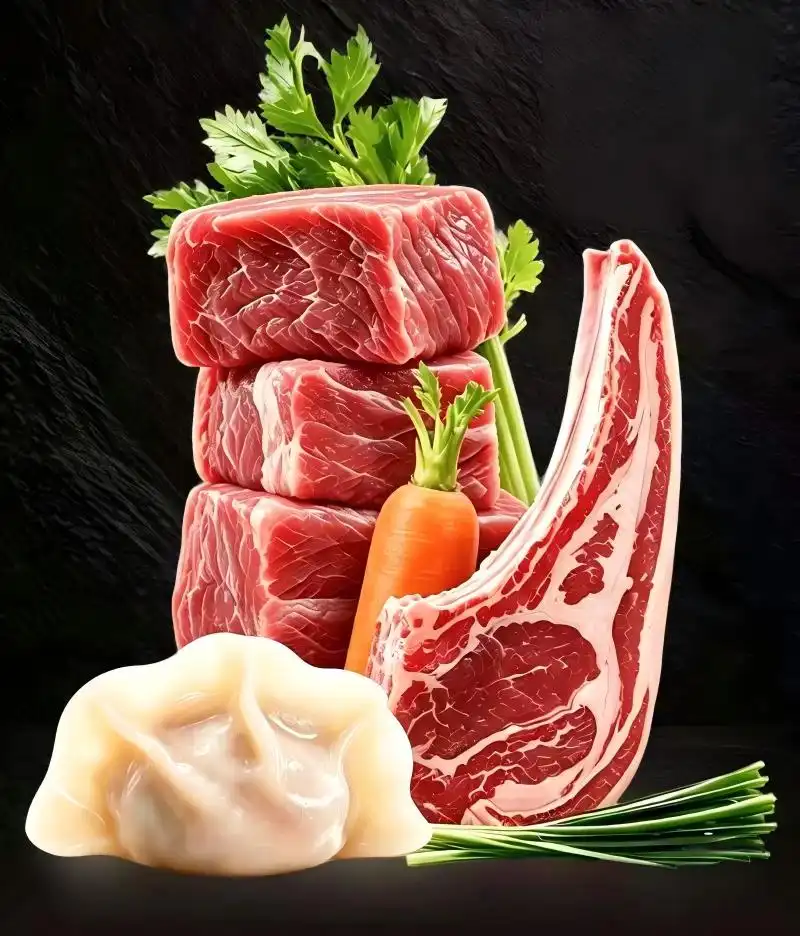
The beef celery dumplings at Zhulaoda are filled with celery, wheat flour, and beef hind leg meat, which makes for a very moist filling. Celery has a lot of water in its cells. When that water freezes, it turns into ice crystals. If the wrapper is thin or the gluten network in the dough isn't fully formed, the ice crystals will put small amounts of pressure on the gaps when the food is heated quickly. This is fixed by the distarch phosphate in Zhulaoda's recipe, which makes the dough more flexible. However, the cooking method still needs to work with it.
Putting frozen dumplings right into water that is violently boiling or onto a dry pan that is very hot causes them to experience rapid thermal shock. The shell is stretched too far because the outside cooks faster than the inside warms up. Researchers who study frozen stuffed pasta products have found that sudden changes in temperature are the main reason why the structures break down during preparation.
Step-by-Step Methods to Cook Frozen Beef Celery Dumplings Without Breaking Them
There are three good ways to cook beef celery dumplings: boiling, steaming, and pan-frying. All of them work well as long as you pay attention to how the food's temperature changes. Here's how to do each one on a small or large scale, for home or business use.
Steaming: The Most Consistent Method for Bulk Operations
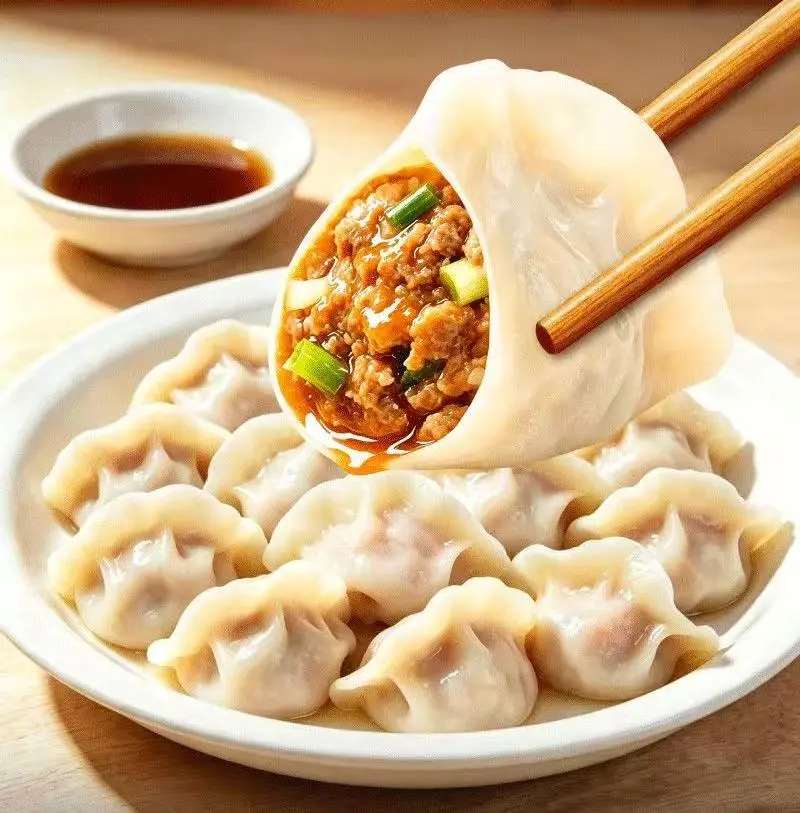
In dining and hotel kitchens, steaming is the best way to get even heat without the automatic movement that comes with boiling water. The shell stays whole, the filling heats through evenly, and the appearance stays perfect—no cracks or wet spots.
Place the beef celery dumplings in a lined steamer basket far enough apart so that they don't stick together. Before putting the basket in, bring the water to a full boil. Then, cover it and steam it for 10 to 12 minutes. When the temperature drops during steaming, don't keep lifting the lid. This will cause condensation to drip directly onto the wrappers, weakening the seams. When set up in an industrial steam cabinet, a steady 100°C steam setting regularly brings the filling's safe internal temperature to 74°C (165°F).
Boiling: Fast and Viable with One Critical Adjustment
Boiling works well when there is a lot of water and the stirring is kept to a minimum. Make sure the pot is big enough so that it holds at least four to five times as much water as dumplings. Bring the water to a full boil, then add the frozen dumplings in a single layer. Once the water returns to a simmer, turn down the heat a bit. After 6 to 8 minutes of cooking, the dumplings should float and the shell should be a little see-through.
The most important change is to keep the whole thing from coming to a violent rolling boil. After the initial immersion, a modest boil keeps the dumplings from bumping into each other and the pot walls, which is one of the most common reasons seams burst in busy kitchens.
Pan-Frying: Achieving the Golden Crust Without Tearing
The potsticker effect can be made by pan-frying, which works especially well for appetizers and dim sum. In a pan with a flat bottom, heat a little vegetable oil over medium heat. The frozen dumplings should be placed flat-side down and not crowded. Water should then be added until it reaches about a third of the height of the dumplings. Cover right away and wait about 6 to 8 minutes for the steam to cook the filling all the way through. Once all the water is gone, take the lid off and let the base cook for two more minutes, until it turns golden brown.
It is important to follow the order of steaming and then frying. If you try to fry them without adding water, the wrapper base will get too hot before the beef celery dumplings' filling is safe.
Essential Tips to Preserve Dumpling Integrity at Commercial Scale
Aside from the method choice, there are a number of operating practices that affect how well the beef celery dumplings are when they get to the table.
Here are some basic rules that business kitchens and buying teams should follow when handling food:
- Cook directly from frozen. Partially warming makes the seams softer and lets water from the celery move into the dough, which makes the wraps fragile. Zhulaoda's product is made and approved according to SB/T 10412 for preparation straight from frozen.
- Maintain cold chain discipline before cooking. Keep the cold chain strict before cooking, and store everything at or below -18°C. Changes in temperature above -10°C speed up the recrystallization of ice, which damages the celery's cell structure and makes it harder for the filling to stick together before it even starts cooking.
- Use lightly oiled or parchment-lined surfaces for steaming. When steaming, use surfaces that have been lightly oiled or lined with parchment paper. Contact with metal steamer racks will cause things to stick. No matter how well the dumpling was cooked, the wrapper tears when it is lifted.
- Batch-cook in consistent portions. When cooking in batches, make sure the portions are all the same size. If the portions aren't the same size, the water-to-dumpling ratio changes during boiling and the steam concentration changes during cabinet steaming, which affects the cook time and end texture.
These rules are the same whether you are in charge of a single hotel banquet service or a cloud kitchen that is always making food. Handling that is consistent leads directly to fewer breaks and a better presentation of the plates.
Comparing Cooking Methods for High-Volume Foodservice
There are more factors to consider than just personal taste when choosing a cooking method for large events like banquets, institutional catering, or quick-service restaurant delivery.
Since steaming keeps the most of the food's flavor and makes it look the best, it's the best way to make plated dim sum and party plates. Once the steam cabinets are loaded, they don't need much active control, and the product stays good for a short time under protected conditions before it starts to go bad quickly.
Boiling offers speed and number output, making it perfect for back-of-the-house tasks where dumplings—beef and celery or otherwise—are given right away. In exchange, the wrapper is a little softer and there is a little more chance that it will break when handling a lot of them at once.
The most unique flavor profile comes from pan-frying, which creates a crisp base and a tender top. This style is popular for casual eating and appetizers. It needs more care for each batch and can't be scaled up without special flat-top equipment.
When banquet buyers look at products to make sure they fit, steaming and pan-frying are the two main ways to cook beef celery dumplings. Zhulaoda's wrapper formula, which uses distarch phosphate to make it heat-stable, works the same way on both.
How to Select and Procure Quality Frozen Dumplings for Consistent Results
The success of a beef celery dumplings product under heat starts with where it comes from. If a dumpling keeps breaking in your kitchen, it's probably because of the way the product was made, not how you cooked it.
When looking at providers, make sure they have certified food safety credentials, clear information about where their ingredients come from, and written cold chain procedures. The company Zhulaoda has ISO9001, HACCP, and QS certifications and a Food Production License SC11137139600148 to run its business. Their beef hind leg meat comes from JINLUO, a partner in a tracked supply chain, and their wheat flour comes from both Canadian sources and Hetao Plain in China, both of which are known for having the strongest gluten.
Packaging choices include 450g, 1kg, and 2.5kg, and the forms can be changed to fit both trial-stage purchases and large orders for the banquet season. OEM and private-label services let hotel and restaurant chains keep exclusive SKUs that don't show up in regular retail channels. This is a requirement for buying that protects the image of the brand.
Conclusion
You can cook frozen beef celery dumplings without breaking them if you follow the method, handle them the same way every time, and make sure the quality of the product can stand up to professional heat. For banquets and formal settings, steaming is still the most effective method. For plated appetizers, pan-frying is the best way to make them look their best. The structure of any dumpling can be traced back to how it was made; the quality of the covering, the control of the filling's moisture, and the freezing process all affect the finished product. Working with a manufacturer whose production standards match your needs takes the guesswork out of things and keeps your kitchen's reputation safe with every service.
FAQ
Is it possible to cook Zhulaoda beef celery dumplings straight from frozen?
Yes. The product is made according to SB/T 10412 so that it can be prepared directly from frozen. Partially warming the shell makes it weaker because it lets water from the celery filling move into the dough. The best way to cook something is straight from the freezer.
How long should I steam frozen dumplings?
If you put the lid on and boil water on the bottom, steam it for 10 to 12 minutes. During this time, don't lift the lid. Standard settings for similar stuffed items in industrial steam cabinets usually get the inside to a safe temperature of 74°C within this range.
Why does my filling get wet after I cook it?
If there is too much water in the filling, it usually means that the cold chain broke before cooking. If the item was kept above -10°C at any point, ice recrystallization breaks down the cells of the celery, letting free water escape when heated. Check that the storage temperature rules are followed all along the supply chain.
Does this product contain common allergens?
Yes. Wheat flour and expanded soy-based products are on the list of ingredients. Both are known to cause allergies. The description says that the food contains wheat and soybeans. This should be checked against the allergen disclosure requirements on your menu before service.
What sizes of boxes are there for sales in bulk?
Zhulaoda has 450g, 1kg, and 2.5kg choices, and the packaging can be changed for both commercial and private-label clients. You can get standard sheets at zhulaodadumpling.com.
Partner with Zhulaoda — A Trusted Beef Celery Dumplings Manufacturer
Since 2001, Zhulaoda has been delivering certified frozen dumplings. They can make 100 tons of dumplings every day and store more than 8,000 tons of them in cold storage. Zhulaoda is a company that only makes beef celery dumplings. They offer private-label packing, special sizes, and large supply contracts for hotel groups, banquet operators, and foodservice providers. You can email the sourcing team directly at sdzldsp@163.com or look at the full product specs at zhulaodadumpling.com to ask for samples and start the process of qualifying suppliers.
References
1. Barbut, S. The Science of Poultry and Meat Processing. University of Guelph, 2015.
2. Delcour, J. A., & Hoseney, R. C. Principles of Cereal Science and Technology. AACC International Press, 2010.
3. Fellows, P. J. Food Processing Technology: Principles and Practice. Woodhead Publishing, 2017.
4. Gould, W. A. Food Quality Assurance. CTI Publications, 1992.
5. Potter, N. N., & Hotchkiss, J. H. Food Science. Springer, 1995.
6. Vaclavik, V. A., & Christian, E. W. Essentials of Food Science. Springer, 2014.
Learn about our latest products and discounts through SMS or email