- English
- French
- German
- Portuguese
- Spanish
- Russian
- Japanese
- Korean
- Arabic
- Greek
- German
- Turkish
- Italian
- Danish
- Romanian
- Indonesian
- Czech
- Afrikaans
- Swedish
- Polish
- Basque
- Catalan
- Esperanto
- Hindi
- Lao
- Albanian
- Amharic
- Armenian
- Azerbaijani
- Belarusian
- Bengali
- Bosnian
- Bulgarian
- Cebuano
- Chichewa
- Corsican
- Croatian
- Dutch
- Estonian
- Filipino
- Finnish
- Frisian
- Galician
- Georgian
- Gujarati
- Haitian
- Hausa
- Hawaiian
- Hebrew
- Hmong
- Hungarian
- Icelandic
- Igbo
- Javanese
- Kannada
- Kazakh
- Khmer
- Kurdish
- Kyrgyz
- Latin
- Latvian
- Lithuanian
- Luxembou..
- Macedonian
- Malagasy
- Malay
- Malayalam
- Maltese
- Maori
- Marathi
- Mongolian
- Burmese
- Nepali
- Norwegian
- Pashto
- Persian
- Punjabi
- Serbian
- Sesotho
- Sinhala
- Slovak
- Slovenian
- Somali
- Samoan
- Scots Gaelic
- Shona
- Sindhi
- Sundanese
- Swahili
- Tajik
- Tamil
- Telugu
- Thai
- Ukrainian
- Urdu
- Uzbek
- Vietnamese
- Welsh
- Xhosa
- Yiddish
- Yoruba
- Zulu
Lean Pork and Shrimps Wontons vs Chicken: Which Sells Better?
When foodservice buyers ask which wonton variety moves faster on a menu or wholesale order sheet, the answer depends heavily on positioning. Lean pork and shrimps wontons consistently outperform chicken wontons in premium B2B channels — Hong Kong-style noodle houses, Singapore hotel restaurants, and high-end frozen food distributors all report stronger per-unit margins and repeat orders from the shrimp-inclusive SKU. Chicken wontons hold their own in budget-conscious or allergen-sensitive segments, but the shrimp variety commands higher ticket prices and builds stronger brand identity. Understanding both products side by side helps procurement teams make decisions grounded in real market data.
Market Demand and Sales Performance: Shrimp Wontons vs Chicken Wontons
Global B2B Demand Patterns
When it comes to food service in the Asia-Pacific region, shrimp-based wontons always make the cut. According to a report from Euromonitor International in 2023, seafood-filled dim sum products grew at a rate of about 6% CAGR in the Asia-Pacific region, faster than poultry-filled options, which grew at a rate of 3.5%. In North America, Chinese restaurants are using unique fillings to make their meals stand out more and more. This makes shrimp wontons a higher-margin anchor item.
Regional Preference Splits
In Southeast Asia, especially Singapore and Malaysia, people can tell a wonton mee is good or bad based on the shrimp filling—whole shrimp that can be seen is a must-have quality signal. Because of the trend toward lean proteins, more and more European buyers are interested in pork-shrimp blends as a healthy food option. North American wholesalers choose products that are both healthy and easy to use, like those that cook quickly and look good in pictures for distribution platforms.
Wholesale Channel Performance
Wholesalers who carry both SKUs often say that shrimp wontons make 20–35% more money per case, even though they sell fewer units. Because the price of chicken wontons stays the same, people order them more often, but they don't usually define a restaurant. For OEM clients, shrimp wontons are worth the higher private-label prices, which makes them the better long-term revenue asset. Lean pork and shrimps wontons sit between the two, offering both volume appeal and higher margin.
Nutritional and Health Benefits Analysis for Procurement Decisions
Protein Profile Comparison
A wide range of amino acids is delivered by the combination of lean pork front leg meat and shrimp meat. Lean pork gives you zinc and complete protein, and shrimp naturally has a lot of iodine, selenium, and B12. These two foods together have more nutrients than chicken by itself. Pork-shrimp wontons usually have 10–13g of protein and a moderate amount of fat per 100g serving, which makes them appealing to restaurant guests who are trying to eat healthier.
Allergen and Labeling Considerations
There are fewer allergen flags on chicken wontons, which is important for school food programs and catering to businesses. On the other hand, shrimp wontons need clear labels for crab shellfish, wheat, soy, and sesame, which are all in Zhulaoda's recipe. Buyers in markets that care a lot about compliance must make sure that their provider gives them verified allergen paperwork. Food Production License SC11137139600148 says that Zhulaoda's product fully discloses allergens. It has labels for wheat, peanuts, shrimp, and sesame.
Impact of Cooking Method on Nutrition
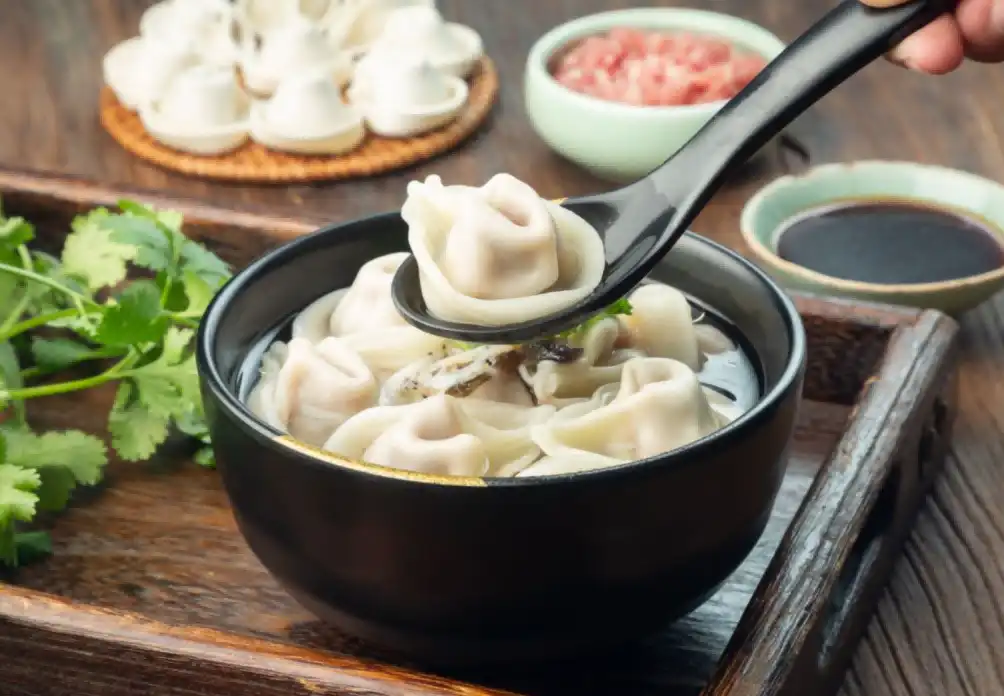
Both types of wontons keep most of their nutrients when they are steamed, and the fat content stays low. The most common way to make broth in a business setting is to boil it for 5–7 minutes. This makes a clean broth, which is a key quality indicator for high-end soup recipes. Adding texture by pan-frying makes the food more calorie dense. When it comes to health-focused meals, steamed or boiled shrimp wontons are better for selling as healthy than fried chicken options.
Supply Chain and Sourcing Considerations
Cold Chain Requirements for Shrimp
Getting shrimp wontons requires better cold chain control than getting chicken wontons. Total Volatile Basic Nitrogen (TVB-N) levels must be below 15 mg/100g of raw shrimp before it can be processed to make sure it stays fresh. Zhulaoda uses blast freezing at -40°C and keeps the cold chain below -18°C until the final delivery. Under SB/T 10412 guidelines, it can be stored at -18°C or lower and has a shelf life of 12 months.
Quality Certifications That Matter to B2B Buyers
Teams in charge of buying things should give priority to suppliers who have official certifications. Zhulaoda has ISO 9001 certification for quality management, HACCP certification for every important control point from receiving raw materials to sending them out, and QS national food safety certification. These qualifications cut down on the time needed to check suppliers and give buyers written proof of their worth. As part of the production process, X-rays are used to look for pieces of shrimp shell (chitin) and metal detectors are used to look for bone bits.
Packaging and Logistics Options
The 450g retail packs, 1kg foodservice bags, and 2.5kg bulk forms of Zhulaoda's lean pork and shrimps wontons can all be customized for private-label projects. When there are a lot of HORECA processes, uniformity and mechanical wrapper stability during bulk boiling are very important. Supermarket cold chains use retail formats to serve them. Translucent skin and clear shrimp visibility are what make people decide to buy.
Product Versatility and Application Scenarios
Premium Foodservice Integration
High-end wonton noodle soup menus can't be complete without shrimp wontons, which chicken can't match. For experienced diners, whole, visible shrimp pieces mean quality. Zhulaoda's wonton soup has a thin shell that is designed to stay intact while boiling without making the broth cloudy, which is a technical requirement for serving Cantonese-style wonton soup. The shell is made of medium-to-high gluten wheat flour and is 0.5–0.8 mm thick to get the perfect mix of bite and hold.
Retail and Institutional Applications
In stores, shrimp wontons are near the top of the shelf, cost more, and look better when they're not in their packaging. Hospitals and corporate cafeterias like buying chicken wontons because they are easy for people with allergies to eat and the prices are always the same. Hotel Chinese restaurants and private dining clubs, on the other hand, always choose pork-shrimp blends as their house specialty. Zhulaoda sells products in forms that are suitable for both groups.
Cooking Versatility Across Channels
There are three ways to cook both types of wontons: boiling, steaming, and pan-frying. To boil, put frozen wontons right into water or soup that is just starting to cook for 5 to 7 minutes. For steaming, 8–10 minutes makes a clean, firm result that is great for serving as an appetizer. A golden crust that's good for casual dining or snack menus comes from pan-frying. With these three options, it's easier for one operator to place shrimp wontons on their whole menu.
Cost-Benefit Analysis: Pricing, Margins, and ROI
Raw Material Cost Dynamics
Shrimp prices change because of disease outbreaks, aquaculture cycles, and changes in the value of the dollar. These all have a direct effect on the landed cost for importers. Chicken prices are more stable around the world. But because shrimp wontons are seen as more expensive, food service providers can handle changes in the cost of ingredients by changing the prices of their menu items in a way that chicken goods can't. Buyers can better predict costs when they buy from a company that buys raw materials directly, like Zhulaoda does through established supply partnerships.
Margin Potential by Channel
Most restaurants charge 30–50% more for shrimp wonton bowls than chicken bowls. This means that distributors will make more money per case, even if the wholesale unit price is higher. Retail buyers benefit from a premium shelf position that keeps full-price sales going instead of relying on sales. Over the course of three buying cycles, volume discount talks with a dependable provider of lean pork and shrimps wontons can further enhance margin structure.
Long-Term Procurement ROI
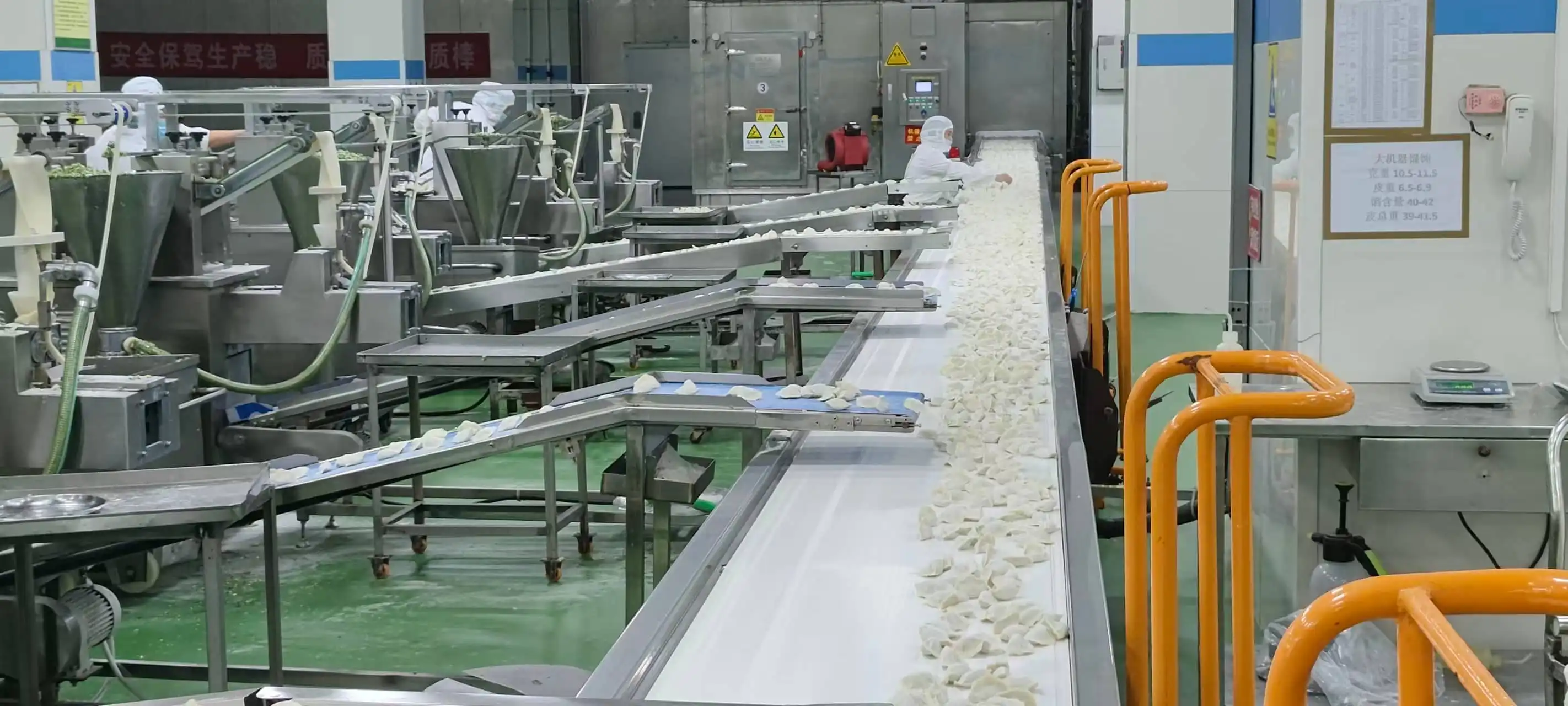
Making a deal with a stable source for shrimp wontons lowers the risk of batch inconsistency, which is one of the main problems that high-end restaurant buyers complain about. The three automatic production lines at Zhulaoda can make 100 tons of goods every day, and the 8,000-ton cold storage facility can keep up with yearly demand spikes. This supply security is a direct way for buyers who are building a signature product around shrimp wontons to build brand value and keep guests coming back.
Conclusion
On the basis of profit, brand recognition, and consumer choice, lean pork and shrimps wontons outsell chicken wontons in high-end restaurants and specialty stores. Chicken wontons are still useful in situations where price is important or where allergens need to be managed. For B2B procurement teams, the choice comes down to channel positioning: shrimp wontons are worth the extra money because they bring in more money and give the menu its own style. Zhulaoda's product is certified, consistently made, and available in a variety of bulk formats. It provides buyers with a solid base for creating a premium wonton program, from sourcing to final service.
FAQ
Are lean pork and shrimps wontons healthier than chicken wontons?
A lot of protein is in both, but the pork and shrimp mix has more micronutrients, like salt and selenium from the shrimp. There are fewer allergy flags on chicken wontons, which can be important in some hospital settings. Which option is better relies on the health concerns of your target customers and where the item is placed on the menu.
What allergens are present in shrimp wontons?
Wheat, soybeans, shrimp (crustacean shellfish), and sesame are all found in Zhulaoda's lean pork and shrimps wontons. Following the rules for food safety and the production license SC11137139600148, full allergen labeling is included. Before putting the product on the market in allergen-sensitive areas, B2B buyers should check the allergen documentation.
How should shrimp wontons be stored and handled for foodservice use?
Keep it at or below -18°C. Standard SB/T 10412 says that Zhulaoda's product can be frozen for 12 months. Do not freeze again after thawing. For food service businesses that serve a lot of people, bulk 2.5 kg bags are made so that portions are always the same and preparation time is kept to a minimum.
What certifications should I look for in a wonton supplier?
The basic needs are ISO 9001, HACCP, and national food safety certification (QS). For people who want to export, make sure that the supplier does X-rays to look for foreign objects and microbiological tests for Salmonella, Listeria monocytogenes, and Vibrio parahaemolyticus. These tests are standard at Zhulaoda's facility.
Can shrimp wontons be customized for private-label programs?
Yes, Zhulaoda lets you change the way 450g, 1kg, and 2.5kg packages are packed. Distributors and retail buyers who commit to buying a certain amount can take advantage of private-label programs.
Partner with Zhulaoda for Premium Wonton Supply
Since 2001, Zhulaoda has been making high-quality frozen wontons in Shandong, China, in facilities that are ISO 9001 and HACCP-certified. We are a reliable supplier of lean pork and shrimps wontons to the food service and retail industries all over the world. You can email us directly at sdzldsp@163.com to get samples, talk about prices, or set up a factory review. You should base your premium wonton program on a reliable supply system.
References
1. Euromonitor International. Packaged Food: Asia-Pacific Regional Trends. 2023.
2. Food and Agriculture Organization of the United Nations (FAO). The State of World Fisheries and Aquaculture. 2022.
3. Journal of Food Science and Technology. Nutritional Composition and Quality Parameters of Frozen Seafood Dumplings. 2021.
4. USDA Economic Research Service. Protein Food Consumption Trends in Foodservice Channels. 2022.
5. British Retail Consortium (BRC). Global Standard for Food Safety, Issue 9. 2022.
6. Food Safety and Standards Authority (FSSA). Allergen Labeling Requirements for Frozen Processed Foods. 2023.

Learn about our latest products and discounts through SMS or email