- English
- French
- German
- Portuguese
- Spanish
- Russian
- Japanese
- Korean
- Arabic
- Greek
- German
- Turkish
- Italian
- Danish
- Romanian
- Indonesian
- Czech
- Afrikaans
- Swedish
- Polish
- Basque
- Catalan
- Esperanto
- Hindi
- Lao
- Albanian
- Amharic
- Armenian
- Azerbaijani
- Belarusian
- Bengali
- Bosnian
- Bulgarian
- Cebuano
- Chichewa
- Corsican
- Croatian
- Dutch
- Estonian
- Filipino
- Finnish
- Frisian
- Galician
- Georgian
- Gujarati
- Haitian
- Hausa
- Hawaiian
- Hebrew
- Hmong
- Hungarian
- Icelandic
- Igbo
- Javanese
- Kannada
- Kazakh
- Khmer
- Kurdish
- Kyrgyz
- Latin
- Latvian
- Lithuanian
- Luxembou..
- Macedonian
- Malagasy
- Malay
- Malayalam
- Maltese
- Maori
- Marathi
- Mongolian
- Burmese
- Nepali
- Norwegian
- Pashto
- Persian
- Punjabi
- Serbian
- Sesotho
- Sinhala
- Slovak
- Slovenian
- Somali
- Samoan
- Scots Gaelic
- Shona
- Sindhi
- Sundanese
- Swahili
- Tajik
- Tamil
- Telugu
- Thai
- Ukrainian
- Urdu
- Uzbek
- Vietnamese
- Welsh
- Xhosa
- Yiddish
- Yoruba
- Zulu
Top Chinese Cabbage and Tofu Dumplings for Foodservice Buyers
If you are sourcing plant-based frozen dumplings for retail, foodservice, or private label distribution, Chinese cabbage and tofu dumplings belong at the top of your shortlist. These dumplings combine crisp napa cabbage with silky, protein-rich tofu, wrapped in a tender wheat dough shell. They satisfy growing vegan and vegetarian demand without sacrificing authentic Asian flavor. This guide walks procurement professionals through product specifications, supplier evaluation, quality standards, and market positioning — everything you need to make a confident, well-informed sourcing decision.
Understanding Chinese Cabbage and Tofu Dumplings: Key Insights for Foodservice Buyers
What Makes This Filling Different
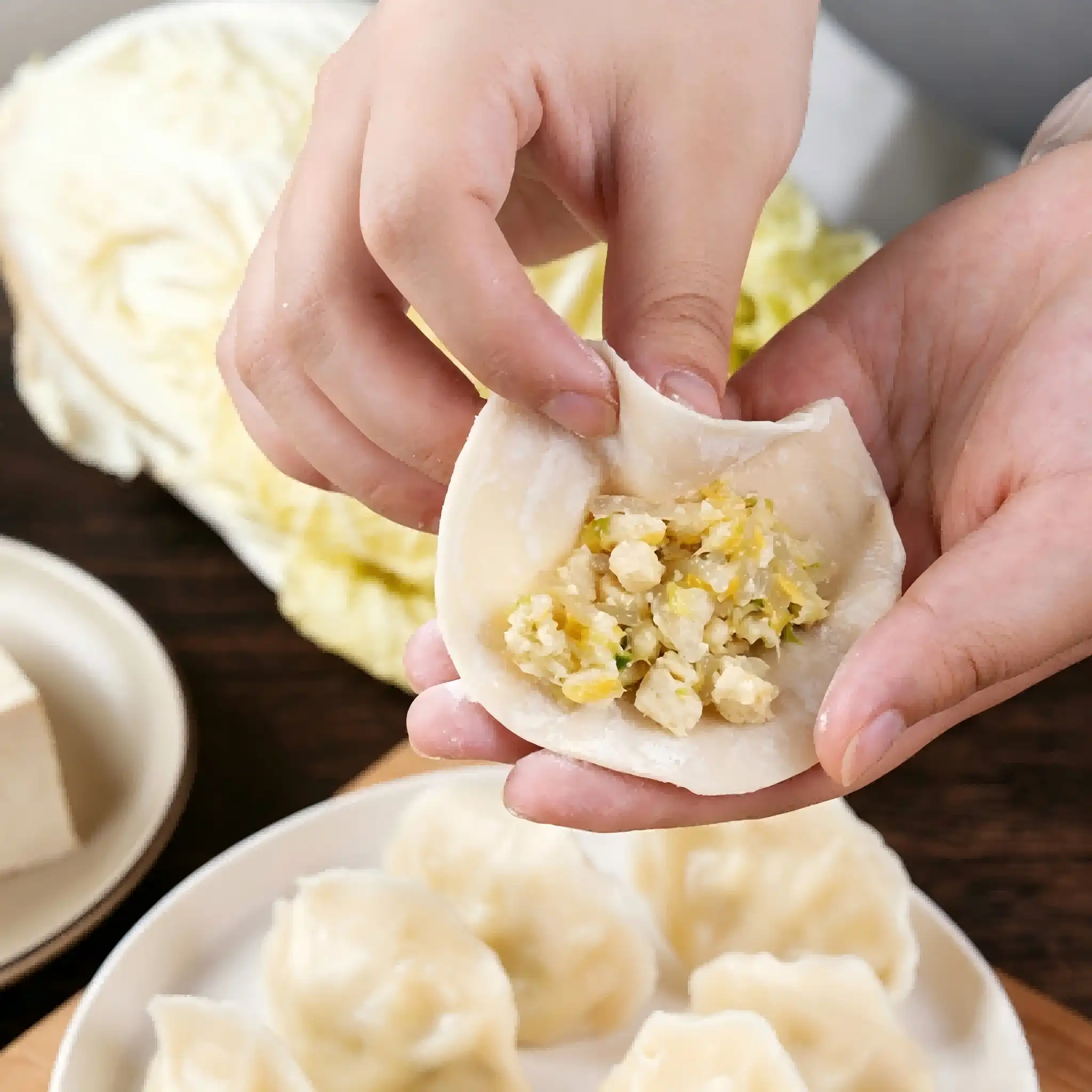
This type of cabbage, also called Chinese cabbage, has a lot more water than green cabbage, so its cells are softer. Before the dumplings are mixed with tofu, osmotic cooling is used to get rid of any extra water that is present during production. This is the step that makes industrial-grade dumplings different from other kinds. There is a unique "crunch-soft matrix" in this filling because the fibers from the cabbage make it chewy and the soy protein makes it creamy and sticky. Because this two-toned texture is hard to get with regular cabbage types, finding the right ingredients is a great way to tell the difference in quality.
Nutritional Profile and Market Relevance
A report from the Good Food Institute every year says that the plant-based food market in the US made about $8 billion in sales in 2023. You can put tofu and cabbage on top of this style. They have about 8 to 12 grams of plant-based protein per serve, less saturated fat, and no cholesterol than versions made with pork. For users who care about their health or who are vegan, this nutritional value has a direct effect on how appealing and trustworthy a brand's label is.
Comparing Dumpling Options: Making the Right Choice for Your Foodservice Needs
Plant-Based vs. Traditional Variants
The most popular frozen food item right now is traditional pork-and-chive dumplings, but people are starting to buy other things. Nielsen data shows that the people who buy the most frozen Asian foods are always families who eat a variety of foods. A vegetable-forward dumpling made from tofu and napa cabbage can meet that need without having to change the menu or buy new cooking tools. Since the food is always boiled, steamed, or fried in a pan, it's easy for restaurant workers to switch between items.
Wrapper Integrity and Cooking Performance
What kind of wrapping is used is just as important as the filling itself. Chinese cabbage and tofu dumplings rely on a wrapper that can hold up to boiling, freezing, and pan-frying. Distarch phosphate mixed with high-gluten wheat flour makes dough that doesn't crack when it boils and stays stretchy when it freezes. Because the flour blend has more amylose, Maillard browning works well at the base for pan-frying without letting oil soak in or seams split. Ask for wrapper specification sheets and make sure that the supplier's dough recipe works with all three ways of cooking before choosing an SKU.
Procurement Guide: Sourcing Chinese Cabbage and Tofu Dumplings for Foodservice
It's not enough to just compare prices to find a good service. These are the main things that experts look at when they buy frozen dumpling makers:
- Verified vegan formula documentation: Every oil, seasoning, and additive must be confirmed free from animal-derived ingredients. Cross-referencing ingredient declarations against third-party vegan certification records protects brands from costly label complaints downstream.
- Allergen management and segregated production lines: Because standard production environments may process wheat, soy, egg, or shellfish, buyers should obtain written segregation protocols and cross-contamination risk assessments before confirming orders.
- OEM and private label capability: Suppliers capable of accommodating 450g, 1kg, and 2.5kg packaging formats, along with custom label printing, reduce the lead time between product approval and retail shelf placement significantly.
- MOQ and cold chain logistics compatibility: An MOQ of approximately 500kg suits brand cold-start requirements. A verified 12-month frozen shelf life at -18°C or below supports the extended logistics chains typical of cross-border e-commerce distribution.
When a supplier can handle 450g, 1kg, and 2.5kg box forms as well as custom label printing, it cuts the time it takes from when the product is approved to when it is put on store shelves by a large amount.MOQ and cold chain operations should work together: A MOQ of about 500 kg meets the brand's needs for cold-start. In cross-border e-commerce, where supply lines are often very long, a proven frozen shelf life of 12 months at -18°C or below works well.
These standards are the very least that brands that work in controlled store and online settings must meet, covering everything from cabbage and tofu to the paperwork a supplier must provide. If a supplier gives you all of the paperwork you ask for, it shows that they are an established business. This lowers your compliance risk.
Ensuring Quality and Consistency: Best Practices for Handling and Serving
Cold Chain Management
To keep frozen dumplings fresh, the cold chain must stay at or below -18°C. Changes in temperature above -10°C speed up the process of ice recrystallizing. This makes the tofu less smooth and the wrapper break. As a normal part of qualifying a seller, buyers should look at the cold chain continuity records of the suppliers they are considering. This is important and shouldn't be forgotten.
Cooking and Presentation Standards
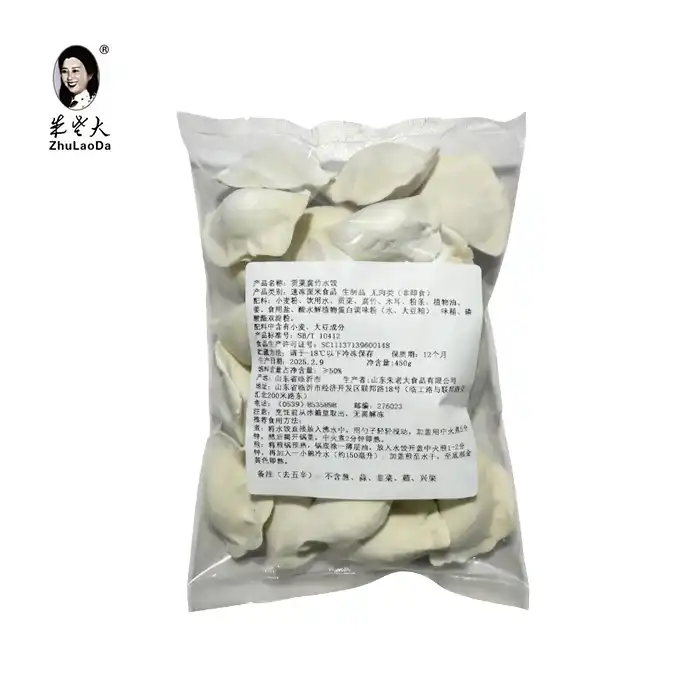
They are always good whether they are boiled, steamed, or pan-fried at Zhulaoda. Chinese cabbage and tofu dumplings have a wheat flour shell, tofu, Chinese cabbage, sweet potato starch noodles, onions, ginger, vegetable oil, edible salt, and taste made from hydrolyzed vegetable protein. The ingredients stay together even when the temperature changes. Aromatics like onion and ginger are mixed with oil during production to keep the flavors from going away after being frozen for a long time. This means that the dumpling will still taste good after 10–11 months in transit.
Leveraging Market Trends and Consumer Preferences to Maximise ROI
The market for frozen dumplings around the world is set to keep growing until 2028. This is because more people in Europe and North America want fast, ethnic, and plant-based frozen foods. Putting out a tofu and cabbage dumpling as "Asian-inspired plant-based comfort food" speaks to three types of buyers at the same time: those who are interested in culture, those who want to eat healthier, and those who want something that is easy to make.
As long as brands work with a good OEM maker, they can use their R&D iteration power to change the taste by adding shiitake mushrooms or more sesame oil, for example. They can do this without having to spend a lot of money making their own ways to make things. It cuts down on the time it takes to learn about the market and launch a product, which gives them an edge in categories where trends matter.
Conclusion
Chinese cabbage and tofu dumplings are two of the most important plant-based frozen foods. Not only are they truly national, but they are also very healthy and fit with the idea of being vegan, and you don't have to give up taste or cooking options. The most important things for procurement professionals are how well the supplier documents are written, how well the production lines are separated, how flexible the OEM is, and how reliable the cold chain is. When all of these things come together, you have a product that can easily move through stores and online while still staying true to your brand.
FAQ
What is the shelf life of these frozen dumplings?
If you keep it at -18°C or lower all the time, it will last for 12 months. This amount of time lets cross-border operations and online shopping delivery take longer without changing the texture of the filling or the strength of the wrapper.
Can the formula be confirmed as fully vegan?
The original recipe calls for vegetable oil, onions, ginger, edible salt, sweet potato starch noodles, tofu, Chinese cabbage, vegetable flour, and a flavor powder made from hydrolyzed soybeans. This doesn't have any meat or animal fats in it. People who want written proof that a formula is vegan should ask the maker for official ingredient lists and paperwork showing how the production line is separated.
What allergens are present?
Parts of the item are made from wheat and soybeans. If a buyer needs special "free from" signs, they should find out if the factory has separate lines that keep allergens out.
What packaging formats are available?
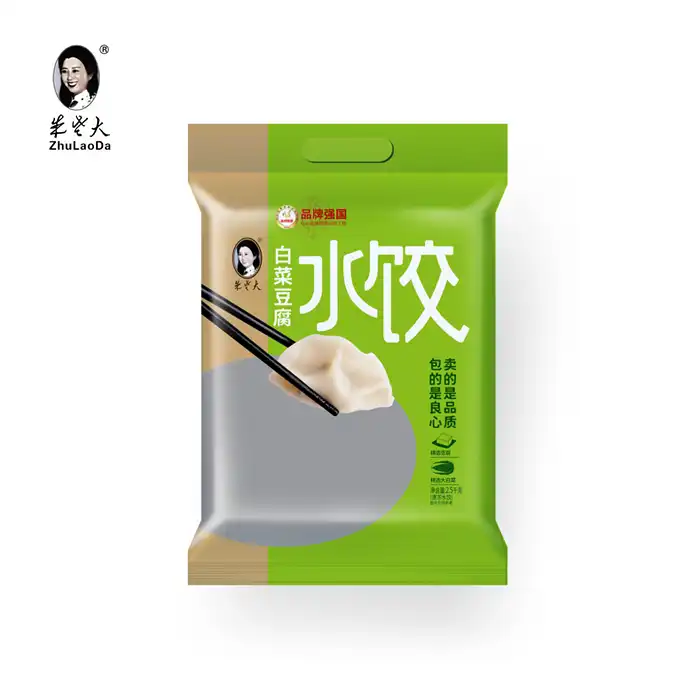
As a whole, you can pick 450g, 1kg, or 2.5kg. You can get private name packaging that is made just for you through OEM deals. This packaging can be used in retail, club stores, and food service.
What is the minimum order quantity?
It's about 500 kg per order, which is enough to test the market and introduce a new brand before raising the number.
Partner With Zhulaoda for Your Private Label Dumpling Program
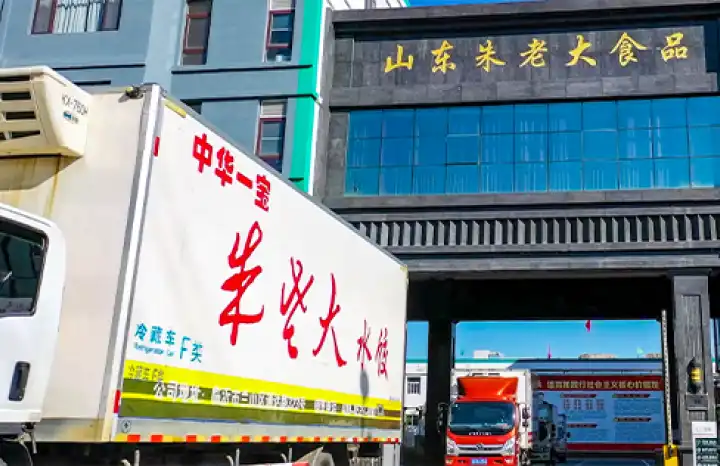
Zhulaoda has supplied certified frozen dumplings since 2001, with 100-ton daily output capacity and an 8,000-ton cold storage facility. As a trusted Chinese cabbage and tofu dumplings manufacturer, we offer full OEM support, rigorous allergen documentation, and a 12-month frozen shelf life built for global distribution. Reach out to our team at sdzldsp@163.com or visit zhulaodadumpling.com to request samples and begin your product development conversation today.
References
1. Good Food Institute. U.S. Retail Market Insights: Plant-Based Foods Industry Overview. 2023.
2. Nielsen IQ. Frozen Food Category Trends: Plant-Based Segment Growth Analysis. 2023.
3. Mintel Group. Frozen Asian Food Market Report: Consumer Preferences and Innovation Trends. 2022.
4. Food and Agriculture Organization of the United Nations. Dietary Protein Quality Evaluation in Human Nutrition. FAO Food and Nutrition Paper 92, 2013.
5. Journal of Food Science. Freeze-Thaw Stability of Tofu-Based Food Systems and Ice Recrystallization Control. 2021.
6. International Food Information Council. Consumer Attitudes Toward Plant-Based Eating and Label Claims. IFIC Foundation Report, 2022.
Learn about our latest products and discounts through SMS or email