- English
- French
- German
- Portuguese
- Spanish
- Russian
- Japanese
- Korean
- Arabic
- Greek
- German
- Turkish
- Italian
- Danish
- Romanian
- Indonesian
- Czech
- Afrikaans
- Swedish
- Polish
- Basque
- Catalan
- Esperanto
- Hindi
- Lao
- Albanian
- Amharic
- Armenian
- Azerbaijani
- Belarusian
- Bengali
- Bosnian
- Bulgarian
- Cebuano
- Chichewa
- Corsican
- Croatian
- Dutch
- Estonian
- Filipino
- Finnish
- Frisian
- Galician
- Georgian
- Gujarati
- Haitian
- Hausa
- Hawaiian
- Hebrew
- Hmong
- Hungarian
- Icelandic
- Igbo
- Javanese
- Kannada
- Kazakh
- Khmer
- Kurdish
- Kyrgyz
- Latin
- Latvian
- Lithuanian
- Luxembou..
- Macedonian
- Malagasy
- Malay
- Malayalam
- Maltese
- Maori
- Marathi
- Mongolian
- Burmese
- Nepali
- Norwegian
- Pashto
- Persian
- Punjabi
- Serbian
- Sesotho
- Sinhala
- Slovak
- Slovenian
- Somali
- Samoan
- Scots Gaelic
- Shona
- Sindhi
- Sundanese
- Swahili
- Tajik
- Tamil
- Telugu
- Thai
- Ukrainian
- Urdu
- Uzbek
- Vietnamese
- Welsh
- Xhosa
- Yiddish
- Yoruba
- Zulu
What Are Pickled Chinese Cabbage and Pork Dumplings?
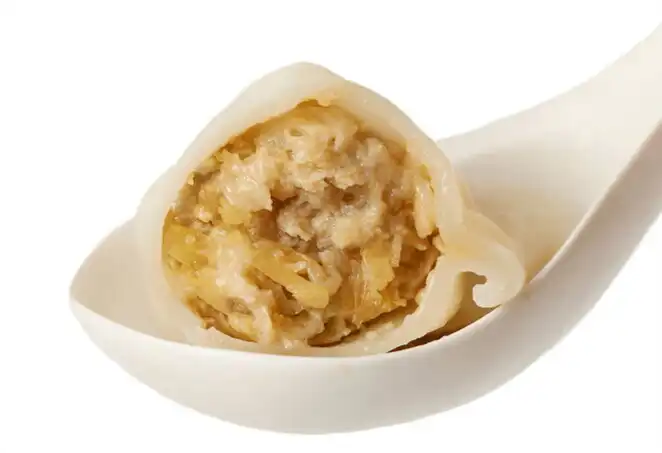
When we talk about authentic Northeast Chinese comfort food, pickled Chinese cabbage and pork dumplings immediately come to mind. These frozen delicacies combine tender pork front leg meat with tangy, fermented Napa cabbage wrapped in a delicate wheat flour dough. The unique combination delivers a savory-sour flavor profile that evokes nostalgia for many overseas Chinese families while appealing to Korean-American consumers familiar with fermented kimchi-style vegetables. The dumplings embody centuries of culinary tradition, offering both emotional connection and practical convenience for busy households and restaurants across North America.
Understanding Pickled Chinese Cabbage and Pork Dumplings
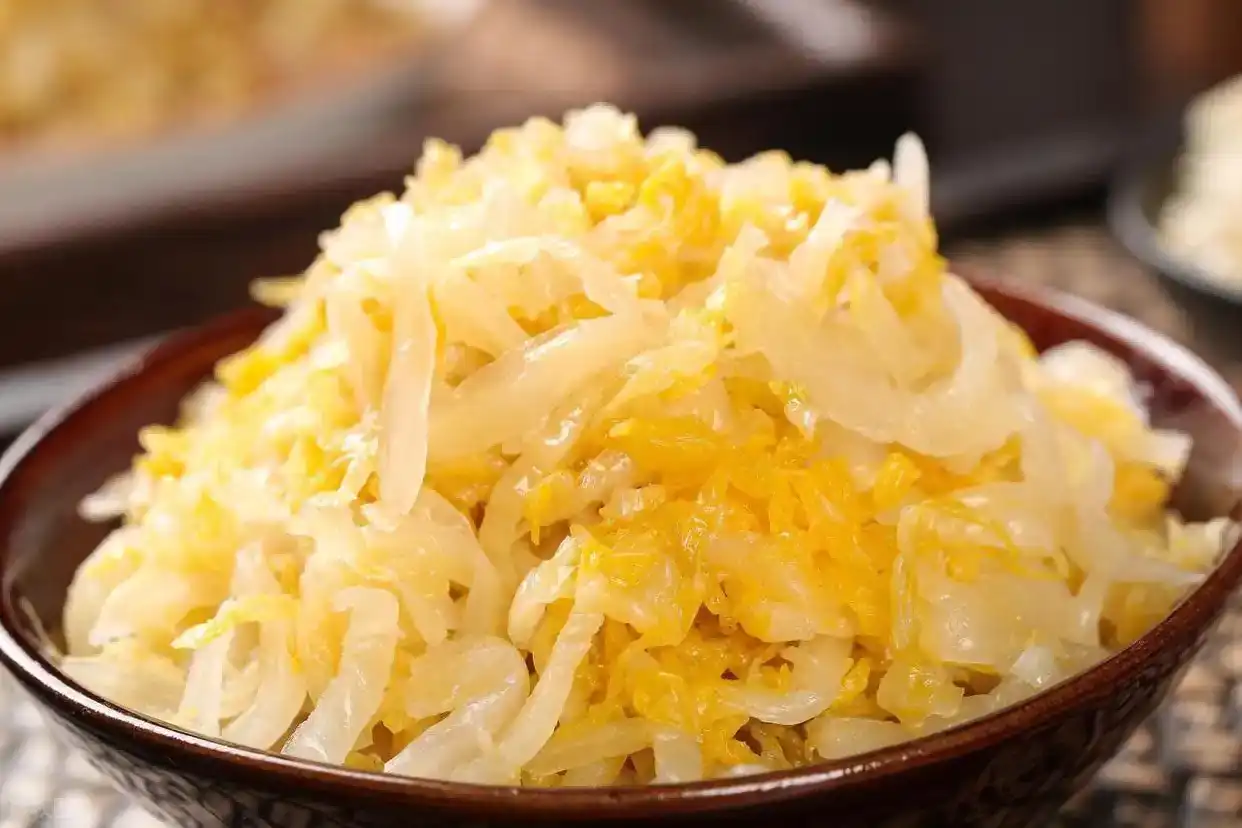
What Makes Pickled Chinese Cabbage Different from Fresh Cabbage
Pickled Chinese cabbage goes through a natural fermentation process that turns regular Napa cabbage into an item that is high in probiotics. Lactic acid bacteria, which are good for you, break down sugars during fermentation. This gives the beer its tangy flavour and crisp texture.
This process not only makes the food last longer, but it also makes it easier to digest and adds gut-friendly microorganisms like those found in Korean kimchi. The controlled fermentation lowers the water content of the vegetables, which keeps the filling from becoming watery after freezing. This is an important thing to keep in mind when making frozen dumplings for sale.
The Culinary Tradition Behind This Combination
The combination of pork and pickled cabbage comes from the harsh winters in Northeast China, when fermenting vegetables was necessary to stay alive. In the autumn, families would make a lot of pickled cabbage, which they would then use all winter long in soups, stews and hot pots. The tangy cabbage cuts through the sweetness of the pork, making a flavour that has been loved for generations. Millions of Chinese immigrants find comfort in this combination, and because it tastes like Korean jjigae, it's also available to a wider range of Asian-Americans.
Nutritional Profile and Health Benefits
Pork front leg meat is a good source of protein, and both pickled and fresh cabbage are good sources of fibre. The fermentation process makes more vitamin C available and adds probiotics, which are good for your digestive health. The usual lean-to-fat mix of 7:3 makes food juicy without adding too many calories. To meet the needs of health-conscious consumers, modern formulations reduce sodium levels while keeping the original flavour. Ginger and onions add anti-inflammatory chemicals to these dumplings, making them more than just convenient—they are also healthy for families and restaurant customers.
Key Factors for Choosing Pickled Chinese Cabbage and Pork Dumplings for B2B Procurement
Quality Indicators for Commercial Products
B2B buyers should look at a few important quality indicators when evaluating suppliers. The amount of nitrite in the pickled cabbage has to meet international standards for food safety, especially for export markets where customs checks are more strict. Pickled Chinese cabbage and pork dumplings are a popular end-product application, so the filling's texture and flavor directly depend on the raw cabbage quality.
Texture uniformity shows that the fermentation process is going well; the cabbage shouldn't get mushy but should stay crisp. Reputable companies like Zhulaoda use osmotic control methods during pre-processing. These include controlled salting, centrifuge dewatering, and oil covering to make a shield against water before mixing with pork. This special method stops syneresis, the release of water that weakens the wrapper when it freezes and thaws.
Certifications for manufacturing are very important for buying things. The Product Standard Code SB/T 10412 makes sure that the quick-frozen wheat flour products meet Chinese national standards, and the Food Production License Number SC11137139600148 makes sure that the products are legal to make. Buyers in bulk should ask for proof that the company is following GB 19295, which sets tight limits on tests for Total Plate Count, Coliforms, Staphylococcus aureus, and Salmonella.
Packaging Options That Serve Different Markets
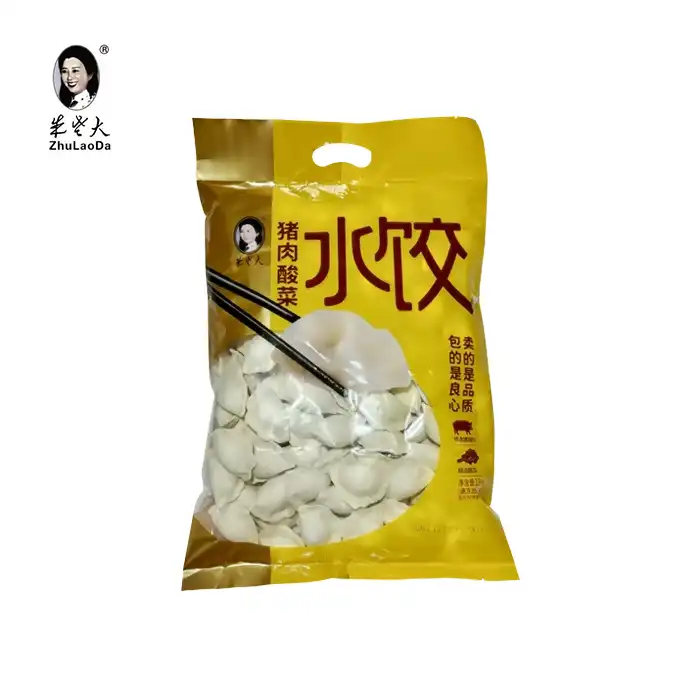
Flexible packaging configurations work well with a variety of distribution channels. The 450g retail size works well for Asian supermarkets that serve regular people, while the 1kg choices are a good mix of convenience and value for small restaurants. The 2.5 kg bulk packaging works well for institutional catering and central kitchens that need to buy things quickly and cheaply.
Importers who want to build their brand in competitive markets can use private label options that come in custom packaging. All types need low-moisture-transmission covers to keep them from sublimating and freezing during the 12 months they can be kept at -18°C.
Evaluating Supplier Capabilities Beyond Product Quality
Logistics skills separate sellers who are solid from those who aren't. Manufacturers who use modern cold storage systems with smart shuttle rack systems show that their infrastructure is mature. Zhulaoda's 8,000-ton frozen warehouse makes sure that there is a steady supply, even during busy festival times when demand goes up. Three automatic production lines that can each make 100 tonnes of product every day allow for growth as the business grows. Modern fresh air systems and strict rules for sterilisation in production workshops lower the chances of contamination that could lead to expensive recalls.
How fast you can clear customs depends a lot on how ready your export documents are. Suppliers who have worked with North American markets before know what is needed for ractopamine-free pork and can provide the necessary veterinary health certificates. Customs delays can be avoided by using bilingual labels that accurately list allergens, such as making sure that wheat and soy ingredients are clearly marked. Temperature tracking records for sea freight show that the cold chain is intact during the 30–40 day shipping window to ports in the U.S. and Canada.
Procurement Strategies and Market Insights
Sourcing Channels for Bulk Orders
Import experts usually find sellers through more than one way. Trade shows like the Canton Fair and specialised food exhibitions offer face-to-face evaluations where samples can be tasted and plant records can be looked over at the same time. Online B2B platforms let you compare more suppliers, but they need to be checked out more carefully. When you work directly with a manufacturer, like when you work with Zhulaoda's export team, you can avoid the costs of going through a middleman and communicate clearly about production schedules, customisation options, and compliance paperwork.
Importers can benefit from the fact that the demand for ethnic frozen foods in North American markets is on the rise. Market research shows that Asian food imports to the US have grown by 8–12% each year since 2018. Frozen dumplings have done especially well with both ethnic customers and mainstream families looking for quick and easy meal options. Even though shipping costs are an issue, this expansion makes container-scale imports more likely to work.
Cold Chain Management for Frozen Products
Keeping things at -18°C during foreign shipping requires picking the right partners. Frozen goods consolidation services know how important it is to use the right refrigeration equipment and cool the containers first. Temperature logging devices should be sent with packages to show that the integrity of the product was kept.
For items like Pork and cabbage, which are prone to quality degradation from even minor temperature fluctuations, this data becomes especially critical. Some importers agree terms that give them money if the temperature goes above or below certain levels. This protects their investment against problems that happen during transport.
The choice of destination port has a big effect on the total landed costs. Major ports on the West Coast make it easy to serve Asian supermarket clusters, while entry points on the East Coast may be better for serving markets in the Northeast U.S. When comparing ports, importers should add up all the costs, such as demurrage risks, customs processing times, and transportation costs within the country. Working with customs traders who are familiar with processed meat products speeds up the clearance process by making sure that the right paperwork is prepared.
Market Positioning and Private Label Opportunities
Korean-Americans who are familiar with pickled veggie flavours will like the "Chinese-style kimchi dumpling" marketing. Because of this, distributors can reach more than just traditional Chinese supermarkets. They can also reach Korean grocery chains and stores that sell goods all over Asia. Putting "Northeast-style dumplings" or "tangy pork pockets" on the menu of fusion restaurants draws curious mainstream eaters who want to try real ethnic foods.
Private label development can help established importers with marketing networks make more money. Zhulaoda can make OEM recipes that change the amount of spice, the thickness of the wrapper, or the ratios of fillings to suit the tastes of different markets. Custom formulations usually have minimum order quantities that start at container-load levels. This is doable for importers who already have established sales channels. Custom packaging with bilingual cooking instructions and brand stories makes items look better on store shelves and keeps customers coming back.
Comparison and Decision-Making Guide for Procurement Managers
Traditional Versus Modern Pickling Methods
Artists who use natural fermentation, which takes a lot of time, may say that their flavours are more complicated, but business buyers who need consistent taste profiles across large volumes are at risk when the flavours aren't consistent. Professional makers use modern controlled fermentation to get uniform results while keeping the probiotic benefits. The main difference is that quality control systems keep an eye on pH levels, temperature curves, and the length of fermentation to make sure that every batch of alcohol meets certain taste standards.
Most of the time, cost-benefit research shows that business production is better than other options. In speciality stores, handmade dumplings might fetch higher prices, but restaurant chains and institutional buyers need a lot of them, and they need to know that the food is safe and will always be the same. This is what advanced manufacturing offers. Zhulaoda only uses certified origins for its ingredients, like Canadian and Hetao Plain wheat flour and JINLUO chilled pork. This shows that the company is dedicated to using high-quality ingredients that support its premium positioning without artisan production variability.
Balancing Authenticity with Market Adaptation
Keeping authentic flavours that please core ethnic customers and changing goods to appeal to a wider market are two things that procurement managers have to deal with all the time. Focus groups of people from the target demographics can give useful information about the level of seasoning, the chewiness of the wrapper, and the ratios of filling to shell.
Pork and cabbage is often the benchmark filling used in such tests, as its familiar taste allows panellists to clearly detect subtle recipe variations. Some importers keep two different SKUs: one with the original recipe for Asian shops and one with some changes like less salt and no MSG for regular stores.
More and more, health-conscious consumers care about how clear the ingredients list is. Trust is built when ingredients like wheat flour, pork front leg meat, pickled Chinese cabbage, soy-based goods, and seasonings are made clear. Food ingredients like distarch phosphate and flavouring essence are useful in industry, but some market groups want "cleaner" versions of their products. Talking to manufacturers about possible changes during the procurement process lets you make changes that fit the values of your target customers.
Practical Cooking and Usage Tips for Partners and Clients
Optimal Preparation Methods for Different Service Contexts
Knowing how different ways of preparing food affect texture and look is helpful for restaurant chefs. Boiling gives food the usual soft texture that older generations like, and it works well for high-volume diner service where batch cooking is important. Steaming keeps the delicate shell together and brings out the aromas of the ginger and scallions, which makes it perfect for presenting dim sum. When food is served on a plate, pan-frying makes the crusts look better because they are golden and require more attention than cooking or steaming.
Quality makers test the success of different cooking methods to make sure they are all reliable. Industry standards say that burst rates must be less than 1% during eight minutes of vigorous boiling. This means that wrappers keep their shape even when they're cooked a little longer than needed, which is important for restaurants that are always busy. The 7:3 lean-to-fat ratio and moisture control methods make sure that the portions don't shrink too much while they're cooking, so the prices on the menu are fair.
Menu Innovation and Fusion Applications
Chefs who are creative are using these dumplings in non-traditional ways that help them reach more customers. Putting sliced cooked dumplings on top of ramen changes the texture and adds more protein. Serving with non-traditional dipping sauces like cilantro-lime crema, sweet chilli mayo, or Sriracha mayo attracts younger diners who want to try something new while still enjoying what they know. Some places serve "dumpling bowls" that include the dish with greens, pickled veggies, and grain bases. This fits in with the current trend of grain bowls.
Catering businesses like these dumplings because they can be used for a variety of events. They work just as well as passed appetisers at cocktail parties, plated courses at sit-down dinners, or buffet items at casual get-togethers. The frozen shelf life of 12 months helps chefs handle their inventory when demand changes, lowering waste and making sure there is product for last-minute bookings.
Conclusion
Pickled Chinese cabbage and pork dumplings are more than just easy-to-find frozen food. They are cultural symbols that meet modern needs for quick, healthy meals. Businesses that sell to people in North America can be sure to make money with these goods because they are in high demand, last a long time, and can be used in a variety of ways in restaurant and retail settings.
Long-term partnership success depends on choosing providers with strong quality systems, knowledge of export compliance, and the ability to increase output. More and more people are interested in authentic ethnic foods, which means that this traditional speciality will continue to grow in popularity.
FAQ
Why Should Importers Consider This Product for Their Portfolio?
There are two ways to make money: nostalgic draw for ethnic customers and crossover possibilities for Korean-American and adventurous mainstream markets. Planning your inventory is easier when demand stays stable and yearly peaks are expected around Lunar New Year and big holidays. When compared to goods with shorter expiration dates, the 12-month shelf life lowers the risk of markdowns.
How Do Commercial Frozen Dumplings Compare to Homemade Quality?
Individual Quick Freezing (IQF) is used in modern manufacturing to make small ice crystals that keep cells intact, giving the texture of fresh homemade dumplings. Unique filling methods stop the release of water that weakens homemade frozen goods. Professional sealing and consistent sizes make the appearance better than what you'd get at home.
What Documentation Should Buyers Request from Suppliers?
The Food Production License, third-party testing results for microbiological safety, temperature tracking records for cold chain compliance, and certificates of origin are all important papers. For U.S. imports, make sure that the pork comes from a source that doesn't use ractopamine and that allergen management protocols are followed. Regulatory problems can be avoided by using nutritional research to back up label claims.
Partner with Zhulaoda for Reliable Supply
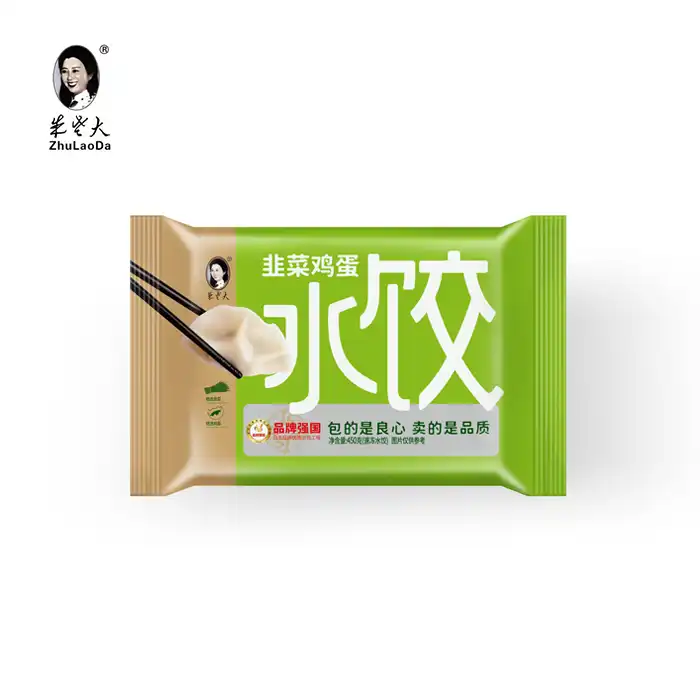
With over 20 years of experience serving international markets, Zhulaoda is a well-known producer of Pickled Chinese cabbage and pork dumplings. Our factory in the southern part of Shandong uses cutting edge automation and strict quality control measures to make sure that every batch meets the highest standards for food safety around the world. We know how hard it is for importers to deal with things like following customs rules and keeping the cold chain intact.
That's why we offer complete export documentation to help with the clearance process. This is true whether you need 450g retail packs for Asian stores or big industrial forms for restaurant sellers. Our OEM and flexible packaging options will help you place your business in the market.
You can talk to our export team at sdzldsp@163.com about your buying needs, ask for samples, and find out how our relationship can help your frozen food business. You can look at our full catalogue of products and manufacturing certifications at zhulaodadumpling.com.
References
1. Grand View Research. (2021). Frozen dumplings market size, share & trends analysis report.
2. Liu, S., et al. (2020). Fermented vegetables: Health benefits, defects, and current technological solutions. Foods, 9(5), 1-23.
3. National Food Safety Standard. (2018). GB 19295 - National food safety standard for quick-frozen wheat flour products. China National Standards.
4. USDA Foreign Agricultural Service. (2022). China - Food and agricultural import regulations.
5. Zhao, D., & Shah, N. P. (2021). Lactic acid bacterial fermentation modified phenolic composition in tea extracts and enhanced their antioxidant activity. LWT - Food Science and Technology, 138, 1-9.
6. Zhulaoda Food Company. (2023). Manufacturing standards and export capabilities.
Learn about our latest products and discounts through SMS or email