- English
- French
- German
- Portuguese
- Spanish
- Russian
- Japanese
- Korean
- Arabic
- Greek
- German
- Turkish
- Italian
- Danish
- Romanian
- Indonesian
- Czech
- Afrikaans
- Swedish
- Polish
- Basque
- Catalan
- Esperanto
- Hindi
- Lao
- Albanian
- Amharic
- Armenian
- Azerbaijani
- Belarusian
- Bengali
- Bosnian
- Bulgarian
- Cebuano
- Chichewa
- Corsican
- Croatian
- Dutch
- Estonian
- Filipino
- Finnish
- Frisian
- Galician
- Georgian
- Gujarati
- Haitian
- Hausa
- Hawaiian
- Hebrew
- Hmong
- Hungarian
- Icelandic
- Igbo
- Javanese
- Kannada
- Kazakh
- Khmer
- Kurdish
- Kyrgyz
- Latin
- Latvian
- Lithuanian
- Luxembou..
- Macedonian
- Malagasy
- Malay
- Malayalam
- Maltese
- Maori
- Marathi
- Mongolian
- Burmese
- Nepali
- Norwegian
- Pashto
- Persian
- Punjabi
- Serbian
- Sesotho
- Sinhala
- Slovak
- Slovenian
- Somali
- Samoan
- Scots Gaelic
- Shona
- Sindhi
- Sundanese
- Swahili
- Tajik
- Tamil
- Telugu
- Thai
- Ukrainian
- Urdu
- Uzbek
- Vietnamese
- Welsh
- Xhosa
- Yiddish
- Yoruba
- Zulu
Beef and Scallion Dumplings for Multi-Location Rollouts
Scaling a foodservice or retail program across multiple locations demands more than a good recipe. When beef and scallions dumplings are on the menu, procurement decisions directly affect margin, brand consistency, and customer loyalty. From wrapper integrity under high-volume cooking to cold chain performance across dispersed distribution points, every variable matters. This guide walks procurement managers, distributors, and OEM buyers through the key considerations for sourcing, deploying, and sustaining a frozen dumpling program that holds up at scale—without sacrificing the savory, protein-forward experience that drives repeat purchases.
Understanding Beef and Scallion Dumplings: Key Insights for B2B Buyers
This type of product is appealing for more than just nostalgic reasons. As interest in high-protein, globally-inspired foods grows in both retail and food service in the U.S., beef and scallions dumplings occupy a defensible niche above commodity pork SKUs.
Product Composition and Nutritional Profile
Beef, pork, chicken, Chinese cabbage, puffed soy products, starch, scallions, ginger, soy sauce, vegetable oil, spices, edible salt, monosodium glutamate, white sugar, phosphate distarch, and food flavor are used to make our beef and scallions dumplings. The multi-protein filling gives the meat a satisfying texture and a rich, savory flavor. Note for people with allergies: the product has parts made of wheat and soy. Each batch meets established standards for food safety and is made under Product Standard Code SB/T 10412 and Food Production License SC11137139600148.
Cooking Versatility Across Commercial Kitchen Formats
Cooking flexibility is an operational benefit that matters when people are sent to more than one place. There are three ways to cook these dumplings:
- Boiling: When the water starts to boil, add the pieces and cook for 6 to 8 minutes, until the pieces float. This method works well in central kitchens with a lot of food where speed is important, and the wrapper stays soft and unified without turning stiff.
- Steaming: Putting it in an industrial steamer for 10 to 12 minutes will steam it. Steaming keeps the filling moist and gives it a clean look that works well in high-end restaurants or at expensive store hot-food counters.
- Pan-frying: Cook in a pan until the bottom is golden. Then add water, cover, and let it sit for 5 minutes. Then take it out and let it crisp up. This method adds a difference in textures that guests who want a restaurant-like experience will like.
Each method produces a distinct sensory outcome, which means a single SKU—such as beef and scallions dumplings—can serve multiple dayparts and service styles across your locations.
Factors to Consider When Procuring Beef and Scallion Dumplings for Multi-Location Distribution
Buying beef and scallions dumplings in bulk brings up issues that a user of a single unit doesn't usually have to deal with. Before agreeing to a seller, you should pay close attention to three specific areas.
Product Format: Frozen Is the Practical Standard
Fresh dumplings can only be kept for a few days and need to be transported in the fridge with strict humidity controls. Textural realism is lost in pre-cooked forms. IQF-frozen (individually quick-frozen) product kept at -18°C or below is the usual way to go for rollouts in more than one place. Our product can stay frozen for 12 months, which helps buyers plan their supplies and protects them from changes in demand. The -18°C storage requirement is in line with FDA rules for frozen foods and makes it easier for U.S. distribution networks to follow the rules.

Supplier Certifications and Traceability
Certification is a filter that can't be skipped; it's not a marketing tool. The Chinese food production license (SC), ISO 9001 (quality management systems), and HACCP (hazard analysis and key control points) should all be checked by procurement teams before any seller is put on the short list. All three are held by Zhulaoda, along with a Food Safety Certification from 2005. The source of raw materials can also be tracked. For example, beef and other proteins come from JINLUO-certified cold fresh meat, and wheat flour comes from high-quality Canadian imports and China's Hetao Plain region.
Packaging Options and Cold Chain Logistics
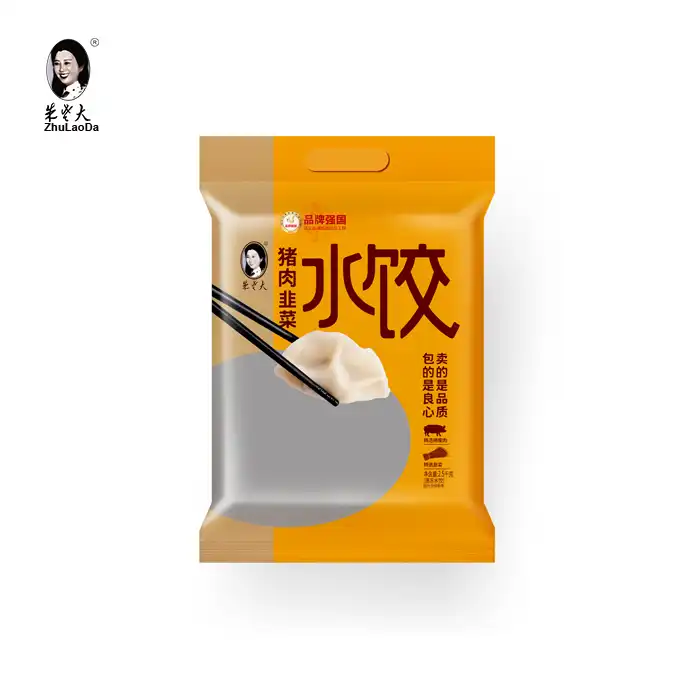
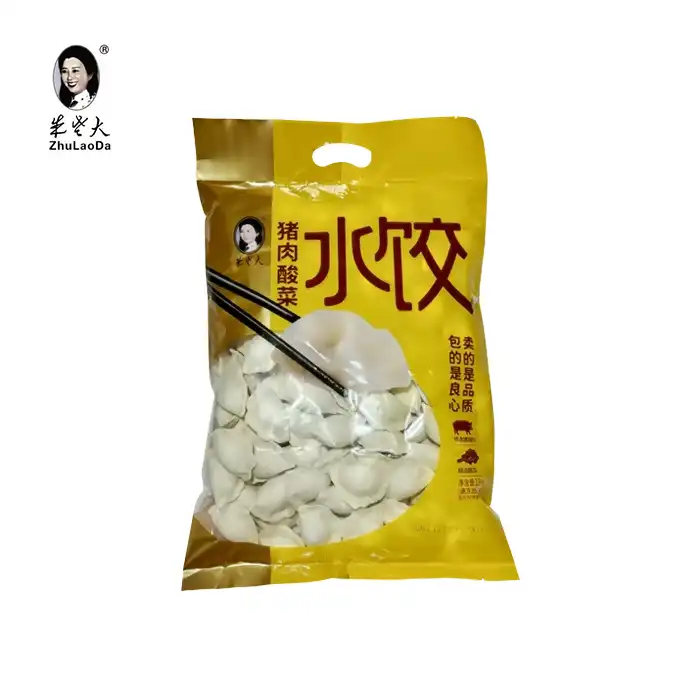
The type of packaging affects both how it looks on the shelf and how much it costs to ship. We have 450g retail units, 1kg foodservice packs, and 2.5kg bulk cases. For private-label and gift box programs, we can also make the packaging more specific to your needs. For the cold chain to be reliable, temperature logs must be kept from creation to delivery. Our cold storage building has a modern clever shuttle rack system that can hold more than 8,000 tons of goods, primarily for beef, and this system keeps the temperature at -18°C throughout storage and shipping.
Comparing Leading Beef and Scallion Dumpling Suppliers
When benchmarking beef and scallions dumplings suppliers, three dimensions separate reliable partners from commodity vendors: production capacity, quality control infrastructure, and customization capability.
Why Zhulaoda Stands Apart in the Frozen Dumpling Category
Shandong Zhu Laoda Food Co., Ltd. has been in business since March 2001 and has three automatic production lines that can make up to 100 tons of frozen food every day. It is the biggest frozen food processing base in southern Shandong and northern Jiangsu in terms of equipment and building scope. The high-quality production workshop has advanced fresh air systems and UV cleaning to keep the working environment under control.
X-rays and metal detectors are used to get rid of strange bodies, bacterial tests are done to look for Salmonella and Listeria monocytogenes, the filling ratio is checked, and the cooked wrapper's texture is examined to make sure it's still structurally sound. These are not vague goals; they are operational standards that are built into every production run.
Pricing positions this product above regular pork dumplings, supporting higher final retail prices and better profit margins for buyers in high-end supermarkets and fusion restaurants. Because the formulas and packaging can be changed, it works well for OEM and private-label programs, which makes it easier for brands to stand out.
Streamlining Multi-Location Deployment: Best Practices
A product that performs in a single-location pilot can still fail at scale if operational discipline is absent. These practices reduce beef and scallions dumplings rollout risk materially.
Demand Forecasting and Ordering Cadence
As trade markets change, so do the prices of beef's raw materials. You can avoid mid-cycle cost increases by locking in forward pricing deals with your supplier while you are negotiating the contract. Align your order cycles with the amount of cold storage space you have and the speed you expect per spot. Smaller, more frequent orders lower inventory risk without triggering minimum-order penalties for high-end retail, where premium frozen dumplings may turn over more slowly than mass-market SKUs. Talk to your supplier about this directly during pilot planning.
Standardized Cooking Procedures and Quality Feedback
Standardized cooking methods are needed to make sure that customers have the same experience everyplace. Give out laminated cook cards that tell you how much water to use for each dumpling, how long to cook them, and how hot to keep them. Set up an organized feedback loop between your front-of-house staff and your buying team, and include scallions in your quality checklist—because their appearance, texture, and color can reveal thawing or temperature abuse just as clearly as cracked wrappers or separated fillings.
Cracks in the wrapper, filling that separates, or uneven browning in pan-fry applications are early signs of cold chain deviation, not recipe failure. As soon as you see these warning signs, talk to your seller about them using batch codes to quickly find the root cause.
Enhancing Customer Experience: How Zhulaoda Supports Your Program
Our beef and scallions dumplings line is designed for B2B customers who need to buy a lot of them without sacrificing quality. When buyers work with Zhulaoda, they get personalized account support, help coordinating samples for multiple rounds of tasting tests, and access to recipes and package designs that can be changed to fit the needs of high-end stores or restaurants.
The normal buying process takes four to eight weeks, from the first sample request to the review of resources to the small-batch trial order. This gives enough time for careful consideration before committing to a large order. Visit zhulaodadumpling.com for full product documentation and certification records.
Conclusion
Where to get beef and scallions dumplings for rollouts in multiple locations is a supply chain decision that has direct effects on the quality of the business and keeping customers. Some of the most important factors are protein quality, cold chain reliability, batch consistency, and certification compliance. These can all be addressed by working with a manufacturer whose systems and facilities are designed for high-volume B2B supply. Zhulaoda's production capacity, traceability practices, and customization capability make it a credible partner for premium retail and foodservice programs. Evaluate samples, verify certifications, and plan your cold chain before committing to volume.
FAQ
What is the shelf life of these frozen dumplings?
The shelf life is 12 months when stored continuously at -18°C or less. Temperature breaks during transport will shorten the effective shelf life, so verified cold chain documentation from the plant to the delivery point is essential.
Can cooked dumplings be re-frozen for later service?
It is not a good idea to freeze cooked dumplings again. Repeated freeze-thaw cycles ruin the texture of the shell and the wetness of the filling, making the eating experience less than ideal. Plan preparation volumes based on expected service demand to cut down on waste.
What packaging formats are available for B2B orders?
Standard options are 450g, 1kg, and 2.5kg. Custom packaging—including private-label store boxes and large foodservice cases—is available. Get in touch with the Zhulaoda team to talk about special format minimum order amounts.

Are hand-made or machine-made dumplings better for high-volume programs?
Machine-made dumplings deliver superior batch-to-batch consistency in terms of wrapping thickness, fill weight, and seal integrity—critical requirements for multi-location programs where sensory uniformity is non-negotiable. Zhulaoda has three automatic production lines that work to very precise measurements.
What certifications should I verify before placing a volume order?
At the very least, make sure that the company has ISO 9001, HACCP, and the Chinese SC food production license (SC11137139600148). For foreign markets that have special dietary requirements, talk to the seller personally about the certifications that are needed.
Partner with Zhulaoda for Scalable Beef Dumpling Supply
Zhulaoda delivers what multi-location buyers need from a beef and scallions dumplings supplier: approved quality, the ability to make 100 tons of dumplings every day, full cold chain infrastructure, and packages that can be customized. Our team is ready to help you with your pilot order and long-term buying plan, whether you are building a high-end retail program or expanding a restaurant supply chain. Reach us at sdzldsp@163.com or visit zhulaodadumpling.com to see all of our products.
References
1. Food and Agriculture Organization of the United Nations. Meat Processing Technology for Small- to Medium-Scale Producers. FAO, 2007.
2. International Association for Food Protection. Journal of Food Protection, Vol. 85, 2022.
3. U.S. Food and Drug Administration. Food Code: Recommendations of the United States Public Health Service. FDA, 2022.
4. Codex Alimentarius Commission. Code of Hygienic Practice for Refrigerated Packaged Foods with Extended Shelf Life. CAC/RCP 46, 2019.
5. Sun, Da-Wen, ed. Handbook of Frozen Food Processing and Packaging. CRC Press, 2011.
6. China National Standard GB/T 23786. Quick-Frozen Dumpling (Jiaozi). Standardization Administration of China, 2009.
_1740477587099.webp)
Learn about our latest products and discounts through SMS or email