- English
- French
- German
- Portuguese
- Spanish
- Russian
- Japanese
- Korean
- Arabic
- Greek
- German
- Turkish
- Italian
- Danish
- Romanian
- Indonesian
- Czech
- Afrikaans
- Swedish
- Polish
- Basque
- Catalan
- Esperanto
- Hindi
- Lao
- Albanian
- Amharic
- Armenian
- Azerbaijani
- Belarusian
- Bengali
- Bosnian
- Bulgarian
- Cebuano
- Chichewa
- Corsican
- Croatian
- Dutch
- Estonian
- Filipino
- Finnish
- Frisian
- Galician
- Georgian
- Gujarati
- Haitian
- Hausa
- Hawaiian
- Hebrew
- Hmong
- Hungarian
- Icelandic
- Igbo
- Javanese
- Kannada
- Kazakh
- Khmer
- Kurdish
- Kyrgyz
- Latin
- Latvian
- Lithuanian
- Luxembou..
- Macedonian
- Malagasy
- Malay
- Malayalam
- Maltese
- Maori
- Marathi
- Mongolian
- Burmese
- Nepali
- Norwegian
- Pashto
- Persian
- Punjabi
- Serbian
- Sesotho
- Sinhala
- Slovak
- Slovenian
- Somali
- Samoan
- Scots Gaelic
- Shona
- Sindhi
- Sundanese
- Swahili
- Tajik
- Tamil
- Telugu
- Thai
- Ukrainian
- Urdu
- Uzbek
- Vietnamese
- Welsh
- Xhosa
- Yiddish
- Yoruba
- Zulu
Pork and Kidney Beans Dumplings Recipe for Restaurants and Cafes Today
Pork and kidney beans dumplings are one of the most satisfying dumpling varieties you can add to a restaurant or cafe menu. The filling combines ground pork front leg meat with tender kidney beans, aromatics like scallions, ginger, and coriander, and a savory blend of soy sauce and seasoning. The result is a hearty, textured bite that appeals to a broad dining audience. Whether you boil, steam, or pan-fry them, this classic pairing delivers consistent flavor, strong nutritional value, and reliable customer satisfaction at scale.
Understanding Pork and Kidney Beans Dumplings: A Culinary and Nutritional Overview
Cultural Roots and Modern Menu Appeal
This type of pork and kidney beans dumplings comes from northern Chinese home cooking, where pork and kidney beans dumplings have been a common filling for many generations. What makes it appealing to businesses today is that it can be seen as both comfort food and a protein- and vegetable-heavy choice, which fits well with U.S. restaurant trends toward healthier eating.
Nutritional Value Worth Highlighting on Your Menu
Kidney beans have a lot of nutrients. The USDA FoodData Central database says that 100 grams of cooked kidney beans have about 8.7 grams of protein and 6.4 grams of fiber. When mixed with lean pork front leg meat, the filling has the right balance of macronutrients to keep you full and your muscles healthy. This dish is a good choice for restaurants that want to attract health-conscious customers because it is high in protein and fiber.
It is important to know that the wrapper is made of wheat flour and the filling is made of soy-based goods that have been extended. There are allergens for both wheat and soy, so food labels must be correct for compliance and customer trust.
Comprehensive Recipe for Restaurant and Cafe Kitchens
Ingredient Standards for Bulk Kitchen Use
Sources are where quality begins. A good example is what Shandong Zhu Laoda Food Co., Ltd. makes: a wheat flour wrapper, pork front leg meat with a 3:7 fat-to-lean ratio, kidney beans, vegetable oil, coriander, scallions, ginger, soy sauce, edible salt, and functional binders like distarch phosphate to keep the filling together when freezing and reheating.
A very important thing that every food manager should know about processing is that kidney beans have a natural lectin called phytohaemagglutinin that makes people sick if they are not cooked enough. By industry standards, the food must be fully blanched before it can be mixed with raw pork. Any preparation done in-house must always start with this step.
Step-by-Step Cooking Methods
Three different ways of cooking produce three different textures. This is how each way works in a kitchen with a lot of people:
- Boiling: Put frozen pork and kidney beans dumplings right into water that is boiling. To keep things from sticking, stir slowly. After 6 to 8 minutes, the dumplings should float and the skin should become slightly clear. For cafeteria-style service, this is the most scalable way to make a soft, chewy wrapper.
- Steaming: To cook, put the pork and kidney beans dumplings in a steamer basket over hot water so they are all in one layer. Ten to twelve minutes of steam. When you steam them, the shell keeps more of its shape and the bite is a little harder, which holds up well under a heat lamp during a buffet.
- Pan-frying (Potsticker Style): In a pan with a flat bottom, heat a thin layer of oil. Place the pork and kidney beans dumplings base-down, add a small amount of water, cover, and cook until the base turns golden and crisp. This way makes a crunchy base and a tender top, which consistently does better than other ways in surveys of customer preferences for table-service settings.
Serve with soy sauce, rice vinegar, or chili oil as accompaniments. These three sauces have a lot of different flavors and don't take much time to make.

Comparing Pork and Kidney Bean Dumplings with Other Popular Varieties
How Kidney Beans Change the Filling Dynamic
On most menus, the pork and cabbage dumpling is the main competitor. Fillings made of cabbage hold a lot more water, which makes it more likely that the wrapper will get soggy after being stored or heated for a long time. Kidney beans, on the other hand, have less water and keep their shape after being heated several times. This makes them better for institutional catering, airplane catering, and large cafeteria operations.
Black bean products taste softer and more earthy, but they don't have the difference in texture that kidney beans do. The firm bite of kidney beans mixed with minced pork makes the mouthfeel more complex, which works better in high-end settings.
When deciding between homemade and pre-made options, making pork and kidney beans dumplings from scratch in a professional kitchen requires finding, blanching, precise control of the fat-to-lean ratio, and quality-consistent wrapping. All of these tasks require extra work that isn't needed for pre-made frozen options. When it comes to food safety, a product made in a plant following ISO9001 and HACCP rules will always do better than one made in-house.
Procurement and Supply Chain Insights
What to Evaluate When Sourcing at Scale
A structured seller review strategy should be used by food service businesses that need to buy a lot of frozen pork and kidney beans dumplings. When it comes to this area, the most important factors are production capacity, cold-chain stability, packaging flexibility, and food safety compliance that can be proven.
Shandong Zhu Laoda Food Co., Ltd. was founded in March 2001 and has three automatic production lines that can make up to 100 tons of food every day. It also has more than 8,000 tons of cold storage space. The building has certificates for ISO9001, HACCP, National QS, and Food Quality and Safety. The Food Production License Number SC11137139600148 and the Product Standard Code SB/T 10412 are used to make the goods.
There are different types of packaging, including 450g retail packs, 1 kg mid-size units, and 2.5 kg foodservice bags. All of these can be changed to fit private label or OEM plans. Because of this, a single supplier relationship can serve multiple channels of distribution at the same time. This makes purchasing easier for both regional distributors and food service operators.
Best Practices to Store, Serve, and Market These Dumplings in Foodservice Settings
Storage and Handling Protocols
All frozen pork and kidney beans dumplings need to be kept at or below -18°C. An intelligent shuttle rack cold storage system at Zhu Laoda's building keeps the whole 8,000-ton goods at the right temperature. To make sure the cold chain stays open, workers who receive packages should record the temperature at the time of delivery.
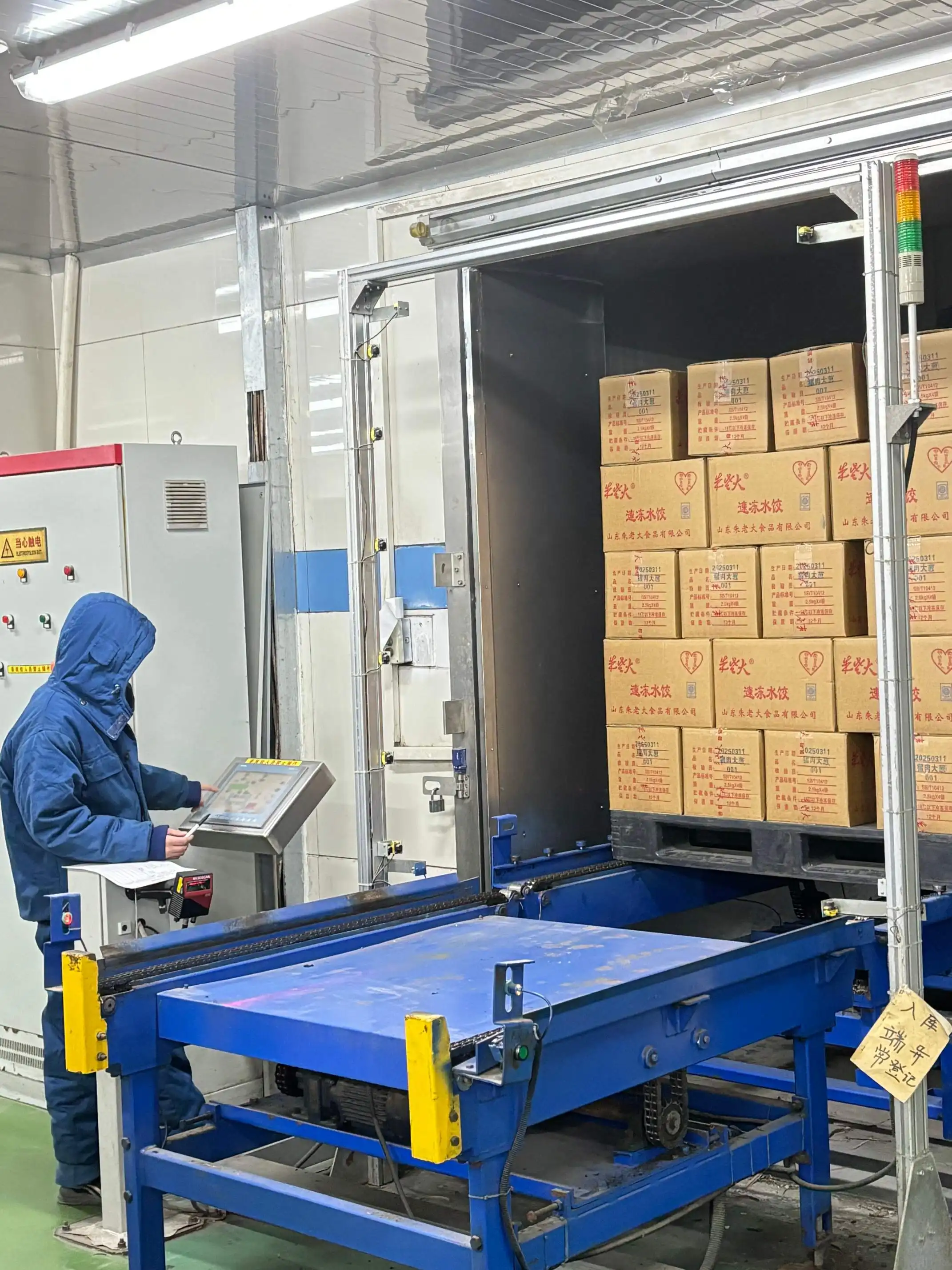
When stored properly in a freezer, food has a shelf life of 12 months from the date it was made. Avoid doing the same freeze-thaw processes over and over because they speed up the drying and micro-cracking of the wrapper, which is a known way for this type of product to fail.
Menu Positioning That Moves Units
Putting this product on the market as a "northern Chinese heritage specialty" takes advantage of people's growing interest in Chinese foods from other regions besides the usual takeout options. Add a short history of the dish to your menu along with a picture of a cross-section of a dumpling to show how the filling feels. As a sign of high-quality, serve a trio of sauces on the side and charge a little more than regular dumplings.
Conclusion
Pork and kidney beans dumplings are a healthy food option that is also easy to make and sell. The structure of the filling is strong, the wrapper can be used with three different cooking methods, and there are well-known safety rules for preparing kidney beans, all of which support positive menu adoption. This variety should be seriously considered as a high-repeat, low-complaint SKU whether you are adding a new section to the menu or expanding an existing dumpling program.
FAQ
Are pork and kidney beans dumplings suitable for gluten-free menus?
Not at all. The package has wheat flour in it, and the product itself has parts made from soy. The names of both allergens must be shown on menus and packaging. People who have celiac disease or are sensitive to gluten should stay away from this product until the company confirms that it comes in a gluten-free version.
What is the shelf life of frozen dumplings for commercial use?
The shelf life is 12 months if it is kept cold at or below -18°C all the time. Changes in temperature during transport or storage will hurt the quality of the wrapper faster than the filling, so cold-chain compliance is the most important thing to keep an eye on.
How do I maintain flavor consistency when scaling from 50 to 500 portions?
The safest way to do it is to buy from a company that has automated controls for filling portioning and wrapper thickness. There are two production factors that directly affect taste uniformity at volume: the amount of fat to lean meat in the pork and the way the kidney beans are blanched.
Can these dumplings be deep-fried?
The most common ways to do this are boiling and cooking. The method of pan-frying is supported. It is possible to deep-fry them, but the temperature inside needs to be carefully watched to make sure the dense bean filling always reaches a safe level.
Elevate Your Menu with Zhulaoda — A Trusted Pork and Kidney Beans Dumplings Supplier
Zhulaoda gives more than 20 years of experience making frozen foods straight to your supply chain. Our pork and kidney beans dumplings are made in a factory that is ISO9001 and HACCP certified, come in 450g, 1kg, and 2.5kg sizes, and can be produced at a rate of 100 tons per day. There are OEM and private label schemes. To get examples or talk about terms for large orders, email us at sdzldsp@163.com or visit zhulaodadumpling.com.
References
1. USDA FoodData Central. Nutritional Composition of Cooked Kidney Beans. U.S. Department of Agriculture, 2023.
2. Liener, I. E. Toxic Constituents of Plant Foodstuffs. Academic Press, 1980.
3. Barbut, S. The Science of Poultry and Meat Processing. University of Guelph, 2015.
4. China National Standard GB 19295. Quick-Frozen Foods: Microbiological Limits and Safety Requirements. Standardization Administration of China, 2021.
5. Fellows, P. J. Food Processing Technology: Principles and Practice. Woodhead Publishing, 2022.
6. Vaclavik, V. A., & Christian, E. W. Essentials of Food Science. Springer, 2014.
_1740477587099.webp)
Learn about our latest products and discounts through SMS or email