- English
- French
- German
- Portuguese
- Spanish
- Russian
- Japanese
- Korean
- Arabic
- Greek
- German
- Turkish
- Italian
- Danish
- Romanian
- Indonesian
- Czech
- Afrikaans
- Swedish
- Polish
- Basque
- Catalan
- Esperanto
- Hindi
- Lao
- Albanian
- Amharic
- Armenian
- Azerbaijani
- Belarusian
- Bengali
- Bosnian
- Bulgarian
- Cebuano
- Chichewa
- Corsican
- Croatian
- Dutch
- Estonian
- Filipino
- Finnish
- Frisian
- Galician
- Georgian
- Gujarati
- Haitian
- Hausa
- Hawaiian
- Hebrew
- Hmong
- Hungarian
- Icelandic
- Igbo
- Javanese
- Kannada
- Kazakh
- Khmer
- Kurdish
- Kyrgyz
- Latin
- Latvian
- Lithuanian
- Luxembou..
- Macedonian
- Malagasy
- Malay
- Malayalam
- Maltese
- Maori
- Marathi
- Mongolian
- Burmese
- Nepali
- Norwegian
- Pashto
- Persian
- Punjabi
- Serbian
- Sesotho
- Sinhala
- Slovak
- Slovenian
- Somali
- Samoan
- Scots Gaelic
- Shona
- Sindhi
- Sundanese
- Swahili
- Tajik
- Tamil
- Telugu
- Thai
- Ukrainian
- Urdu
- Uzbek
- Vietnamese
- Welsh
- Xhosa
- Yiddish
- Yoruba
- Zulu
Best Pork and Chinese Cabbage Wontons for High-Volume Kitchens
When procurement managers and head chefs search for a dependable, high-volume wonton SKU, pork and Chinese cabbage wontons consistently rise to the top of the list. These wontons combine a thin, resilient wrapper with a well-seasoned pork and Napa cabbage filling, making them the standard choice for noodle shops, Cantonese wonton soup chains, and Asian supermarket frozen aisles across the United States. Their broad appeal, straightforward cooking profile, and proven shelf stability at -18°C for up to 12 months make them a practical anchor product for any serious food operation.
Understanding the Role of Pork and Chinese Cabbage Wontons in High-Volume Kitchens
Why This Product Dominates High-Volume Menus?
Pork and cabbage wontons are an old favorite. Willy Won Ton soup is a big part of the daily ticket counts at Cantonese and Hong Kong-style noodle shops. There is a natural umami balance between front-leg pork and Chinese cabbage (Napa type). This is because the free glutamates in the pork and the mild sweetness of the cabbage work together to make a flavor that is satisfying without needing a lot of seasoning.
Nutritional and Culinary Appeal
The lean pork in a normal 20g wonton unit gives it a good mix of macronutrients. The wheat wrapper gives it carbs, and the cabbage and aromatics like ginger, leeks, and onion give it vitamins. This is why Chinese vegetable and pork wontons are a cheap way to get protein. You can find them in restaurants and frozen food shops.
Common Sourcing Challenges in This Category
When you buy something, the most common problems are broken wrappers during boiling, ingredients that shrink after cooking, and taste changes between batches. Usually, these issues happen because the flour doesn't have enough protein, the cabbage wasn't dried enough before it was mixed, or there were issues with keeping the cold chain going. When choosing a provider, these things should be thought about. This is the best way to keep product quality high.
Optimal Criteria for Selecting Pork and Chinese Cabbage Wontons for High-Volume Use
Wrapper Quality Standards
For a commercial wonton to stay fresh, the wrapper has to be able to stand up to rough conditions and boiling water. For dough that is between 0.5mm and 0.8mm thick, the experts say to use wheat flour with medium to high gluten and 11–13% protein. Food is sometimes mixed with starch acetate to help it stay stable when it freezes and thaws and to keep it from breaking when it's frozen. This is true of Zhulaoda's recipe. Pork and chinese cabbage wontons are a good example of a product that relies on this kind of wrapper stability.


Filling Composition and Freshness
How the filling tastes and how much it gives when it's cooked depend on how much pork fat to lean there is in it. There is about 3:7 or 2:8 fat to lean mass in most people. One way to dry Chinese cabbage by osmosis is to salt it. This drops its free water content to about 15–20% so that it can be mixed. It will be too watery inside and the wrapper will break too quickly when it freezes if you don't do this step. There is even less of a risk of microbiology when pork comes from supply chains that have been checked and are HACCP-certified.
Regulatory Compliance and Certifications
People who buy things in the U.S. market need to get approval from suppliers. You need to have ISO 9001 for quality management, HACCP for food safety control, and a country-of-origin food production license. Zhulaoda has a license to make food with the number SC11137139600148, and it meets the requirements of Product Standard Code SB/T 10412. With these credentials, there is a written record that can be used to make sure that import rules are being followed.
Sourcing Pork and Chinese Cabbage Wontons: Trusted Suppliers and Wholesale Options
Evaluating Supplier Capabilities
A good company that makes frozen wontons should be able to show that they can make enough wontons every day, store them in the right way, and keep track of their raw materials. Five years ago, Shandong Zhu Laoda Food Co., Ltd. opened for business. They now have three automated lines that can make up to 100 tons of food every day. There is a smart shuttle rack system in their cold storage warehouse that can hold more than 8,000 tons. This proves they can reliably meet the needs of people who buy a lot. Wontons are the product category where this capacity matters most, since wrappers and fillings both degrade quickly without proper cold storage.
Raw Material Sourcing Transparency
Jinluo is a well-known brand of chilled meat in China, and Zhulaoda only buys pork from them. Wheat flour is made from grains that grow in Canada and the Hetao Plain. These places are known for having high-protein grains. People buy fresh vegetables right from the farms where they grow. After it comes in and before it is used, each batch is checked for microbes, pesticide residue, and physical and chemical properties. By being strict about buying things directly, the same high-quality goods are sent out for all orders.
Packaging Options and MOQ Flexibility
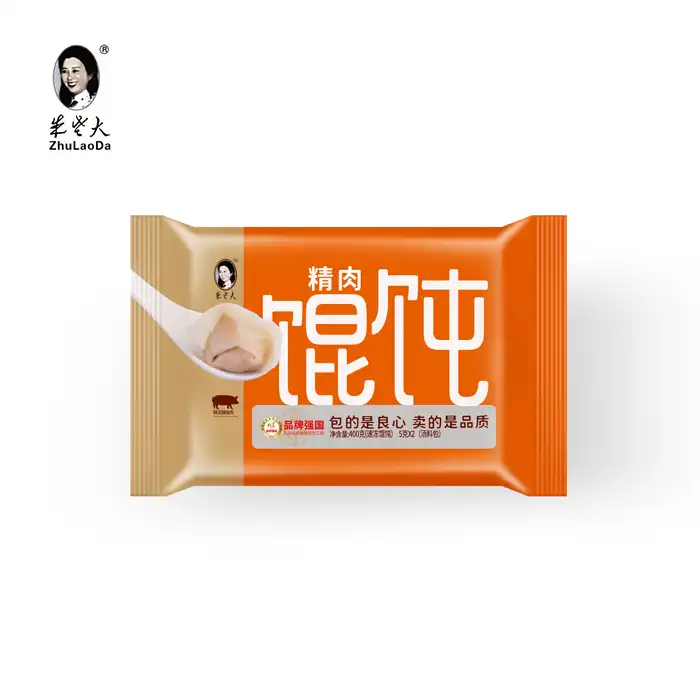
Buying food in bulk is an important part of running a restaurant. From Zhulaoda, you can choose from three basic package sizes: 450g, 1kg, and 2.5kg. There are also options that can be changed to meet the needs of chain accounts and private-label programs at supermarkets. The 1 kg and 2.5 kg forms are best for use in restaurants and commercial catering in the back of the house. The 450g size, on the other hand, is good for putting on store shelves.
Efficient Cooking and Handling Practices for High-Volume Kitchens
Boiling and Steaming in Commercial Settings
The main way to cook at places that serve soup and noodles is still to boil them. You can put frozen wontons right into broth or water that is boiling. They should float to the top after 5 to 7 minutes of cooking. The recipe for Zhulaoda's wrapper makes sure that it stays in shape during this process so that the broth doesn't get cloudy. For eight to ten minutes in a regular commercial boiler, the wrapper turns into a hard, slightly see-through structure.
Pan-Frying for Retail and Catering Variety
You can do a lot more with food when you pan-fry it. Heat the oil in a pan with a flat bottom. Put the wontons in the oil with the flat side down. Fry them until the bottom turns yellow. Add some water and cover. For four minutes, let it steam. After that, take the lid off and let it cook some more. With this method, the same SKU can be used for both dim sum-style displays and casual dining menus. Pork and chinese cabbage wontons are a good example of a SKU that works across both formats.
Frozen Storage and Handling Protocols
Along the whole supply chain, it is very important that the temperature stays at or below -18°C. Inside the wrapper, ice crystals form when the temperature changes. This makes the wrapper break when it's being sent out. They use blast-freezing technology at -35°C to keep the structure of their goods locked in as soon as they are made. If you are storing it inside, don't let it thaw and freeze too many times. It will last for a year from the date it was made if you store it properly.
Enhancing Procurement Decisions Through Brand and Product Evaluation
Why Zhulaoda Stands Out in B2B Contexts?
Zhulaoda's business reputation is based on how well it makes products, not on how much it spends on ads. X-rays are used to look for bone pieces, seal integrity vacuum tests are done, and a sensory panel is used to make sure there are no off-flavor chemicals present. These are all parts of the company's quality control process. Not only a few samples are checked, but the whole batch is checked. For buyers who have seen lower-level suppliers make batches that aren't always the same, this way of doing things makes it easy to tell one seller from another.

Certifications That Matter to Buyers
It has ISO 9001, HACCP, QS, and a Food Quality and Safety Certification that it passed for the first time in 2005. These aren't just nice badges; they prove that the process has been properly recorded and managed, which keeps sellers from being held responsible for food safety issues and their imports being turned down. If a U.S. company wants to get wonton delivery or food service contracts, these papers should be a normal part of the qualification process.
Long-Term Partnership Value
When you're buying frozen food, the best relationships with suppliers are ones where you can talk about prices clearly, make changes to your order schedule, and get help customizing products. Zhulaoda usually buys things every two to six weeks, during which time they send out samples and get steady repeat orders. A buyer can start with a single SKU, like the pork and cabbage wonton, and then move on to Zhulaoda's other items, like other kinds of dumplings, to get more for their money with just one seller account.
Conclusion
One of the most reliable and frequently purchased SKUs in the cold Asian food area is pork and chinese cabbage wontons. Purchasing managers who buy things for noodle chains, Asian supermarkets, or institutional catering programs need to pick the right manufacturer. This is because the choice of manufacturer affects both the quality of the goods and the reliability of the supply chain. With a daily capacity of 100 tons, approved cold chain infrastructure, and traceable raw material sources, Zhulaoda has a supply base that can handle high-volume accounts without the usual risks of inconsistency that come with this type of business. It ships at -18°C, stays good for a year, and cooks in less than 10 minutes, so it's a good pick.
FAQ
Can I use both boiling and steaming methods with the same product?
Yes. Zhulaoda's pork and Chinese cabbage wontons are formulated for boiling, steaming, and pan-frying. The wrapper maintains integrity across all three methods. Boiling takes 5–7 minutes, steaming 8–10 minutes, and pan-frying approximately 6–8 minutes total.
How should I handle bulk frozen wontons to prevent cracking?
Keep storage temperature constant at -18°C or below. Avoid partial thaw-refreeze cycles, as these cause ice crystal expansion inside the wrapper. Transfer product directly from frozen storage to cooking without intermediate holding at room temperature.
How do I verify a wonton supplier's food safety compliance?
Request production license documentation, third-party audit reports, and batch-level test records covering TPC, Salmonella, and Listeria. Zhulaoda holds Food Production License SC11137139600148 and complies with SB/T 10412 product standards. ISO 9001 and HACCP certificates are available upon request.
What allergens are present in these wontons?
The ingredients contain wheat and soybean components. All allergen information is declared on product packaging in compliance with labeling requirements.
Is the pork supply traceable?
Yes. Zhulaoda sources pork from Jinluo with full batch traceability to the processing facility, supporting antibiotic residue control and African Swine Fever documentation requirements.
Request a Sample from Zhulaoda — Your Pork and Chinese Cabbage Wontons Supplier
People who meet the requirements can get free samples of Zhulaoda's goods. Our team will send you samples so you can test the wrapper, filling, and cooking in your own kitchen before you place a big order. This is true whether you are in charge of a chain of noodle shops, a grocery store that sells frozen foods, or a large-scale catering business. To get samples or talk about prices for your business, email us at sdzldsp@163.com.
References
1. China National Standard GB/T 23786 — Quick-Frozen Dumplings Product Standard, Standardization Administration of China, 2009.
2. Food and Agriculture Organization of the United Nations — Codex Alimentarius: Code of Hygienic Practice for Refrigerated Packaged Foods with Extended Shelf Life, FAO/WHO, 2018.
3. Journal of Food Science — Effect of Freeze-Thaw Cycles on the Texture and Structural Integrity of Wheat-Based Dumpling Wrappers, Institute of Food Technologists, 2019.
4. Food Control — HACCP Implementation in Frozen Convenience Food Manufacturing: A Systematic Review, Elsevier, 2020.
5. International Journal of Food Properties — Dehydration Methods for Brassica Vegetables and Their Impact on Filling Quality in Frozen Dumplings, Taylor & Francis, 2021.
6. Journal of Cereal Science — Influence of Wheat Flour Protein Content on the Mechanical Properties of Dumpling Wrappers Under Commercial Boiling Conditions, Elsevier, 2022.
Learn about our latest products and discounts through SMS or email