- English
- French
- German
- Portuguese
- Spanish
- Russian
- Japanese
- Korean
- Arabic
- Greek
- German
- Turkish
- Italian
- Danish
- Romanian
- Indonesian
- Czech
- Afrikaans
- Swedish
- Polish
- Basque
- Catalan
- Esperanto
- Hindi
- Lao
- Albanian
- Amharic
- Armenian
- Azerbaijani
- Belarusian
- Bengali
- Bosnian
- Bulgarian
- Cebuano
- Chichewa
- Corsican
- Croatian
- Dutch
- Estonian
- Filipino
- Finnish
- Frisian
- Galician
- Georgian
- Gujarati
- Haitian
- Hausa
- Hawaiian
- Hebrew
- Hmong
- Hungarian
- Icelandic
- Igbo
- Javanese
- Kannada
- Kazakh
- Khmer
- Kurdish
- Kyrgyz
- Latin
- Latvian
- Lithuanian
- Luxembou..
- Macedonian
- Malagasy
- Malay
- Malayalam
- Maltese
- Maori
- Marathi
- Mongolian
- Burmese
- Nepali
- Norwegian
- Pashto
- Persian
- Punjabi
- Serbian
- Sesotho
- Sinhala
- Slovak
- Slovenian
- Somali
- Samoan
- Scots Gaelic
- Shona
- Sindhi
- Sundanese
- Swahili
- Tajik
- Tamil
- Telugu
- Thai
- Ukrainian
- Urdu
- Uzbek
- Vietnamese
- Welsh
- Xhosa
- Yiddish
- Yoruba
- Zulu
Pork Shrimps Corn Dumplings vs Meat Dumplings: Which Tastes Better?
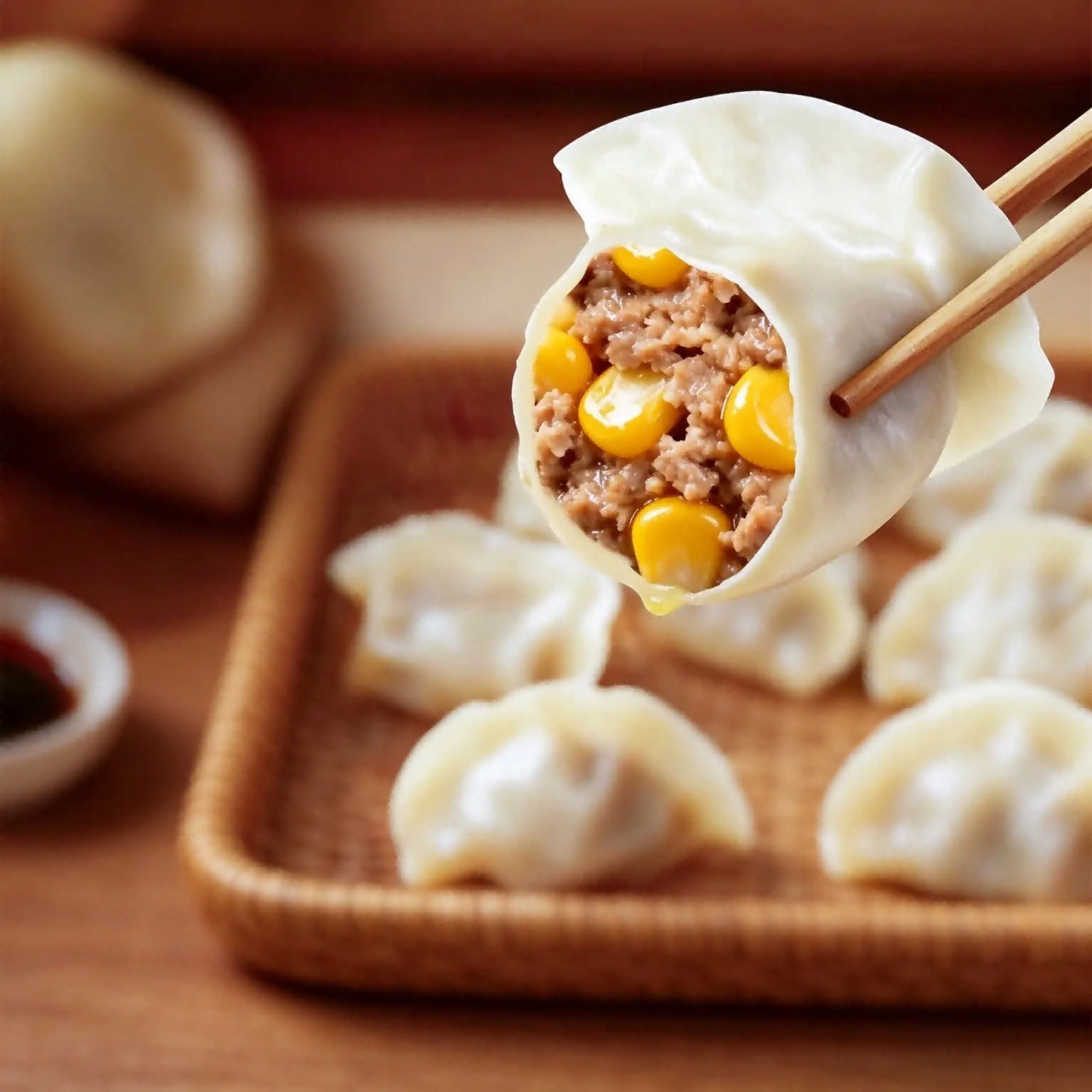
If you are comparing pork shrimps corn dumplings with traditional meat dumplings, the honest answer is: it depends on what your customers want. Pork shrimps corn dumplings deliver a naturally sweet, layered flavor that comes from the combination of tender pork front leg meat, bouncy shrimp, and fresh corn kernels. That tri-texture profile — crunch, snap, and tenderness — sets them apart from classic pork-cabbage or pork-chive fillings. For supermarket buyers targeting family and children's segments, this sweet-savory direction consistently scores higher in consumer preference tests across North American Asian grocery markets.
Flavor Profiles and Taste Comparison
What Makes the Tri-Protein Filling Different?
Most meat dumplings only have one type of meat (like beef, pork, chicken, or chicken) and one type of vegetable (like cabbage or chives). People know and like the taste, so it doesn't really surprise them. Pork shrimps corn dumplings, on the other hand, get their flavor from three things: amino acids from pork, nucleotides from shrimp, and natural plant sugars from corn. That is, this mix has more umami depth without adding a lot of extra spices.
How Cooking Method Affects Taste
The way you cook really does change the taste. After being boiled for 6 to 8 minutes, the corn stays sweet and the filling stays juicy. After 8–10 minutes of steaming, shrimp smells stronger than when it was fresh. The bottom of something pan-fried turns brown and crisp, and the corn and shrimp cook the inside all the way through. This is a great way to advertize food that you can buy. All three ways can be used to cook traditional meat dumplings, but mixing corn and shrimp gives them the steam effect that other two do.
Traditional Meat Filling: Where It Still Wins
Classic pork-and-cabbage dumplings are very popular in places where price is important. Because they don't taste strong, it's easy to change the flavor of the dipping sauce, and a lot of people like them. If a buyer wants to build a full SKU range, traditional fillings are the norm, and shrimp-corn varieties are the best and most unique option. On the shelf, both have clear jobs to do.
Nutritional and Health Considerations
Protein Quality and Macronutrient Profile
Shrimp is a lean source of protein that gives you all the amino acids you need when mixed with pork. There are more than 9g of protein in 100g of these dumplings, which is enough to support claims that they are "high protein" in many markets. Corn has fiber and natural sugars that make you less likely to want extra sweets that are made in a lab. The nutrition facts for these foods are more balanced than those for regular pork-only sandwiches, which tend to have more saturated fat.
Allergen Awareness for B2B Supply Chains
The shrimp corn cakes at Zhulaoda are made with wheat, soybeans, and shrimp. There are rules about all of these major allergens in the United States through FALCPA. This means that signs have to be easy to read for people who shop at grocery stores. Foods made by Zhulaoda follow ISO 22000 and HACCP rules, and allergens are kept separate while the products are being mixed and stuffed. Using an ATP swab to test shows that allergy residue is taken off between production runs, which is what is needed for compliance across borders.
Dietary Positioning for Family and Children's Segments
The corn gives these dumplings a light sweetness that makes them great for kids. The corn-shrimp mix is more appealing to younger people than traditional types that are hotter or saltier, and the recipe doesn't need to be changed. This puts the product firmly in the "everyday family meal" category for private label sellers who want to sell family packs in North American stores. This is a group that always places orders.
Market Availability and Quality Evaluation
How to Evaluate Filling Quality at Scale
When you make good composite-filling dumplings, you need to think about a lot of things. 45:55 or 50:50 for the top should be the right amount of filling to dough. The amount of water must stay between 55 and 65% so that the fruit stays juicy and the wrapping doesn't get weak. Shrimp should have a structure that is easy to bend. If it's too soft, it means that the proteins are breaking down or the shrimp wasn't frozen properly. If corn kernels smell sour or spoiled, it means they were heated too much before they were made. These quality standards are especially important for pork shrimps corn dumplings.
When shopping, people should make sure the seller meets these simple quality standards before making a deal:
- Microbiological testing: Mandatory checks for Salmonella, Listeria monocytogenes, and Vibrio parahaemolyticus, with lower Total Plate Count limits than standard meat dumplings due to the seafood component.
- Foreign object detection: High-sensitivity X-ray inspection to catch shell fragments from shrimp or cob fragments from corn — both are common critical control points (CCP) in factory audits.
- Wrapper integrity: Visual inspection for hairline cracks after freezing, which cause soup loss during cooking and raise consumer complaints.
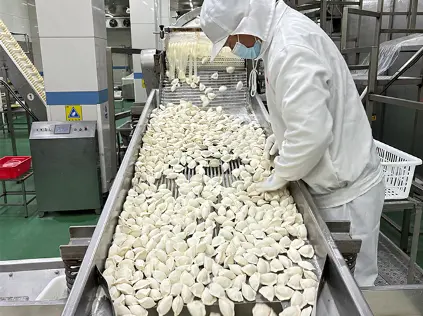
A high-sensitivity X-ray is used for "foreign object detection" to find pieces of shrimp shell or corn cob. These are both common critical control points (CCPs) that are checked during factory audits.- Attention to the wrapper: Before the package is frozen, look for tiny cracks on the outside. These cracks can let soup leak while it's cooking, which will make customers unhappy.
Frozen vs. Fresh: The Practical Choice for Retail
Frozen is the only option that works for private label services at grocery stores. Individual Quick Freezing (IQF) technology stops big ice crystals from forming, which keeps the structure of shrimp at the level of its cells. Zhulaoda can be stored for 12 months at -18°C, which makes it easy to ship within China and to other countries without changing the quality of the food once it is made.
Procurement Considerations for Global B2B Clients
OEM and Private Label Capabilities
For buyers like store private label buying managers, being able to make the product is just as important as having the product. Zhulaoda can do both OEM and ODM work. They can alter the recipe to change how sweet it is and how thick the wrapper is. They can also make packaging that fits your needs, and the sizes they offer include 450g, 1kg, and 2.5kg. Deals with standard NDAs keep recipes secret, which is one of the main concerns in private label sourcing.
MOQ, Packaging, and Delivery Structure
Minimum order quantities and flexible packaging are big parts of a buyer's decision about which suppliers will work best for them. Zhulaoda can handle steady, big orders without any supply issues because it can produce 100 tons of goods every day and store 8,000 tons of cold goods. As part of the sample and package design phase, before trial production starts, US labeling rules are followed for grocery store buyers. This includes making sure the packaging is ready to go on the shelf and that it includes FDA ingredient declarations and allergen statements.
Sourcing Channels and Audit Readiness
People in North America who buy under their own brands usually find sellers at PLMA trade shows, on Alibaba, Global Sources, or through other buyers. An RFQ is the first step in the buying process. Next comes sampling and packaging design, then a third-party factory audit (Sedex/BSCI), trial production, and finally an annual framework agreement. It is important for Zhulaoda to have third-party checks, and they have helped foreign buyers go through this process before. The Canadian and Hetao Plain wheat flour and JINLUO cold fresh pork come from sources that have been checked out, and there is full paperwork that can be used for audits.
Taste Testing and Decision Support for Buyers
Consumer Preference Data Across Key Markets
Asian food shops in North America often do tests that show kids and people under 12 like sweet dumpling fillings better than neutral ones. Asian-Americans are much more likely to "purchase intent" the pork-shrimp-corn mix than the regular pork-cabbage mix, especially if it comes in a family-size package. Based on these numbers, the shrimp-corn SKU should be marketed as an expensive, one-of-a-kind item instead of a straight replacement for other fillings.
Balancing Taste, Nutrition, Price, and Supply Chain
Private label buyers need all four of these to be in sync before they agree to a new SKU. Even though the ingredients for the shrimp-corn mix cost more than those for regular pork fillings, the premium positioning lets the prices go up on the shelf and the profit per unit go up as well. When you add up solid OEM supply and certified cold chain processes, you get a risk level that is doable. People who have bought this SKU before say that they often buy it again, especially when they have kids.
Making the Final Call
A lot of people come to stores that sell traditional meat recipes because they are tasty and save them money. Pork shrimps corn dumplings capitalize on the trend toward higher prices, attract younger families, and give private label programs true differentiation. The question isn't which tastes better in a strict sense, but which is better for the buyer's shelf plan and the shopping habits of their target customer.
Conclusion
In a store's offering, both kinds of dumplings are used for different things. Most people like this group's traditional meat dumplings because they taste good and are cheap. Pork shrimp and corn dumplings add a sweet-savory twist that appeals to families and younger customers, allowing for private label differentiation at a higher price point. For grocery stores that want to add Asian frozen food, it makes sense to have both types of food. There's a lot of different types of the shrimp-corn kind on the shelf because it's good for you and shoppers with kids love it. Pork shrimps corn dumplings therefore serve as a strong differentiator in the frozen aisle.
FAQ
Are pork shrimps corn dumplings suitable for children?
Yes. Younger people really like this kind because the natural corn gives it a mild sweetness, and the pork and shrimp inside are soft. It's better for family meals because it doesn't have a lot of strong spices or bitter tastes.
What allergens do these dumplings contain?
It has wheat, shrimp, and soy in it. Follow the rules set by the US FALCPA for all three of these allergens. Buyers should make sure that the labels from sellers meet FDA rules before they finalize the package for the US market.
How do I verify shrimp quality in bulk orders?
People should ask about IQF (Individual Quick Freezing) shrimp and microbial test results that show Vibrio parahaemolyticus. When shrimp is done cooking, it should be firm but still bendy. If it's soft, it either took a long time to freeze or too much phosphate was used to process it.
Can the recipe be adjusted for private label programs?
Yes. In OEM deals, you can change how sweet the candy is, how thick the wrapper is, and how much filling there is to shell. At the start of the sampling process, an NDA is signed to keep things private.
What cooking method best preserves the shrimp texture?
It works best if you boil it for 6 to 8 minutes at full strength. When boiling, timing is very important because it makes the smell stronger. If you want the crispiest texture, use wrappers that are about 0.8 to 1.2 mm thick so they can hold the filling while they cook.
Partner with Zhulaoda — A Trusted Pork Shrimps Corn Dumplings Manufacturer
It has been making frozen dumplings since 2001. Every day, they make 100 tons of dumplings on three robotic lines. We can help with full private label programs because we have a lot of experience making pork shrimp corn dumplings. We can change the recipe, design the packaging, make sure they are ready for a third-party audit, and deliver them cold chain. Our factory is approved (SC11137139600148, SB/T 10412) and can store up to 8,000 tons of goods in cold rooms. You can ask for samples and talk about sources right away by emailing sdzldsp@163.com.
References
1. Resurrección, A.V.A. Consumer Sensory Testing for Product Development. Blackwell Publishing, 1998.
2. Hui, Y.H. et al. Handbook of Frozen Foods. Marcel Dekker, 2004.
3. Fellows, P.J. Food Processing Technology: Principles and Practice. Woodhead Publishing, 2009.
4. U.S. Food and Drug Administration. Food Allergen Labeling and Consumer Protection Act (FALCPA) Guidance. FDA, 2006.
5. Belitz, H.D., Grosch, W., and Schieberle, P. Food Chemistry. 4th ed. Springer, 2009.
6. Private Label Manufacturers Association (PLMA). Private Label Today: Industry Report. PLMA, 2023.

Learn about our latest products and discounts through SMS or email